
How to Properly Store Leftover Paint
Expert Guide: How to Properly Store Leftover Paint So It Doesn't Dry Out Until Next Season
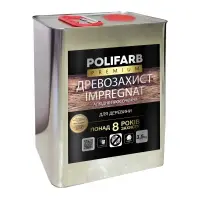
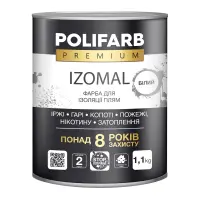
After the renovation or construction season comes to an end, you are almost always left with anywhere from half a can to several liters of high-quality paint. Throwing it away is wasteful, as these coatings can be incredibly useful for future local touch-ups, fixing chips, or small decorative projects next year.
However, simply closing the lid "until spring" is not enough. If air gets inside or the formula undergoes temperature shocks, the paint will separate, develop an irreversible skin, or cure (dry out) completely.
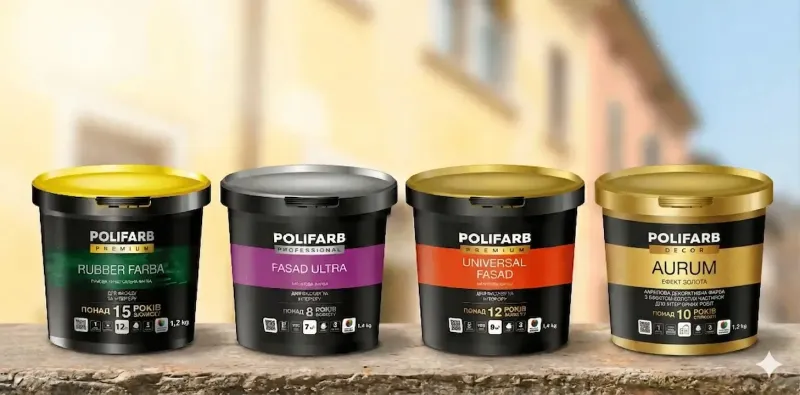
Professional painters and Polifarb technical experts use a time-tested coating preservation workflow that guarantees the retention of all physical and chemical properties of the material until the next season.
1. Compositions Preparation: Cleanliness Matters
The primary enemy of paint during long-term storage is bacteria. If you dipped a brush or roller directly into the original can while working, microorganisms, dust, and drywall putty particles inevitably contaminated it. In a water-borne environment, this triggers spoilage, causing the paint to develop a foul odor and rendering it completely unusable.
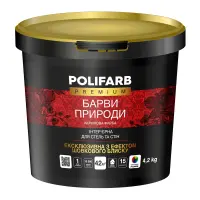
Professional Approach: Before long-term storage, any paint that has interacted with tools should be strained through a professional paint strainer or clean nylon. If you poured your paint from the Polifarb STANDARD or «Barvy Pryrody» lines into a paint tray, leaving the product inside the original can untouched, straining is not required.
2. Can Sealing: Fighting the "Skin"
The presence of oxygen inside a sealed container triggers oxidation and the evaporation of the liquid base. As a result, a dense polymer film ("skin") forms on the surface, which cannot be dissolved back into the batch without compromising the paint's quality.
Preservation Workflow:
Clean the Rim: Thoroughly wipe away any wet paint accumulation from the rim grooves of the can. If left uncleaned, the dried residue will deform the lid during the next reopening, destroying the airtight seal.
Protective Barrier: Cut a piece of heavy-duty plastic wrap slightly larger than the diameter of the can's opening. Place it over the open container before firmly pressing the lid into place.
The "Inverted" Tactic: Once the lid is securely closed (it is best to gently tap it with a rubber mallet without distorting the metal tracks), turn the can upside down for 10–15 seconds, then return it to its upright position. The paint itself will seal any micro-gaps beneath the lid.
Tech Tip: If you only have 1–2 liters of paint remaining in a large 10-liter bucket, transfer it into a smaller plastic or glass container, filling it nearly to the top. The smaller the air gap between the paint and the lid, the better the chances of preserving its original viscosity.
3. Temperature and Humidity Profiles (Where to Store?)
Paints and coatings are critically sensitive to the climate of their storage facility. Leaving leftover materials for the winter in an unheated garage, on an open balcony, or at a cold summer cottage is a critical mistake.
For Water-Dispersible Paints (Acrylic, Latex, Silicone): Freezing temperatures are fatal. At temperatures below 0 °C, the water carrier turns into ice, permanently breaking the polymer emulsion. Once thawed, such paint turns into a curdled, separated mass that loses all adhesion properties. The optimal storage range is +5…+25 °C.
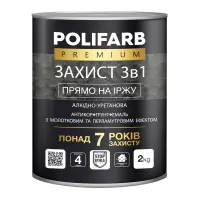
For Solvent-Borne Materials (such as «Zakhyst 3v1» Primer-Enamel): These systems are more frost-resistant but react poorly to extreme heat and direct sunlight. High temperatures accelerate internal chemical reactions, which can lead to gelling or thickening. They should be stored in a cool, dark space, away from heating appliances.
Checklist: How to Verify Paint Performance in the Spring
When the new season arrives, run a quick audit before applying the product:
Visual Inspection: Open the container. If a thin skin has formed on the surface, carefully lift it out and discard it entirely. Do not stir the skin back into the batch; small chunks will clog rollers and ruin the final wall texture.
Odor Test: If a water-based paint emits a distinct sour or rotten smell, bacteria have ruined the batch. Applying it inside residential spaces is strictly prohibited.
Agitation: Paint separation into a clear liquid layer and a dense pigment sediment after winter is a normal physical process. Mix the composition thoroughly using a power mixer on a low RPM setting for 3–5 minutes. If the mass becomes homogeneous, smooth, and free of lumps, the material is fully ready for application.
Summary
Properly preserving your leftover Polifarb products saves your budget and guarantees that you can refresh your interior or protect metal from corrosion at a moment's notice using a reliable, high-quality material.