
How to Remove Dried Expanding Foam
How to Remove Dried Expanding Foam: Effective Methods for Different Surfaces
Dried expanding foam (polyurethane) is one of the toughest messes during renovations. Fresh foam cleans off easily with solvent, but once fully cured (after 24+ hours), chemicals barely work. You’ll need to combine mechanical removal with softening. Here are proven methods for various materials — from safest to more aggressive.
General Rules Before Starting
Wear gloves and work in a ventilated area.
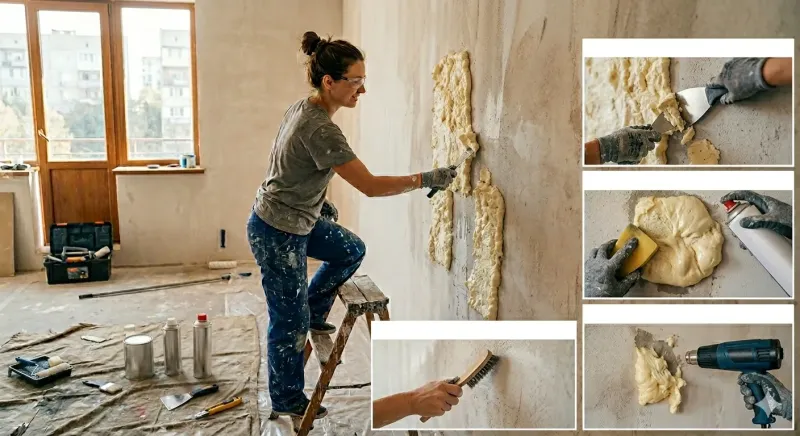
Always cut away excess with a sharp knife, blade, or plastic scraper as close to the surface as possible (don’t scratch!).
Test any product on an inconspicuous spot first.
For skin: remove large chunks first, then use oil, vinegar, or salt scrub.
Ways to Remove Dried Foam
Mechanical Removal (most universal and safest)
Cut thick layers with a knife or spatula.
Sand remnants with medium/fine sandpaper (120–220 grit) or pumice stone. Suitable for: concrete, brick, metal, wood (carefully), tile, glass. Downside: time-consuming and requires care.
Special Foam Cleaners / Removers (professional)
Gun cleaner or dedicated PU removers.
Apply to foam, wait 5–30 min (per instructions), wipe off with soft cloth or plastic scraper. Suitable for: plastic, PVC, painted surfaces, metal, glass (carefully). Most effective for delicate materials.
Acetone, Solvent 646, White Spirit
Soak cloth or sponge, apply to foam for 5–15 min, refresh periodically.
Scrape softened foam off. Suitable for: metal, glass, tile, concrete. Avoid on plastic, lacquered surfaces, linoleum, fabric — may dissolve or discolor.
Dimexide (pharmacy-grade DMSO)
Apply to cotton pad, press against foam for 10–30 min.
Wipe off softened residue. Suitable for: wood, parquet, laminate, painted walls (gentle option). Very effective and inexpensive.
Household Remedies (gentle)
Vegetable oil, petroleum jelly, fatty cream → apply, wait 20–60 min, scrub with sponge.
Vinegar (9%) or citric acid → for plastic and skin.
Coarse salt + water → skin scrub. Suitable for: plastic, skin, fabric (carefully).
What NOT to Do
Avoid strong solvents on plastic, PVC, lacquered doors, laminate, fabric — risk melting or bleaching.
Don’t scrub hard with metal brushes on soft surfaces.
Don’t expect one solvent to fully dissolve cured foam — it’s highly resistant.
Quick Guide by Surface
Metal, glass, tile → mechanical + acetone/cleaner.
Plastic, PVC doors → oil/vinegar/special cleaner, no acetone.
Wood, parquet → Dimexide + sanding.
Concrete, brick → knife + sandpaper.
Skin on hands → oil → vinegar → pumice/salt.
Fabric, upholstery → let dry → cut → treat with Dimexide or special remover.
Key rule: the sooner you start cleaning, the easier it is. Fully dissolving cured foam is almost impossible, but making it nearly invisible is realistic.
Good luck with your renovation — may the foam stay only where it belongs!