

Rubber Paint
How Rubber Paint Works: The Anatomy of Heavy-Duty Protection for Your Home
Rubber paint (or hydrophobic acrylic enamel) is one of the most innovative and technologically advanced materials on the modern construction market. It got its name not because it contains liquid rubber, but due to its incredible elasticity: once dry, the coating behaves exactly like a thin, durable layer of rubber.
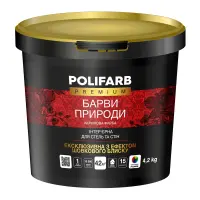
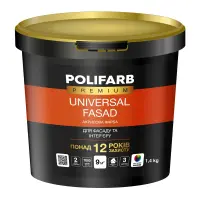
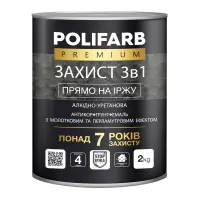
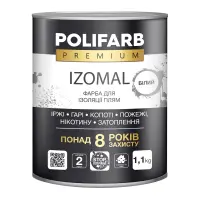
This property is exceptionally well-engineered in local products like Rubber Farba by the Ukrainian manufacturer Polifarb, which is widely used to protect roofs, plinths, and facades.
Let’s break down "to the molecule" how this material actually works and why it solves problems that standard paints simply cannot handle.
The Chemical Secret: What's Inside?
The core of high-quality rubber paint consists of acrylic latex (advanced polymers), water, coalescents (special film-forming additives), and pigments.
Unlike standard water-dispersion paints, where the polymers form a rigid, relatively stiff structure after drying, rubber paint utilizes an increased concentration of flexible latex resins.
How It Works: 4 Main Mechanisms
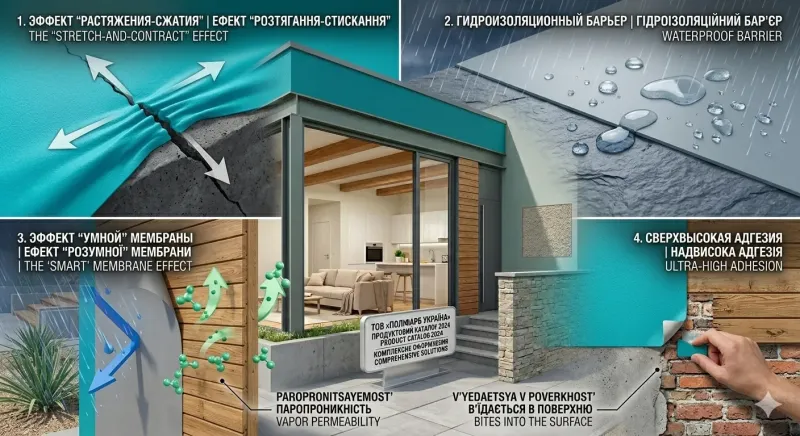
1. The "Stretch-and-Contract" Effect (Anti-Cracking)
Every building "lives": it settles, expands during summer heat, and contracts during winter frosts. As a result, micro-cracks inevitably appear on walls and plinths.
Ordinary paint: Cracks right along with the concrete or plaster substrate. Water gets into the crack, freezes, and the coating begins to peel.
Rubber paint: Features an elasticity rate of up to 200–400%. It creates a flexible protective cocoon. If a micro-crack forms underneath, the paint layer simply stretches right over it, maintaining the facade's integrity.
2. Waterproof Barrier
As the water evaporates, the polymers cross-link with each other, forming a seamless, completely watertight membrane. Water (rain, melting snow, splashes) cannot penetrate the coating. This is exactly why rubber paints are heavily favored for painting slate, tiles, galvanized roofs, and basements that are constantly exposed to dampness.
3. The "Smart" Membrane Effect (Vapor Permeability)
It might seem that if the paint doesn't let water through, it would turn the house into a "thermos." Fortunately, it doesn't. A liquid water molecule is large and cannot pass through the latex film. However, a vapor molecule is microscopic. Rubber paint works just like an expensive, high-tech membrane sports jacket: it keeps liquid water out while allowing excess moisture from inside the walls to evaporate freely. The walls can "breathe," meaning mold and mildew won't stand a chance inside the house.
4. Ultra-High Adhesion (Bonding)
Due to its molecular structure, the latex compound literally bites into the surface. Rubber paint can be applied to a wide variety of materials (sometimes even without specific primers, although priming is always recommended):
Porous concrete, brick, and gas blocks;
Drywall and wood;
Old slate and asbestos-cement;
Ferrous metal and galvanized steel (after degreasing).
Where Does Rubber Paint Work Best?
Roofing: Protects old slate from degradation and moss growth, and revives galvanized roofs by halting corrosion.
Plinths and Facades: Prevents groundwater and driving rain from eroding the foundation.
Wooden Structures: Its elasticity ensures the paint won't crack when the wood "shifts" due to changing humidity levels.
How to Apply It Correctly for the Technology to Work
Even the best rubber paint won't perform as intended if the application technology is violated:
Cleanliness is Key: The surface must be thoroughly cleaned of dust, dirt, grease stains, and any old, peeling paint must be removed.
Priming: Porous surfaces need to be bound with a deep-penetration primer. This evens out the absorption rate and maximizes adhesion.
Thin Layers: The biggest mistake is applying one thick layer "to get it done faster." Rubber paint must be applied in at least 2 (ideally 3) thin coats. Each subsequent coat should only be applied after the previous one is completely dry (usually 2–4 hours). This is the only way the proper polymer network can form.
The Bottom Line: Rubber paint acts as a long-term protective armor. It successfully combines the decorative appeal of premium enamel with the protective capabilities of waterproofing, extending the lifespan of outdoor structures by 8–10 years.