Paint prices differ because paints use different binders, different amounts of pigment and different additives, and these decide hiding power, wash resistance and coverage per square metre. Two similar buckets of white paint can differ threefold in price, but the fair comparison is the cost of a painted wall over several years, not the cost of a bucket.
What goes into the price of paint
Binder
The binder is the glue that holds pigment on the wall. Cheap paints contain little of it, often heavily diluted acrylic or even PVA. Better paints use acrylic latex resins. The binder controls adhesion, film elasticity and how many times the wall can be washed before the colour wears off.
Pigment and filler
Titanium dioxide is the most expensive white pigment, and it is what gives hiding power. Cheap paints replace part of it with chalk and other fillers. The result: a paint with good hiding power covers the surface in two coats, while a budget one often needs three or four.
Functional additives
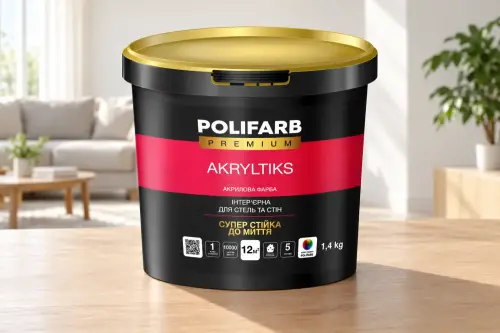
Mould protection, UV stabilisers, thickeners that keep paint from dripping off the roller. For example, the thixotropic AKRYLTIKS matt acrylic paint is thick in the bucket and thins under the roller, so it does not splatter or sag on a ceiling. Each additive costs money but saves time on the job.
Production and batch control
Consistent shade and properties from batch to batch come from laboratory control of raw materials and finished paint. That is part of the price too, and it is what no-name paints lack (see how to tell quality paint from cheap paint).
How paints in different price ranges compare
POLIFARB makes several interior paint lines, and the difference shows in the numbers:
Paint | Wash resistance | Sheen | Coverage per coat | Best for |
|---|---|---|---|---|
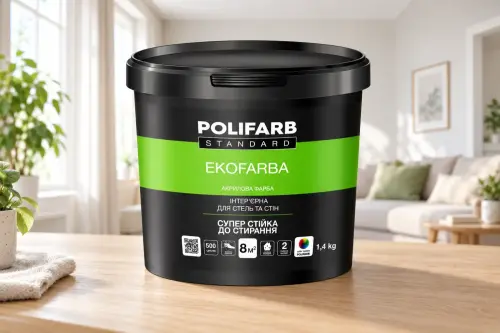
EKOFARBA (STANDARD) | 500 dry-abrasion cycles, not for washing | Deep matt | 195 g/m² | Bedrooms, living rooms, country houses, rentals |
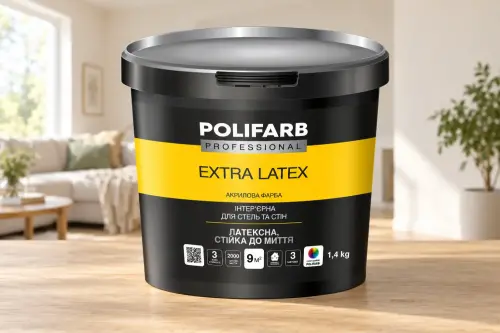
EXTRA LATEX (PROFESSIONAL) | Class 3 | Matt | 175 g/m² | Living spaces with moderate wear |
AKRYLTIKS | Class 2 | Matt | 130 g/m² | Kitchens, hallways, children's rooms, ceilings |
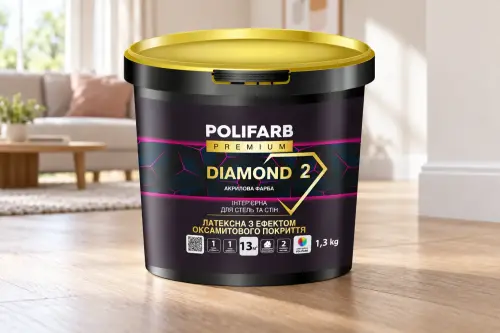
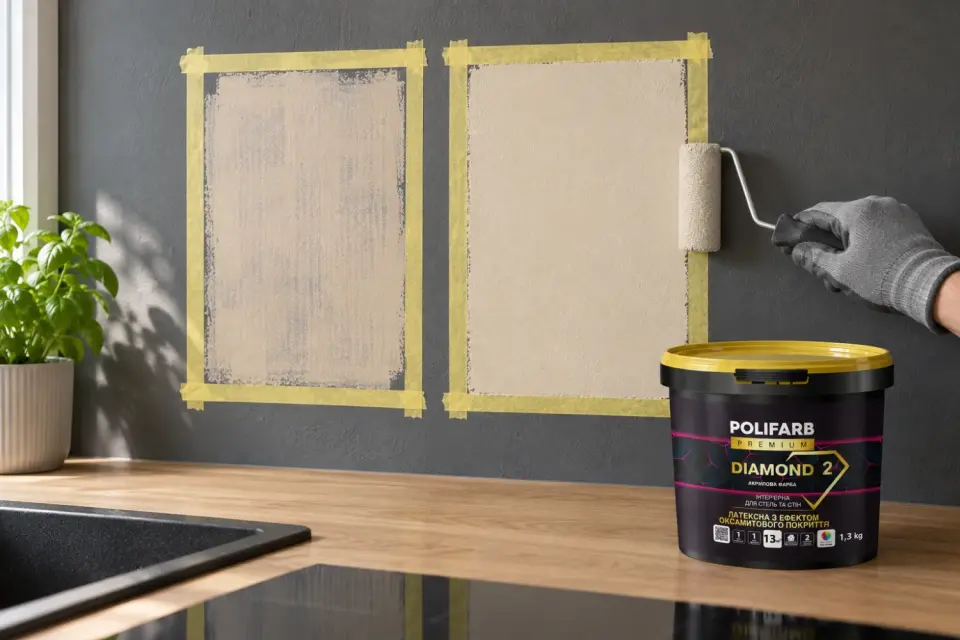
DIAMOND 2 | Class 1 | Deep matt | 125 g/m² | Washable walls with minor unevenness |
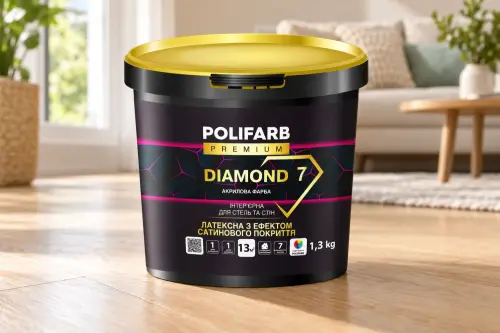
DIAMOND 7 | Class 1 | Satin | 125 g/m² | Kitchens, hallways, bathrooms away from splashes |
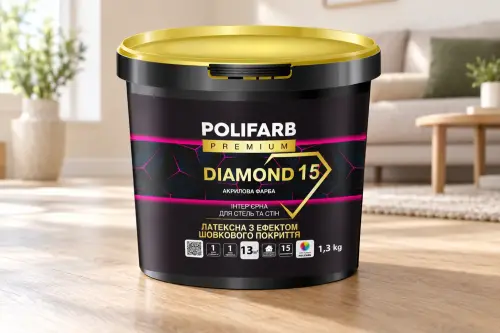
DIAMOND 15 | Class 1 | Silk sheen | 125 g/m² | Smooth, fully filled walls where sheen is wanted |
Class 1 wet-scrub resistance is the top of the five-class scale. On a wall that gets wiped weekly, it is years of margin. On a bedroom wall or a ceiling that nobody washes, that margin is unnecessary, and a lower class is the sensible choice.
How to calculate the real cost of a wall
Price per litre or kilogram means little without coverage. Work it out like this:
- Take coverage per coat from the label (g/m²) and multiply by the number of coats, usually two for interior paint.
- Multiply by the wall area minus windows and doors.
- Divide the bucket price by its weight and multiply by the kilograms you need.
- Divide the result by the number of years the wall will last in that room before repainting.
Example for 50 m² of wall in two coats: DIAMOND 2 at 125 g/m² needs about 12.5 kg, EKOFARBA at 195 g/m² about 19.5 kg. The paint that is cheaper per kilogram needs half as much again, and in a kitchen it will not stand regular washing. The paint consumption calculator gives the exact amount for your room, and paint consumption per 1 m² explains how surface and tools change the figure.
A kitchen example
A kitchen wall was painted with paint that has no wash-resistance class. Two years later it carries grease splashes, hand marks and wipe marks that no longer come off, so the wall has to be repainted. A Class 1 paint in the same spot withstands wiping with a damp cloth without losing colour.
What to choose for your budget
- Dry rooms that are never washed, large areas on a tight budget: EKOFARBA deep matt acrylic paint.
- Living spaces with moderate wear: EXTRA LATEX acrylic latex paint, Class 3.
- Kitchens, hallways, children's rooms, walls with minor flaws: DIAMOND 2 deep matt acrylic latex paint or AKRYLTIKS.
- Frequently washed walls where a slight sheen is fine: DIAMOND 7 satin acrylic latex paint.
- Perfectly smooth walls and rich colours: DIAMOND 15 silk acrylic latex paint.
If you have not yet picked the type of paint for your surface, start with how to choose paint for any surface.
FAQ
Is more expensive paint always better?
No. It gives more wash resistance and lower consumption, but a bedroom or ceiling does not need that margin. Match the class to how hard the room is used.
Why does cheap paint need three coats?
It contains less titanium dioxide and more filler, so the surface shows through. The third coat eats the price difference and adds a day of work.
Which matters more: price per litre or coverage?
Coverage. A paint at 125 g/m² and one at 195 g/m² on the same wall differ in weight by roughly half again.
What is the difference between DIAMOND 2, 7 and 15?
Sheen: 2 is deep matt, 7 is satin, 15 is silk. The higher the sheen, the easier the film is to clean and the smoother the wall must be.