The best paint for washable window reveals is an acrylic latex interior paint with Class 1 wet scrub resistance and a satin or silk finish. The film is dense, dirt does not stick to it, and marks come off with a damp cloth without streaks.
Why ordinary paint on window reveals wears out fast
Window reveals are among the hardest-working surfaces in a home. They collect dust and condensation, hand marks and curtain rub. Budget matte emulsion with Class 2–3 resistance shows streaks and scuffs after a few cleanings, and stains come off deep matte paint worse than off a denser low-sheen film.
What to look for in a paint for window reveals
- Class 1 wet scrub resistance, the top of the five-class scale: the surface can be washed many times, including with detergents.
- Satin or silk sheen. Gloss highlights every flaw; deep matte gets dirty faster.
- Good hiding power and adhesion to plaster, filler and drywall.
- Vapour permeability, so moisture is not trapped in the wall.
- Water-based formula without a strong smell: oil and alkyd enamels are washable too, but they smell strongly, dry longer and give a less flexible film.
DIAMOND 2, 7 or 15: which one for window reveals
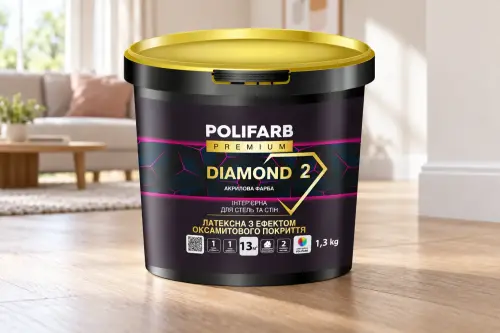
All three DIAMOND acrylic latex paints have Class 1 wet scrub resistance, a consumption of 125 g/m² per coat and are applied in two coats. They differ in sheen.
Paint | Sheen | When to use on reveals |
|---|---|---|
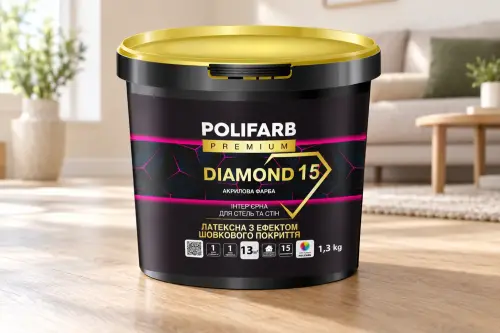
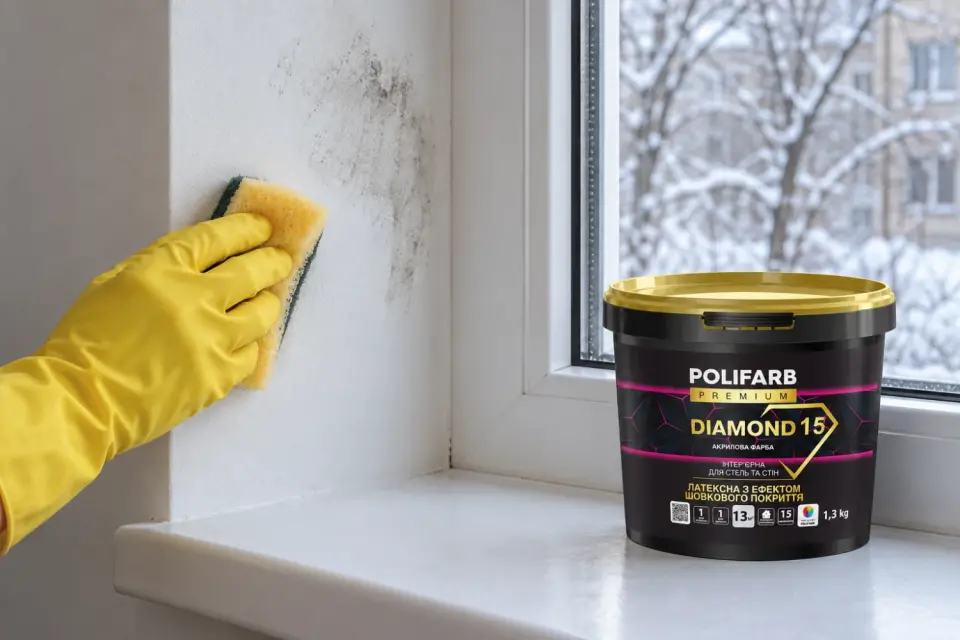
DIAMOND 15 | Silk, the highest in the range | Smooth, well-filled reveals that are washed often |
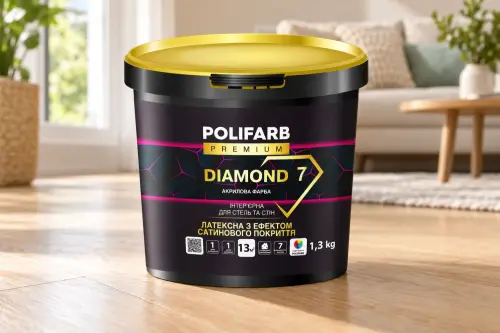
DIAMOND 7 | Satin | A compromise: easy to clean and hides small flaws better |
DIAMOND 2 | Deep matte | Reveals with visible plaster waves under side light |
Why DIAMOND 15 suits window reveals
DIAMOND 15 acrylic latex paint forms the densest and smoothest film among the interior DIAMOND paints, so dirt barely sticks and marks wipe off with a damp cloth. It goes on cement and cement-lime plaster, drywall and filler. The flip side of the sheen is that it shows the geometry, so the reveal must be flat. If the surface is not perfect, choose DIAMOND 7 satin acrylic latex paint or DIAMOND 2 deep matte acrylic latex paint.
How to prepare and paint window reveals
- Levelling. Reveals must be flat: plaster, apply finishing filler, sand with fine sandpaper and remove the dust.
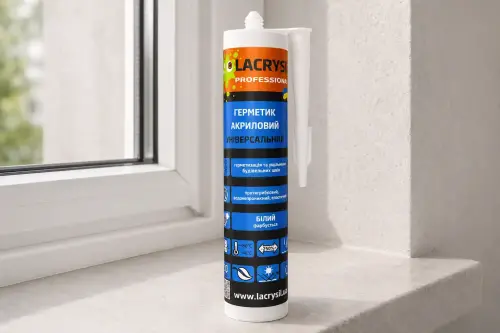
- Joint with the frame. Fill the gap between the reveal and the window with Universal acrylic sealant: it takes paint, so the joint disappears under the finish.
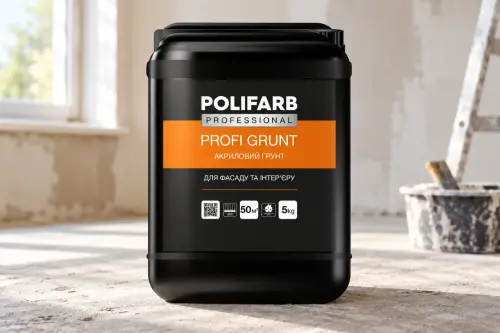
- Priming. Apply PROFI GRUNT deep-penetrating acrylic primer: it evens out absorption so the paint gives a uniform colour in two coats.
- Colour. Reveals are almost always white: the window looks bigger and the room brighter. DIAMOND paints can be tinted if the reveal should match the wall; the colour visualizer helps pick the shade.
- Application. Two coats with a short-nap roller, corners and joints with a brush. Room temperature +10…+25 °C, humidity up to 80%. Apply the next coat after the previous one has dried.
- Care. Wait 7–14 days before the first wet cleaning, until the film reaches full strength. Use a soft sponge, no abrasive cleaners.
If the reveals are cold and sweat
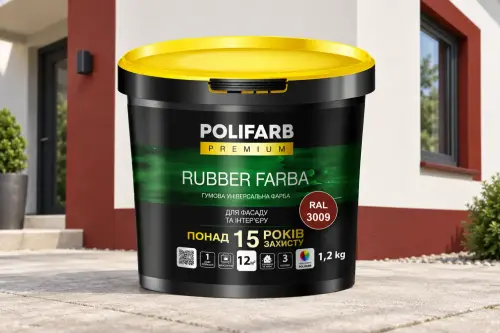
Next to a glazing unit with condensation, on reveals with micro-cracks or on exterior reveals, interior paint is not the best choice. Use RUBBER FARBA acrylic rubber paint with its elastic, water-resistant film instead. How to paint such reveals is covered in rubber paint for window reveals.
What to buy
For warm interior reveals that need washing: PROFI GRUNT, acrylic sealant for the frame joint and DIAMOND 15 in two coats (or DIAMOND 7 if the surface is not perfect). Calculate the amount for all windows with the paint consumption calculator.
FAQ
Which paint for window reveals is easiest to clean?
A latex paint with Class 1 wet scrub resistance and a silk or satin sheen, such as DIAMOND 15 or DIAMOND 7.
Matte or gloss paint for window reveals?
Satin or silk is best. Gloss shows flaws, deep matte gets dirty faster.
How many coats should go on window reveals?
Two coats over a primed surface. DIAMOND paints use 125 g/m² per coat.
When can freshly painted reveals be washed?
Once the film has reached full strength, usually after 7–14 days.