Selected package
Leftover:
We use necessary cookies for the cart, session, and security. Analytics and marketing cookies are enabled only after your choice. Learn more
Polifarb App
Add the store to your home screen for faster access and an app-like full-screen experience.
It installs in a couple of taps — here is how.
Tap in the Safari toolbar
Choose “Add to Home Screen”
To install the app, open this site in the Safari browser.
Search
Start typing to see suggestions.
Save to favorites
Add to compare
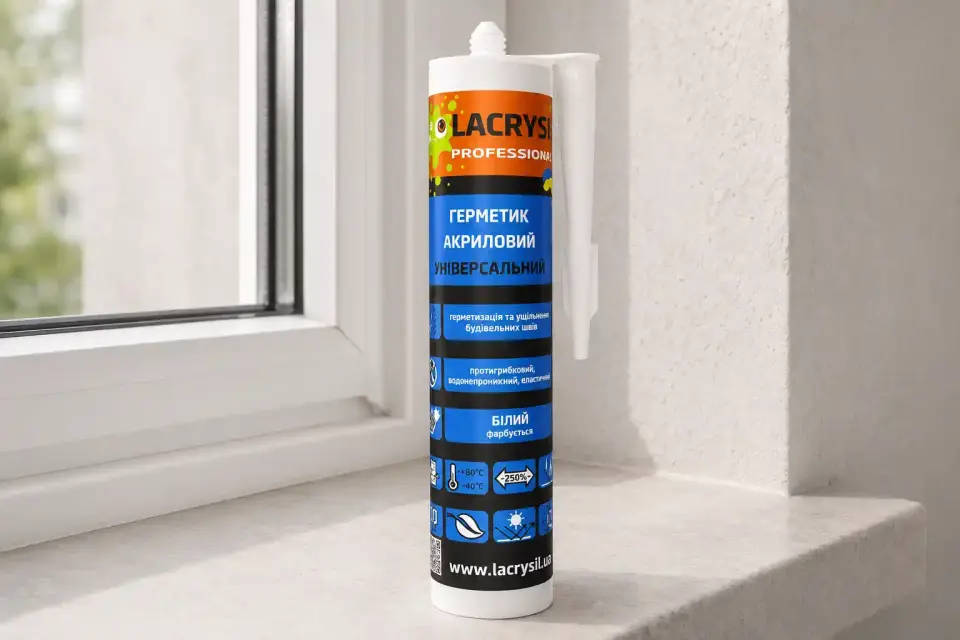
The workhorse paintable acrylic sealant. Windows, doors, skirting, sills and cracks A white bead that disappears under filler and paint
1 available
Maximum joint depth: 5 mm
Selected package
Leftover:
Cheaper package combination
pcs
Leftover:
Universal acrylic sealant: general-purpose protection for interior and exterior joints.
No silicone can take paint. An acrylic bead can be filled and painted along with the reveal, wall or skirting, which is why acrylic goes wherever the joint must disappear and silicone is kept for wet zones.
Window frames, door openings, skirting, sills, cracks and gaps in mineral substrates and timber, plus filling joints in external wall insulation systems.
It stays flexible through seasonal movement and adheres well to glass, timber, stone and mineral surfaces.
Higher than ordinary acrylic, so it handles exterior work and damp rooms, but it is still not silicone: bath and shower joints want the sanitary silicone.
Apply at +10 to +35 °C, higher than the sanitary acrylic. Service -40 to +100 °C. White, 0.2 and 0.4 kg, 18-month shelf life, water clean-up while fresh.
Not for permanent immersion or high-movement joints. Use silicone or an MS-polymer product for facade expansion joints and vibrating structures.

A 0.4 kg cartridge gives about 15 m of 4×4 mm bead. Maximum depth 5 mm.
The 5 mm depth limit matters: acrylic cures by losing water, and a deeper bead stays raw in the core. Pack deep gaps with backer rod first.
Preparation
Application
Painting
Afterwards
| Material / Base | Concrete, brick, gypsum, plasterboard | Stone, granite, marble | Mirror, glass | Wood, chipboard, fiberboard, MDF, plywood | Tile, ceramic, porcelain | Primed metal | Plastic, PVC | Polystyrene |
|---|---|---|---|---|---|---|---|---|
| Concrete, brick, gypsum, plasterboard | ||||||||
| Stone, granite, marble | ||||||||
| Mirror, glass | - | |||||||
| Wood, chipboard, MDF, fiberboard, plywood | ||||||||
| Tile, ceramic, porcelain | - | |||||||
| Primed metal | ||||||||
| Plastic, PVC | - | - | - | |||||
| Polystyrene |
Acrylic or silicone?
Acrylic where the joint will be painted or filled; silicone in wet zones. Painting is the deciding difference.
When can I paint?
Once fully dry: a day for a wide bead.
Why the 5 mm depth limit?
Acrylic cures by losing water; a deeper bead stays raw inside.
Bathrooms?
In a damp room yes, but use sanitary silicone on the bath joint itself.
Why +10 °C?
That is the rated minimum for this product; the sanitary acrylic goes from +5 °C and joint sealant "A" from -25 °C.
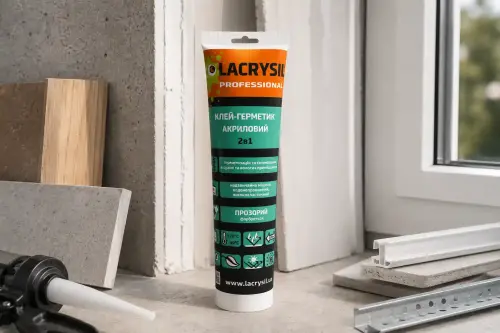
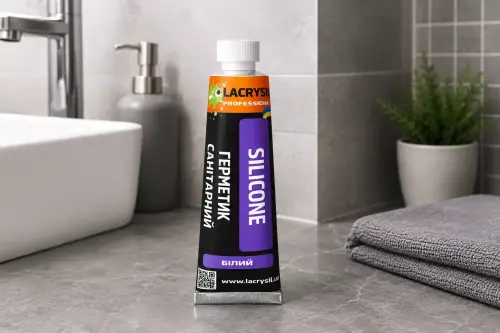
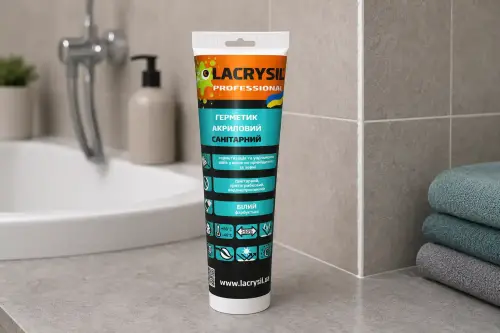
4 similar products