











Active filters
ClearShowing 1–3 of 3 products
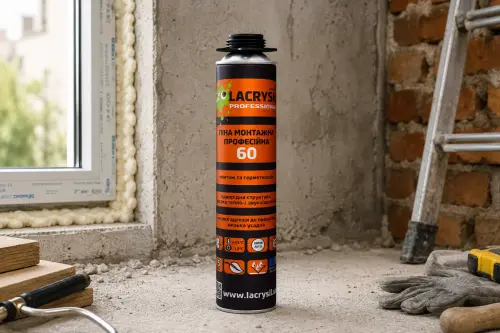
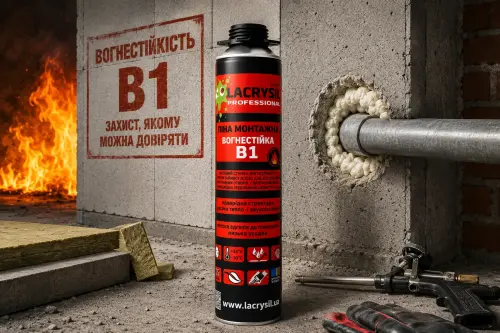
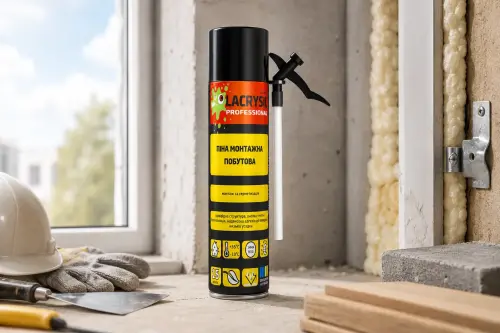
mounting foams are used for filling gaps, cavities, and installation joints, installing window and door blocks, insulating joints, and fixing selected building materials. The section includes household and professional foams, fire-resistant formulas, adhesive foams for insulation boards and blocks, and a cleaner for fresh foam residue and tool care.
What mounting foams help with
filling cracks, gaps, holes, cavities, and installation spaces;
installing and sealing window and door blocks;
sealing joints, pipe penetrations, and areas where a cavity needs to be filled;
auxiliary thermal and acoustic insulation of joints when applied correctly;
fixing insulation boards, panels, foam blocks, and aerated concrete blocks with adhesive foams.
How to choose the foam type
Household foam is suitable for work with an adapter tube when an applicator gun is not needed.
Professional foam is used with an applicator gun when application control and repeatable work matter.
Fire-resistant foam is appropriate for assemblies that require this material type according to the project or site requirements.
Adhesive foam is used for installing insulation boards, panels, foam blocks, aerated concrete blocks, and some building structures.
Foam cleaner is used for fresh residue, can valves, applicator guns, and tools.
What to check before work
can type: household with a tube or professional for an applicator gun;
substrate material, joint width, cavity volume, and whether the part needs fixing;
application temperature, humidity, and surface preparation recommendations;
foam expansion after application and final curing time;
the need to clean fresh residue before curing and protect the formed joint from conditions specified by the manufacturer.
The foams here differ mainly in post-expansion. Professional gun foam adds only 15–30% volume and does not bow the frame, while household foam with a straw grows 2–3 times, so the gap is filled to about a third of its depth; both can be applied from -10 °C. Red fire-rated B1 foam is used for fire-rated door and window frames and is applied from +10 °C. Once cured, any foam must be covered against UV with sealant, plaster or trim.