











Active filters
ClearShowing 1–2 of 2 products
mounting glues help fix panels, skirting boards, window sills, decor, and sheet materials without unnecessary visible fasteners. They are chosen when a part needs to be installed neatly without damaging the face surface with drilling or screws. The category includes PVA, acrylic, rubber, and MS-polymer formulas for different substrates, element weights, and installation conditions.
What mounting glues help with
fixing elements without visible screws, nails, or extra drilling;
installing skirting boards, moldings, panels, window sills, decor, and sheet materials;
creating a neat joint on visible areas;
handling repair, finishing, furniture, and auxiliary installation tasks;
matching the formula to a specific substrate: wood, concrete, gypsum, MDF, PVC, metal, ceramic, or combined materials.
How to choose the glue type
PVA glues are suitable for wood, cardboard, paper, plywood, and joinery tasks where easy application and a clean bond matter.
Acrylic mounting glues suit most interior finishing jobs, including skirting boards, panels, decor, sheet, and porous materials.
Rubber glues are used for stronger fixing and tasks that require compatibility with different building substrates.
MS-polymer glues are chosen when an elastic joint, mixed-material bonding, or installation in more demanding conditions is needed.
What to check before buying
the material of the substrate and the part being fixed;
where it will be used: indoors or outdoors, dry areas or areas with higher moisture;
the element weight and required initial grab time;
the application method: dots, beads, or full-surface spreading when allowed by the instructions;
pack size, color, application temperature, and manufacturer limitations.
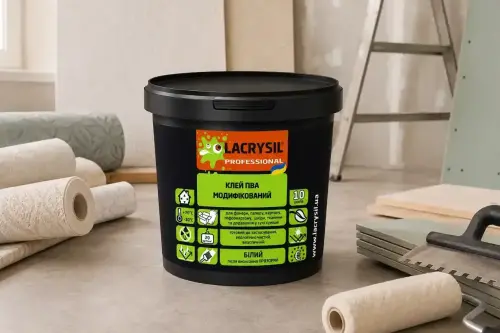
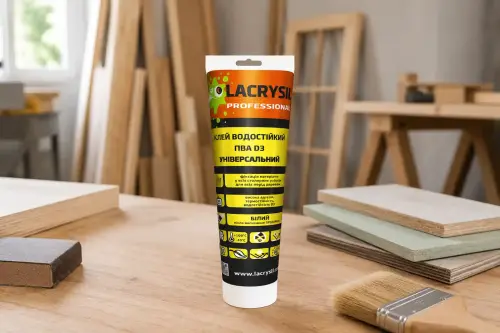
Modified PVA is a finishing glue for cardboard, drywall, fabric, wallpaper and glass-fibre wallcoverings, and it is also added to plaster and cement mortars to improve adhesion. PVA D3 is a D3 water-resistance class wood glue to EN 204 for timber, chipboard, plywood and veneer: it holds 1000 kg/m² and copes with condensation and humidity in kitchens and bathrooms. Both dry clear, wash off with water while fresh and work best at +18…+22 °C.