Acrylic paint is a water-based dispersion paint in which acrylic polymers form the film. It thins with water, has almost no odor during work, dries quickly and leaves a water-resistant, flexible film, which is why it is used both indoors and on facades. Below: composition, how it dries, a comparison with other paints, and which acrylic paints to use for which job.
What acrylic paint is made of
- Binder: an acrylic polymer emulsion (polyacrylates based on methyl, ethyl and butyl acrylate and their copolymers). It determines strength, water resistance and flexibility.
- Pigments provide color and hiding power.
- Water is the thinner and carrier.
- Additives: thickeners, stabilizers, drying retarders, preservatives.
Ukrainian manufacturers often label these paints VD-AK, short for water-dispersion acrylic.
How it dries
Fresh paint looks milky. As the water evaporates, the polymer particles fuse together (coalescence) into a clear, strong film that holds the pigment. That is why a dried coat always looks slightly darker than a wet one. Once dry, the paint no longer washes off with water.
Properties
- fast drying: touch-dry in 15–60 minutes, fully dry in a few hours;
- no harsh odor and no organic solvents during application;
- a flexible film that does not crack with temperature changes;
- water and weather resistance once dry;
- good adhesion to concrete, brick, plaster, drywall and wood;
- can be tinted with pastes into thousands of shades;
- applied by brush, roller or sprayer, and can be used for relief and texture.
Acrylic vs other paints
Property | Acrylic | Oil-based | PVA water-based |
|---|---|---|---|
Base | Water and acrylic polymer | Drying oil (linseed) | Water and PVA or other polymers |
Drying time | 15–120 min | 1–7 days | 1–4 hours |
Odor during work | Minimal | Strong | Minimal |
Flexibility | High | Medium | Medium |
Washability | Class 3 to class 1 | High | Depends on formula, often low |
Price | Medium to high | High | Low to medium |
Where acrylic paints came from
The first synthetic paints appeared in the 1930s, based on nitrocellulose and polyvinyl acetate. Acrylic resins developed rapidly after World War II. In 1949 Leonard Bocour and Sam Golden released Magna, a solvent-based acrylic artists' paint used by Mark Rothko, Willem de Kooning and Barnett Newman. Water-based artists' acrylics followed, including Henry Levison's Liquitex line, used by Andy Warhol and David Hockney. Today acrylic is the main type of interior and facade paint.
Where acrylic paints are used in renovation
Ceilings and low-traffic walls
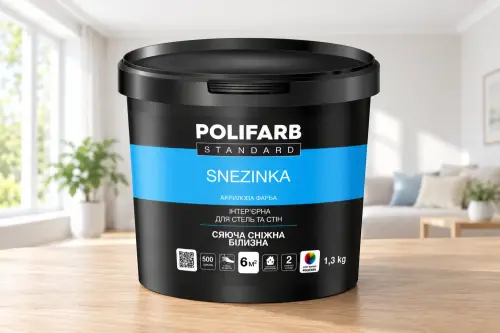
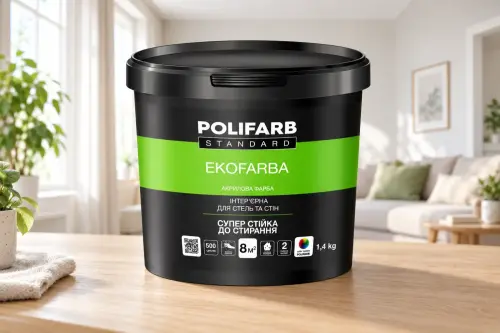
Bedrooms, living rooms and ceilings that nobody washes. SNEJINKA acrylic paint gives a bright white deep matte that does not yellow, and EKOFARBA acrylic paint withstands 500 dry-scrub cycles and hides hairline cracks.
Kitchens, hallways, children's rooms
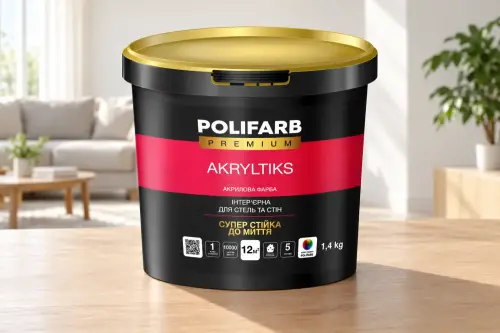
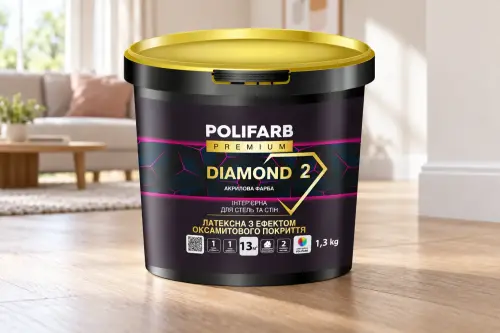
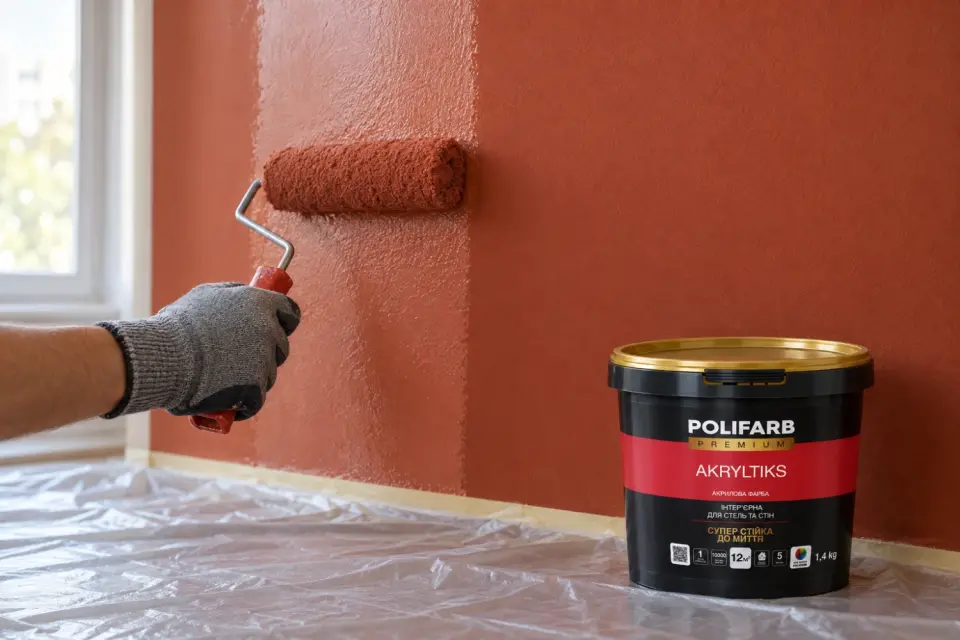
These need class 1 or class 2 wet-scrub resistance. AKRYLTIKS acrylic paint is class 2 for wet-scrub resistance and does not drip from the roller. DIAMOND 2 acrylic latex paint gives a deep matte finish with class 1 for walls washed every week.
Facades
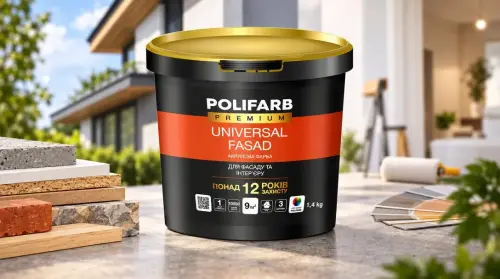
UNIVERSAL FASAD acrylic facade paint has class 2 washability and a declared facade protection of more than 12 years. For plinths, slate and metal there is RUBBER FARBA acrylic rubber paint with a flexible film. How acrylic differs from silicone on a facade is covered in the article acrylic vs silicone facade paint.
Surface preparation
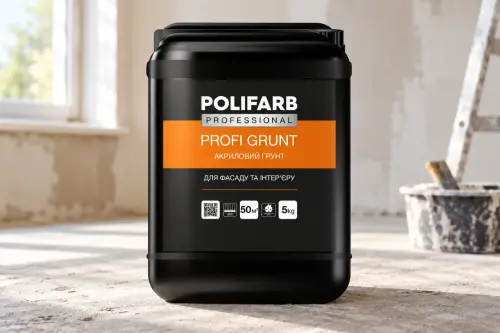
Any acrylic paint goes onto a primed surface. PROFI GRUNT deep-penetrating acrylic primer strengthens the surface and evens out absorption, so the paint covers in 2 coats instead of 3.
What to choose
Ceilings: SNEJINKA. Bedrooms and living rooms: EKOFARBA. Kitchens and hallways: AKRYLTIKS or DIAMOND 2. Facades: UNIVERSAL FASAD. Primer for all of them: PROFI GRUNT. For choosing a wall paint room by room, see how to choose wall paint, and for why similar-looking paints cost different amounts, read why paint prices differ.
FAQ
What is the difference between acrylic and emulsion paint?
Both are water-based, but acrylic paint uses acrylic polymers as the binder. The film is stronger, more water-resistant and more flexible than in cheap PVA paints.
Can you wash walls painted with acrylic paint?
It depends on the wet-scrub class. Class 1–2 paints such as DIAMOND 2 (class 1) or AKRYLTIKS (class 2) can be washed regularly; paints rated for dry scrub should only be wiped.
How long does acrylic paint take to dry?
Touch-dry in 15–60 minutes, fully dry in a few hours. The recoat time is on the label.
Can acrylic paint be used outdoors?
Yes, if it is an acrylic facade paint designed for rain, frost and UV.