Paint runs and sags on a wall can be fixed after drying without repainting the whole room: sand the sag with fine abrasive paper, remove the dust, spot-prime if needed and repaint the whole surface with a thin coat. The key condition is that the paint has fully dried and hardened.
Why paint goes on unevenly
Before you fix anything, find the cause so you do not repeat it in the next coat. Runs usually come from three things:
- Too thick a coat. Trying to cover the colour in one go is the main mistake. The paint does not set in time and slides down under its own weight.
- Over-thinning. Too much water or solvent and the paint loses its viscosity.
- The wrong tool. A roller with the wrong nap or an overloaded brush leaves drips and ridges.
How to fix runs after drying: step by step
The method depends on the surface and the size of the defect. Wait until the paint is fully dry first, usually 24–48 hours depending on the type of paint.
Step 1. Spot sanding
Do not try to cut the sag off with a scraper: it is easy to tear the paint down to the filler or metal and make the defect larger.
- Use fine abrasive paper, P180–P240, or a sanding block.
- Work in small circles on the sag only, without touching the flat area around it.
- Sand until you can no longer feel the edge between the defect and the surface.
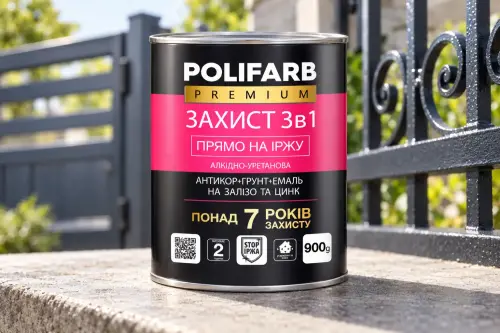
If the run is on a pipe or a metal profile painted with Zahyst 3in1 anti-corrosion primer-enamel, wet-sand with slightly dampened paper to avoid deep scratches.
Step 2. Remove the dust
Sanding dust stops the new coat from lying flat: the paint goes on lumpy and soon peels. Brush or vacuum the area, wipe it with a slightly damp lint-free cloth and let it dry.
Step 3. Spot priming
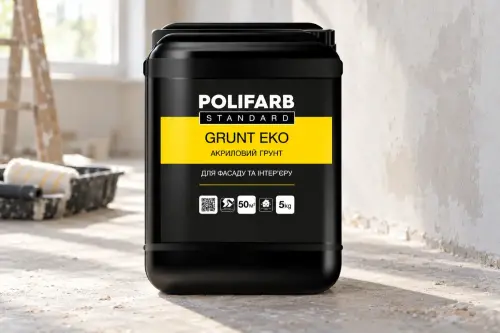
If sanding went through to the filler, prime that spot. Otherwise it absorbs paint differently from the rest of the wall and shows a different colour and sheen. For walls, use GRUNT EKO acrylic primer. If you went through to bare metal, apply a coat of the primer-enamel the part was painted with.
Step 4. Finish coat
Touching up just the spot with a brush will not work: it will show.
- Thin the paint strictly according to the label. For a finish coat of water-based paint, usually no more than 5–10 % water is allowed.
- Apply a thin coat to the whole surface, corner to corner, or to the entire part, rolling it out well.
How to avoid runs
- Two thin coats beat one thick coat. POLIFARB interior paints such as Barvy Pryrody acrylic paint are designed for two-coat application.
- Roll off excess paint on a grid or the ribbed part of the tray. The roller should be evenly loaded but not dripping.
- Keep the temperature between +5 and +30 °C. In heat the paint dries too fast to level out; in cold it stays liquid longer and runs.
- Apply in a W pattern, spread across, and make the final passes in one direction, for example top to bottom.
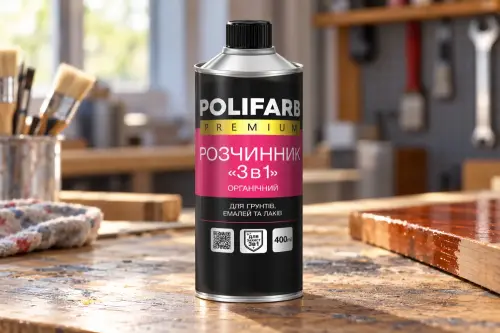
- With alkyd enamels, go easy on the solvent. Too much ROZCHYNNYK 3 in 1 organic solvent makes the film thinner and reduces hiding power and protection.
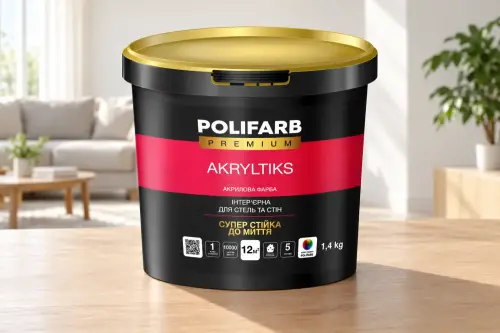
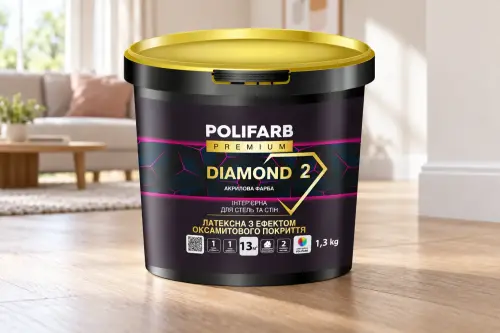
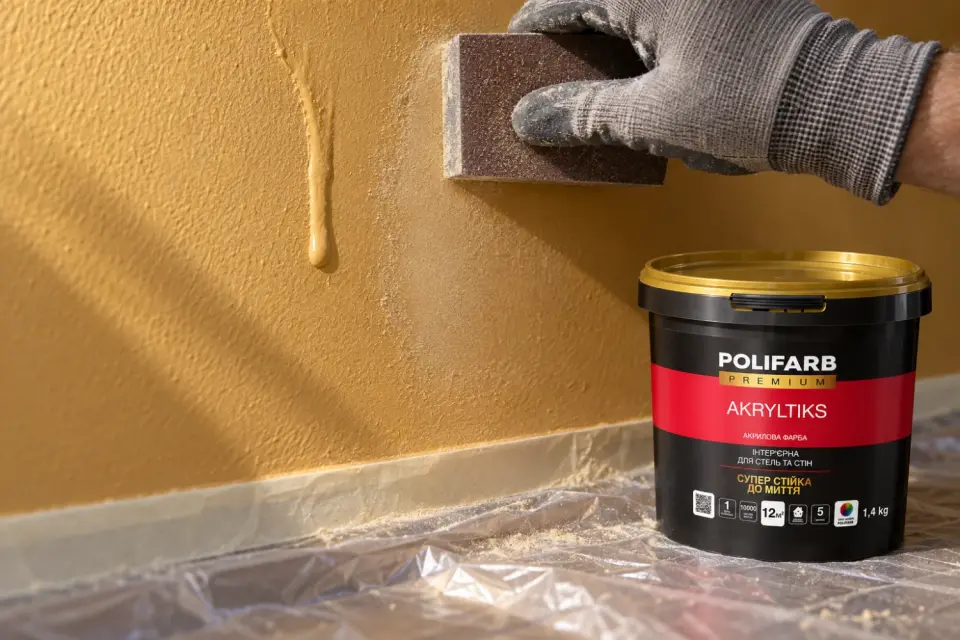
If you are painting for the first time or working on a ceiling, choose thixotropic AKRYLTIKS acrylic paint: it is thick in the bucket, thins under the roller and thickens again when you stop, so it does not drip from the tool or sag on vertical surfaces. A deep matt finish like DIAMOND 2 acrylic latex paint also hides small repair marks better.
Other reasons paint streaks or peels are covered in common wall painting mistakes, and tool cleaning in how to clean brushes and rollers.
What to buy
For the repair: P180–P240 abrasive paper, primer for sanded-through spots and the same paint you used, enough for the whole surface. For a run-free next job: thixotropic AKRYLTIKS or deep matt DIAMOND 2 and the right roller.
FAQ
How do I remove paint runs from a wall after drying?
Sand the sag with P180–P240 paper, remove the dust, prime any sanded-through spots and repaint the whole wall with a thin coat.
Can I cut a sag off with a scraper?
Better not: a scraper tears the paint down to the substrate and makes the defect bigger. Sand it instead.
How long should I wait before fixing runs?
Until the paint is fully dry and hard, usually 24–48 hours depending on the type of paint.
Why does paint drip from the roller?
The roller is overloaded, the paint is over-thinned or the coat is too thick. Roll off on a grid and apply two thin coats.