Most wall painting mistakes happen before the can is even opened: painting a weak or damp substrate, skipping primer, picking the wrong roller. The result is paint that peels, blisters, streaks or changes shade. Below are nine common mistakes and how to avoid them.
1. Painting a weak substrate
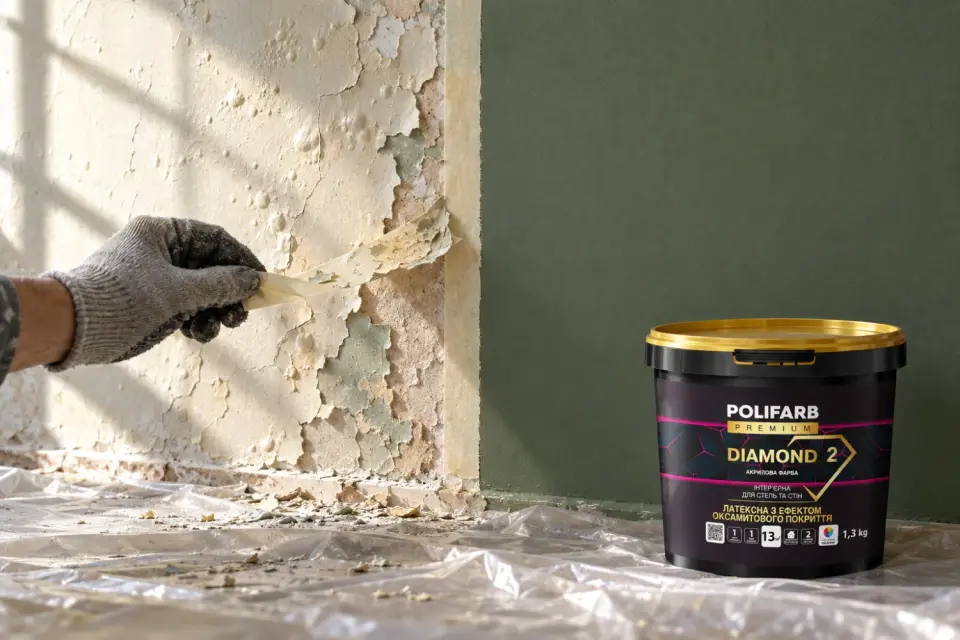
Paint often peels off in sheets not because it is bad but because the surface was not prepared. If chalk whitewash, dust or grease is left on the wall, the paint sticks to that rather than the wall. As the film dries, its tension pulls the whole layer away.
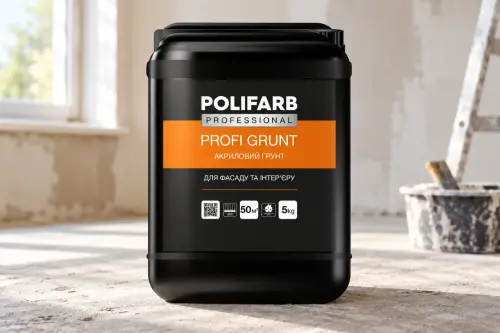
The tape test: stick a piece of masking tape to the cleaned wall and rip it off sharply. If plaster particles come away on it, the substrate needs consolidating, not just painting. Use PROFI GRUNT deep-penetrating acrylic primer, which binds dust within the layer. On whitewash specifically, see can you paint over whitewash.
2. Skipping primer on a sound wall
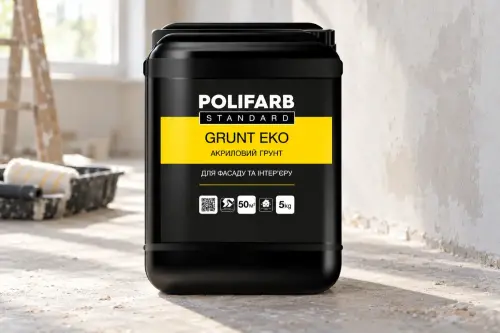
Even sound plaster or filler absorbs paint unevenly: porous spots show patches and uneven sheen, and the first coat soaks into the substrate. For ordinary surfaces, one coat of GRUNT EKO acrylic primer at 100–200 g/m² is enough. More in how to prime walls before painting.
3. Painting a damp wall
On a damp wall, water trapped under the film tries to escape as vapour when the wall warms up or the temperature changes. The result is blisters. Indoor painting should be done at air humidity no higher than 60–70 %. Above that, the paint cures poorly and loses its stated durability and washability.
4. Ignoring temperature
Optimal conditions for most interior paints are +15…+25 °C. In heat the paint dries too quickly to level out; in cold it stays liquid longer and runs. The limits are on the can.
5. Not keeping a wet edge
The main problem on large areas is roller marks and lap lines. Keep a wet edge: do not let paint dry at the boundary of the section you have just painted. Each new roller pass should overlap paint that is still wet. Apply in a W pattern, spread across, and make the final passes in one direction.
6. Skipping sanding between coats
Even expensive silk or velvet-effect paint looks cheap on an uneven wall. After the first, levelling coat the surface often raises fibres, especially on filler. Sand lightly with P240–P320 paper and remove the dust before the finish coat. For preparing filler for paint, see putty before painting.
7. Using the wrong roller
Material | Roller |
|---|---|
Acrylic water-based paints | Short or medium nap, nylon or microfibre |
Gloss enamels | Minimal nap, flock or velour, to avoid orange peel |
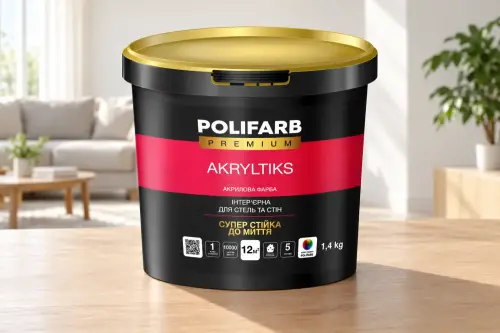
Wash a new roller in soapy water and let it dry before use so it does not shed fibres on a fresh wall. If you are painting for the first time, thixotropic AKRYLTIKS acrylic paint does not drip from the roller or spatter, and the joins between passes come out even.
8. Applying one thick coat
A thick coat does not set in time and runs. Two thin coats give an even colour with less risk of sags. If runs have already formed, see how to fix paint runs after drying.
9. Choosing the wrong paint for the room
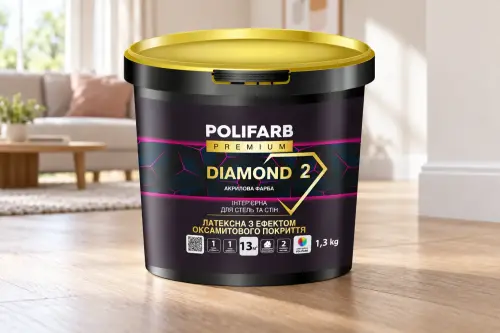
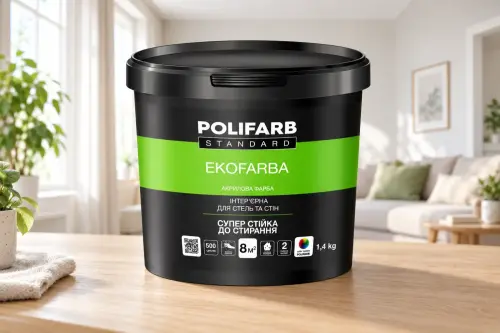
Bedroom paint will not survive kitchen cleaning. EKOFARBA acrylic paint is rated for 500 dry abrasion cycles, for rooms where walls are not washed. Kitchens and hallways need class 1 wet scrub resistance, like DIAMOND 2 acrylic latex paint, whose deep matt finish also hides minor irregularities.
Checklist before you buy
- Substrate: what are you painting — concrete, plaster, filler, wood, metal, old paint.
- Conditions: humidity and temperature in the room.
- Quantity: work out the area with the paint coverage calculator and add 10 % for absorption and touch-ups.
- Tools: do not skimp on rollers. A properly washed roller lasts several jobs; see how to clean brushes and rollers.
What to buy
A basic wall kit: PROFI GRUNT for weak substrates or GRUNT EKO for sound ones, paint matched to the room (DIAMOND 2 for washable walls, EKOFARBA for bedrooms, AKRYLTIKS for ceilings and beginners), P240–P320 abrasive paper and a roller suited to the paint.
FAQ
Why is paint peeling off the wall?
Usually because of a weak substrate: dust, whitewash, grease. The paint holds onto those, not the wall. Do the tape test and consolidate with a deep-penetrating primer.
Why did blisters appear after painting?
The wall was damp or air humidity was above 60–70 %. Water under the film escapes as vapour and lifts the paint.
How do I paint a wall without streaks?
Keep a wet edge, apply in a W pattern and make the final passes in one direction.
Should I sand between coats of paint?
Yes, if the first coat has raised fibres: sand with P240–P320 paper and remove the dust.