Save to favorites

Add to compare

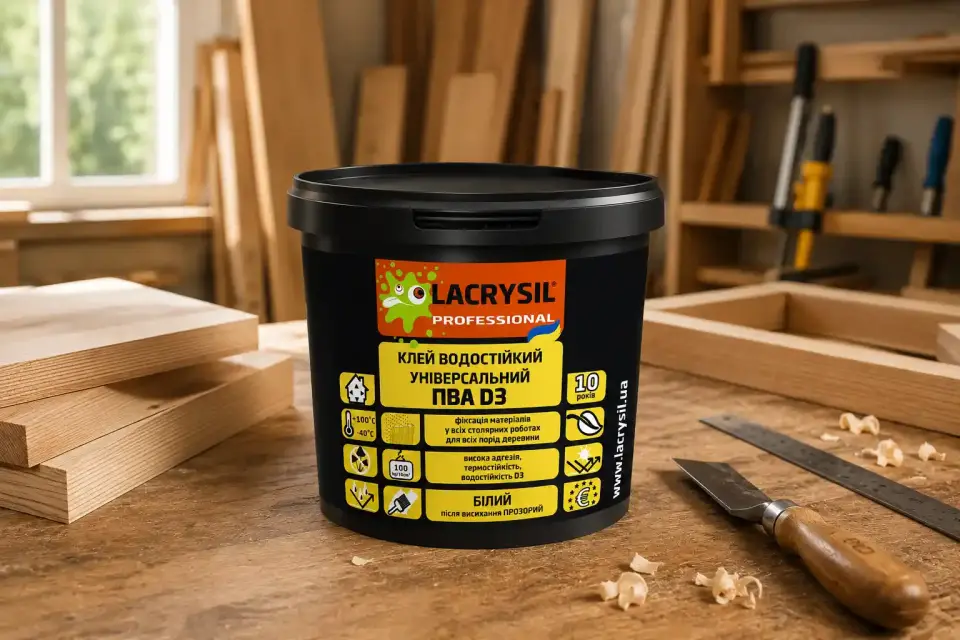
PVA D3 glue, White, transparent after drying, 10 kg

5.0 (1)

A D3 water-resistant woodworking PVA. 1000 kg/m² Dries clear Suitable for hot and cold pressing

Specifications

Color:
White, transparent after drying
Consumption:
0.15 - 0.2 kg/m²
Storage term:
12 months
Drying time:
24 hours
Operating temperature:
-40°C ... +100°C
Packaging:
10 kg
Base:
polyvinyl acetate
Application temperature:
+18°C ... +22°C

Choose a variant

5 available

Consumption calculator

Description

PVA D3 is a professional water-resistant polyvinyl acetate adhesive for timber.

What D3 means

EN 204 grades run D1 to D4. D1 is dry rooms only; D2 takes brief damp. D3 covers frequent contact with running water or condensation and high humidity: kitchen furniture, worktops, windows, doors, stairs and bathroom joinery.

Hot and cold pressing

It works both ways: clamped cold, or heated for much faster set when veneering and facing panels.

Beyond timber

All wood species, chipboard, hardboard, plywood, veneer, facing materials, card and plasterboard, leather, fabric, porcelain, glass, tile and vinyl. Also an additive for chalk and cement mixes.

A clear joint

It dries clear, so the glue line does not show on pale timber or at veneer seams. Full strength at 24 hours; parts leave the press much sooner.

Conditions

Optimum application at +18 to +22 °C: narrower than assembly adhesives. Service -40 to +100 °C. 0.15, 0.4, 0.75, 2 and 10 kg, 12-month shelf life, water clean-up.


How much you need

0.15–0.2 kg/m² at a 0.3–0.5 mm bed. Count the glued area, not the size of the part.

  • 0.15 kg: furniture repairs and a few joints;
  • 0.4 kg covers about 2 m²;
  • 0.75 kg covers about 4 m²;
  • 2 kg covers about 11 m²;
  • 10 kg covers about 57 m²: workshop quantities.

End grain drinks far more than face grain: coat it twice, letting the first pass soak in.

Application

Preparation

  • flatten and dust off the timber; moisture content 8–12 %;
  • degrease oily species such as teak;
  • warm the shop to +18–22 °C, and the adhesive with it.

Cold pressing

  • spread an even coat on one face;
  • clamp or press the parts together;
  • hold under pressure for 30–60 minutes;
  • full strength at 24 hours.

Hot pressing

  • heat cuts set time dramatically; match the schedule to thickness;
  • press veneers briefly so the joint does not starve.

Afterwards

  • wipe squeeze-out before it dries: cured glue rejects stain and lacquer;
  • wash tools with water;
  • do not freeze; 12 months.

Compatibility table

Material / Base Concrete, brick Gypsum, plasterboard Wood, chipboard, fiberboard, MDF, plywood Polystyrene
Gypsum, plasterboard
Leather, fabric
Wallpaper, paper
Wood, chipboard, fiberboard, MDF, plywood
Tile, ceramic, porcelain
Polystyrene

FAQ: D3 grade, pressing and temperature

  • Kitchen worktops?
    Yes. D3 is exactly for splashes, condensation and humidity. Permanent immersion needs D4.

  • Versus ordinary PVA?
    Water resistance. Household white PVA is usually D2 and fails in kitchens and bathrooms.

  • Clamping time?
    30–60 minutes at room temperature; full strength after a day.

  • Will the glue line show?
    No, it dries clear, but wipe squeeze-out immediately or it will reject stain.

  • Can I glue in the cold?
    No; +18–22 °C is needed for the film to form properly.

Video
Reviews (1)

Similar products

1 similar products