









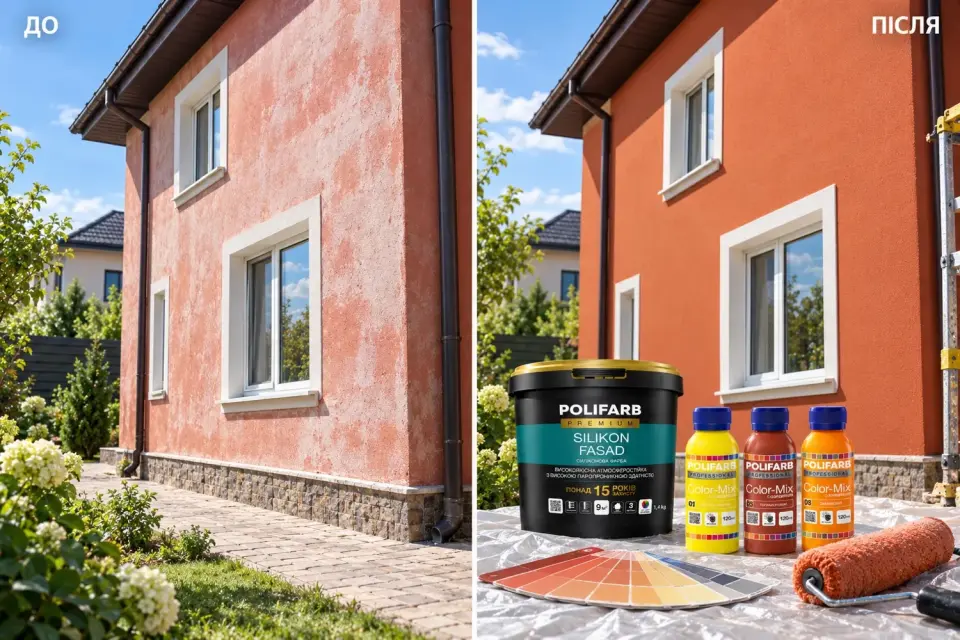
Colour fades when sunlight breaks down the pigments in the paint while rain and frost slowly wear away the binder. A saturated red or yellow on a south-facing wall turns pale within a few seasons, while beige or grey on the same wall holds for years. Here is why it happens, which shades are most sensitive, how to choose paint and pigments so the colour lasts, and what to do if a wall has already faded.
Why paint fades
UV breaks down pigments. Some pigments, especially bright organic ones, gradually lose colour in the sun. The longer the direct sunlight, the faster it goes.
The binder ages and chalks. When the paint film breaks down from the surface, a whitish powder appears that comes off on your hand, and the colour under it looks dusty. An acrylic binder resists UV less well than a silicone one.
The wrong paint or the wrong tint. Interior paint used outdoors, or a tinting paste not made for facades, fades faster and unevenly.
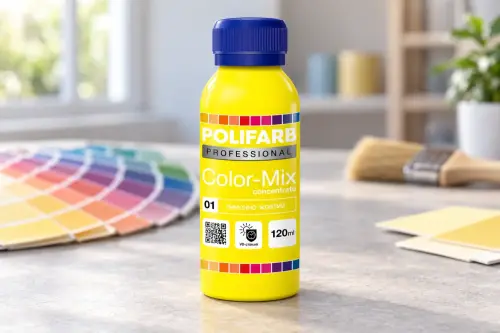
Too much tint. Adding more paste than the instructions allow weakens the film and it holds colour less well. For COLOR MIX the limit is 10% of the paint volume.
Fading is not the same as a colour mismatch. If one part of a wall differs from the next straight after painting, the sun is not to blame: the paint was tinted in different batches or not mixed.
Which colours fade faster
Shades | How they behave in the sun |
|---|---|
Saturated reds, yellows, oranges, bright blues, violets | Most sensitive: these colours are often made with organic pigments and pale first on the sunny side |
Beige, sand, terracotta, browns, greys | More stable: they are usually built on mineral (oxide) pigments that UV barely breaks down |
White and light pastels | Fading is hardly visible, but dirt and chalking show more |
Very dark shades | Get very hot in the sun, so the facade under them works harder through temperature swings |
This is a rule of thumb: how stable a particular shade is depends on the pigments it is mixed from. For bright facade colours it is best to choose the pigments with a technologist.
How to choose paint so the colour lasts
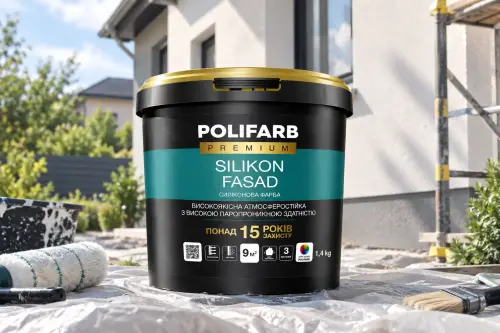
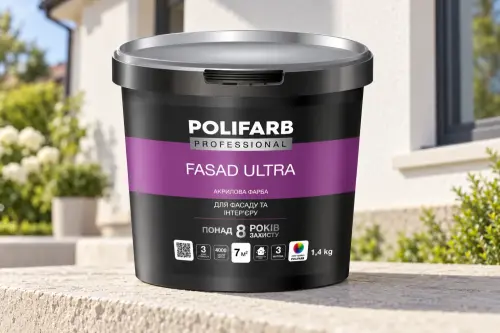
Facade paint for facades. For walls that get sun all day, silicone SILIKON FASAD is the better choice: facade protection of over 15 years is stated, and it is tinted in POLIFARB Color System. Acrylic FASAD ULTRA costs less, but its acrylic binder resists UV less well and the difference shows sooner on a south wall. See acrylic or silicone facade paint.
Tints with UV-resistant pigments. The pigments in COLOR MIX paste are UV-resistant, so a tinted wall does not fade in patches in its first season.
A colour with stability to spare. On a south wall in sun all day, a calmer shade lasts longer than a very bright one.
Lightfast POLIFARB pigments: ask for advice
POLIFARB has lightfast pigments for facade shades. If you have chosen a saturated colour, are painting a south-facing facade or want to repeat a colour that has already faded next door, write to us or call. A technologist will suggest the paint and base, and the pigments to build the shade from so it lasts as long as possible.
How to pick a colour in POLIFARB Color System and buy it
In POLIFARB Color System you can choose a shade, see how it looks, work out the tinting cost for the paint and pack size you need and put the tinted paint in your cart. It is ordered like any other item, with online payment and Nova Poshta delivery. To get the quantity and shade right, see paint tinting and colour matching.
How to paint for an even colour
Tint all the paint for the wall at once, not one bucket at a time.
Paint a test patch in an inconspicuous spot and look at it in daylight: colour looks different in sun and in shade.
Stir the paint thoroughly and mix buckets from different batches together in one container.
Paint a wall from corner to corner without breaks so there are no joins.
Apply as many coats as the data sheet says: a thin film lets UV reach the base sooner.
What to do if the colour has already faded
Run your palm over the wall. If white dust stays on it, the coating is chalking: wash and prime it before repainting.
If the paint holds firmly and has only paled, wash the wall and repaint in two coats.
For the new coat, use facade paint and UV-resistant pigments, and agree a saturated shade with a technologist.
FAQ
Why does facade paint fade?
UV breaks down some of the pigments, and sun, rain and frost gradually break down the binder. It shows fastest on saturated colours and on walls in sun all day.
Which facade colours fade least?
As a rule, beige, sand, terracotta, browns and greys, which are usually made with mineral pigments. Bright reds, yellows and blues fade more noticeably.
Can facade paint be tinted with any paste?
No. A facade needs a paste with UV-resistant pigments, such as COLOR MIX, at no more than 10% of the paint volume.
Does silicone facade paint fade?
Every coating changes over time, but a silicone binder withstands weather better than an acrylic one: SILIKON FASAD states facade protection of over 15 years. Colour stability also depends on the pigments.
Where can I pick a paint colour and buy it ready tinted?
In POLIFARB Color System on the site: choose a shade, see the tinting cost and place the order. For saturated facade colours, ask us about lightfast pigments.