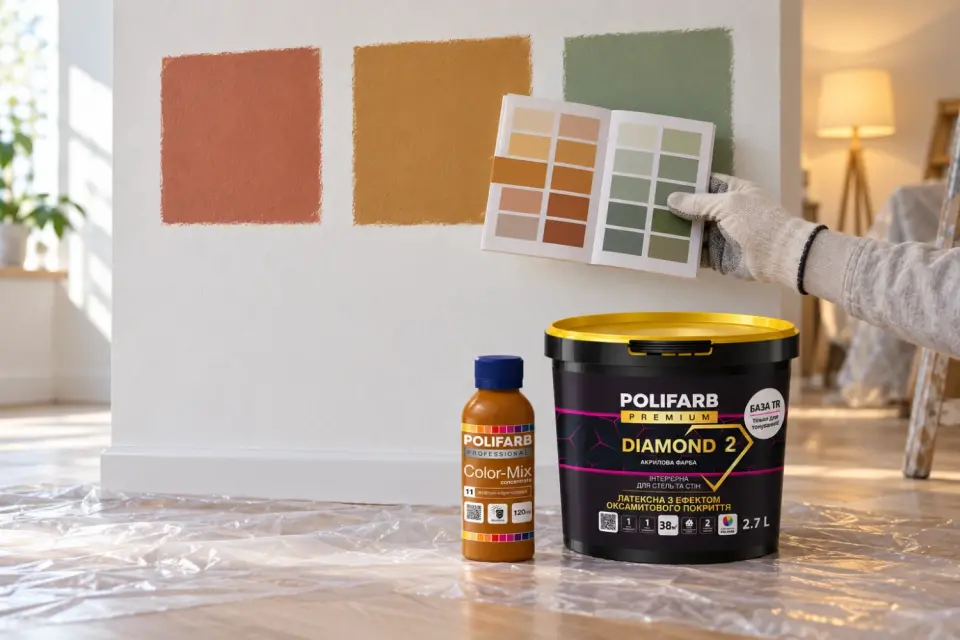
Paint tinting means colouring a white or clear base with pigment according to the recipe for the chosen colour. You can pick a shade online in the POLIFARB Color System visualiser: NCS and RAL catalogues, a preview on a photo of a room, facade or roof, and the tinting cost for a specific paint. Below: how to choose the colour, which base to use and how much tinted paint to buy.
How to choose a colour in the visualiser
- Pick a scene: interior, living room, bedroom, facade or roof.
- Pick a catalogue (NCS has about 2000 shades, RAL 190) and a colour. It is laid onto the surface with light and shadow preserved, like a real photo.
- If the colour is in a photo (wallpaper, fabric, a neighbour's facade), upload it to "Colour pick from photo" (PNG, JPG or WebP up to 5 MB) and click the area you want. The service finds the nearest shade in the catalogue.
- Compare a few options and note the colour code, for example RAL 7016 or NCS S 2005-Y20R. That code is what the paint is tinted to.
- The "Paints in this colour" block lists the paints that can be tinted to that shade, and the cost calculation shows the paint, the tinting and the total separately.
Every tintable paint has a colour-matching block on its product page that opens the visualiser with that paint and package already selected.
How to judge a colour without getting it wrong
- The screen is brighter than the wall. The preview deliberately imitates matt paint in daylight, so on the wall the colour will be less saturated and less deep than the swatch on your monitor. Screen settings shift the shade too.
- Do a test patch. Before buying the full amount, order a small quantity and paint a patch on the wall it is meant for.
- Look at the patch in different light. The visualiser shows daylight, so check the sample in the evening under artificial light as well.
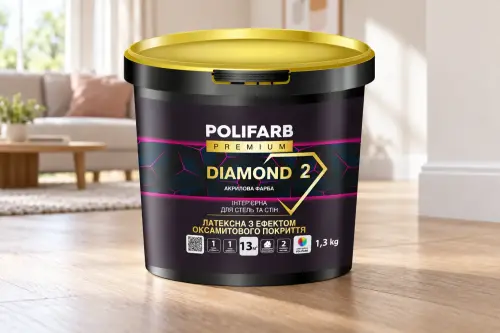
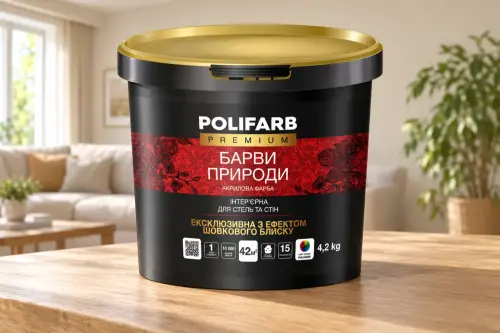
- Test with the paint you will buy. The same code looks different on deep-matt DIAMOND 2 acrylic latex paint and on Barvy Pryrody paint with a silky sheen.
For shade ideas see our article on 2026 colour trends, and for choosing the paint itself, how to choose wall paint.
Tinting bases: white W and clear TR
Light and pastel shades are tinted into white paint (base W). Saturated and dark colours need the clear TR base: it has no white pigment, so the colour comes out deep. TR bases are sold in litres.
Paint | Use | Clear tinting base | Rate per coat |
|---|---|---|---|
DIAMOND 2 | walls and ceilings that get washed often | 0.9 / 2.7 / 9 l | 125 g/m², 2 coats |
Barvy Pryrody | walls, silky sheen | 3 l | 125 g/m², 2 coats |
walls and ceilings, matt | 3 / 5 / 10 l | 130 g/m², 2 coats | |
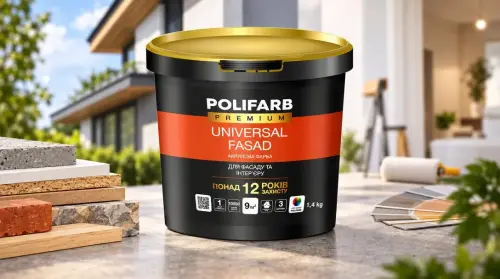
facade and interior | 1 / 3 / 10 l | 175 g/m², 2 coats | |
roof, plinth, metal, slate | 0.9 / 2.7 / 9 l | 150 g/m², 3 coats | |
doors, window sills, railings | base C 0.8 / 2.2 l | 0.25 mm coat |
Machine tinting or pigment
For an exact NCS or RAL colour, paint is machine-tinted: each code has a recipe for a specific base, and the colorants are dosed to it. That is how tinting works in the visualiser and in the shop.
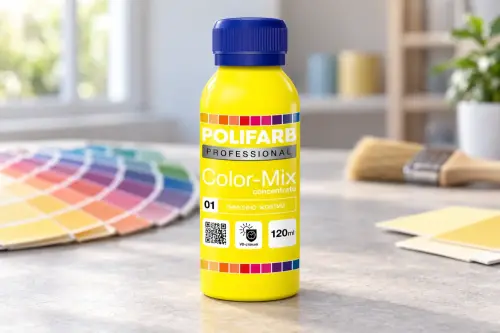
If you are matching a shade by eye or want to adjust a ready colour slightly, COLOR-MIX universal pigment is more convenient. It is a paste in a 120 ml bottle: 20 base colours that, with POLIFARB paints, give over 100 shades, both by mixing and by varying the amount of paste in the same volume. It works in water-based paints and in solvent-based products: interior and facade paints, alkyd enamels, wood stains, plasters and primers. The pigments are UV-resistant; use no more than 10 % paste by volume of the material.
Why tint the whole amount at once
Batch difference is the most common reason the last wall comes out a different shade. Even with the same recipe, paint tinted later can differ slightly. So:
- work out the paint in advance and tint the whole amount in one order;
- when tinting yourself, measure the same amount of paste into each bucket and do not open a bottle from another batch halfway through;
- keep some tinted paint for touch-ups. The paste keeps for 36 months, so the rest of the bottle is useful too. For storing paint, see how to store leftover paint.
How much tinted paint to buy
Calculate it the same way as white: area × rate per coat × number of coats + margin. Example: the walls of a 4 × 3 m room minus a window and a door are 34.2 m², with DIAMOND 2 at 125 g/m² in two coats:
- 34.2 × 0.125 × 2 = 8.55 kg;
- with a 10 % margin, 9.4 kg.
A margin matters more for tinted paint than for white: buying the same shade later means a new tint and the risk of a different batch. Check the area and number of packages in the paint consumption calculator. If you are buying a clear base in litres, enter the rate in l/m² from the base label and the package size in litres too: the calculator works with either unit.
What to buy
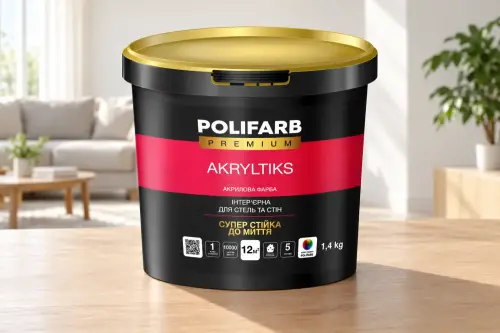
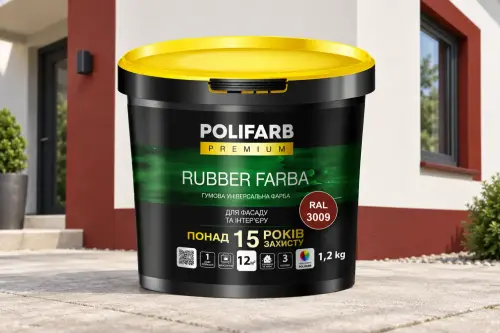
For walls that get washed, DIAMOND 2 or AKRYLTIKS in your colour; for the facade, UNIVERSAL FASAD; for the roof and plinth, RUBBER FARBA; for wood and metal, the 7-in-1 primer enamel. Choose the colour and get the tinting cost in the colour visualiser, and for your own shade or a top-up tint use COLOR-MIX paste.
FAQ
How do I match a paint colour from a photo?
Upload the photo to "Colour pick from photo" and click the area you want. The service reads the colour at that point and finds the nearest shade in the NCS or RAL catalogue.
Will the colour on screen match the paint on the wall?
Not exactly. The preview imitates matt paint in daylight, and on the wall the colour is less saturated than the bright swatch on screen. Do a test patch before buying.
What is the difference between base W and base TR?
White base W suits light and pastel shades. Clear TR has no white pigment and is used for saturated and dark colours.
Can I tint paint myself?
Yes, with COLOR-MIX paste. It works in water-based and solvent-based paints, but an exact NCS or RAL code is more reliably achieved by machine tinting to a recipe.