Neutral or acidic silicone is chosen by substrate, not by room. Acidic silicone bonds well to ceramics, glass, enamel and porcelain, so it is enough for a bathtub, shower or kitchen sink. Marble, concrete, natural stone, copper and mirrors need a formula that releases no acid. A wrong choice costs a damaged substrate, a dark joint and repeat work.
The difference between acidic and neutral silicone
Both types cure with moisture from the air; the difference is what they release while curing. Acidic silicone releases acetic acid, hence the vinegar smell. The acid reacts with alkaline and metal surfaces: marble and concrete get marked next to the joint, copper, brass, zinc and iron start to corrode. Neutral formulas release no acid, so they are gentler to sensitive materials. Always check the instructions of the specific sealant.
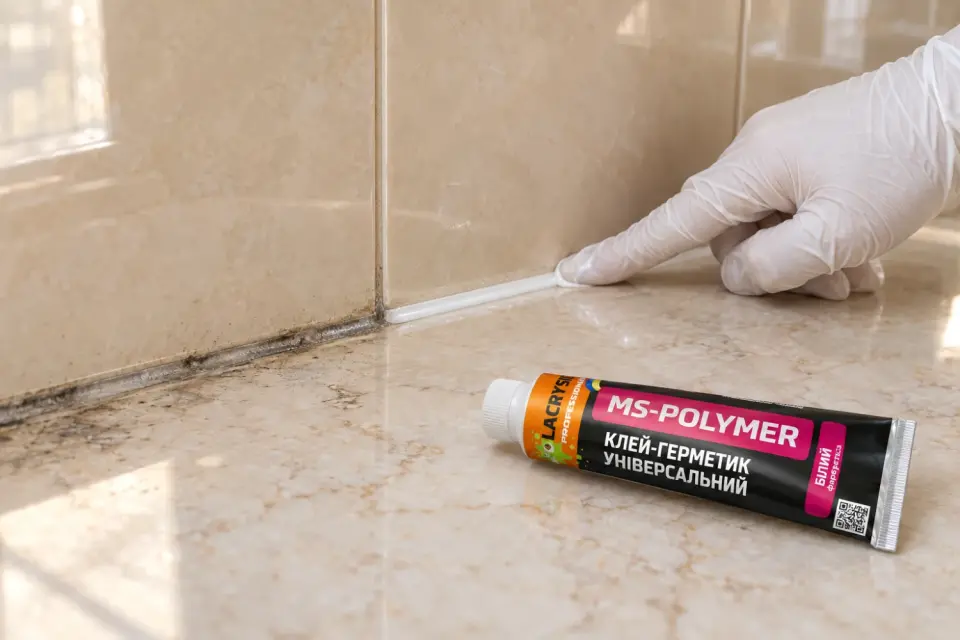
LACRYSIL silicone sealants are acid-cure. Where a neutral formula is needed, the catalogue offers an MS polymer adhesive-sealant instead: it contains no silicone, isocyanates or solvents.
What to use on your substrate
Substrate | Acidic silicone | What to use |
|---|---|---|
Ceramic tile, bathtub enamel, porcelain | yes | sanitary silicone |
Glass, glazing units, aluminium | yes | universal silicone |
Marble, natural stone, concrete, lime plaster | no | MS Polymer |
Copper, brass, zinc, unprotected iron | no | MS Polymer |
Mirrors | needs a separate check | MS Polymer, which lists mirrors among its substrates |
Painted wall, joint to be painted | no, silicone cannot be painted | acrylic sanitary sealant |
Bathroom and shower: sanitary silicone
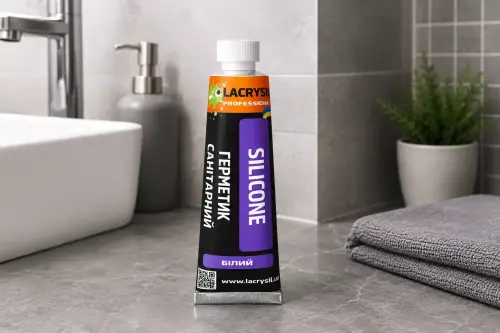
If a joint regularly meets water, steam, cleaning agents and temperature changes, use a material made for wet areas. Silicone sealant “Sanitary” contains fungicides that prevent mould growth while the joint is intact. It has practically zero shrinkage, so it does not pull away from the bathtub edge, handles joint movement up to 20 % and works up to +130 °C.
- bathtub, shower cabin, shower tray and tile joints;
- kitchen sink and countertop junctions;
- joints near a water heater and on hot water pipes;
- local repair of a white or clear joint.
A ceramic or enamelled bathtub and tiles are a compatible pair for acidic silicone. If the bath is surrounded by marble or a stone sill, acidic silicone does not go there.
Glass, windows and outdoors: universal silicone
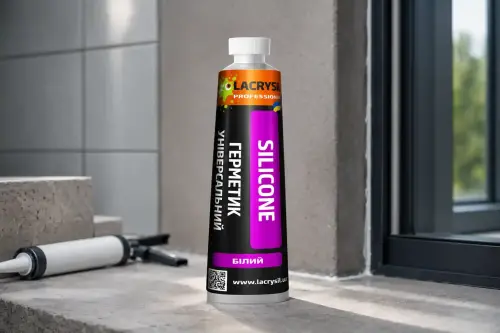
Silicone sealant “Universal” is made for non-porous materials: glass, window frames, glazing units, gutters. It is weather-resistant, does not shrink after drying, handles movement up to 20 % and protects expanding foam from UV. It is not used in constantly humid indoor joints, as it has no fungicides.
Stone, metal and mirrors: MS Polymer
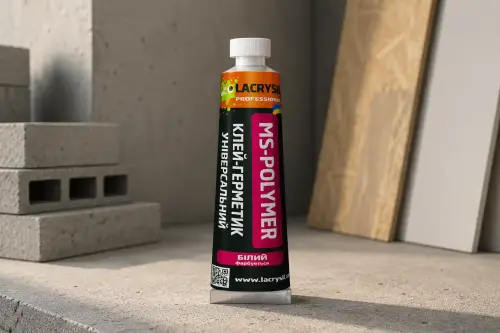
For sensitive substrates use MS Polymer adhesive-sealant “Universal”. One bead both bonds and seals; it works on metal, glass, mirrors and plastic and in service from -40 to +100 °C. The clear version suits a visible joint in a shower cabin. Apply at +10 to +35 °C; curing takes 24–48 hours.
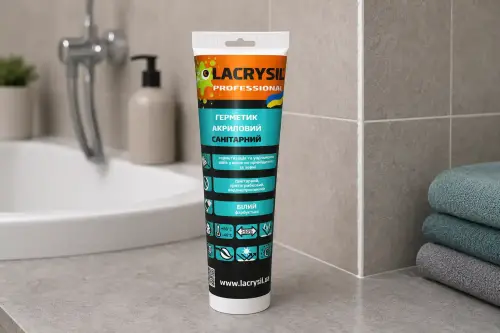
If the joint next to the wall will be painted, silicone will not work at all. Use acrylic sanitary sealant with antiseptics, which takes paint. More in the article can you paint sealant.
Common mistakes
New silicone will not make up for poor preparation. The old dark joint must be fully cut out, and the substrate washed, degreased and dried.
- applying over old mould;
- working on a wet or greasy surface;
- acidic silicone on marble, concrete or a copper pipe;
- universal silicone without fungicides on a constantly wet joint;
- water on the joint before it has cured.
Step-by-step application is covered in the article how to apply silicone sealant, and waiting times before the first shower in how long sealant and silicone take to dry.
What to choose
Bathtub, shower, sink on ceramics and enamel: sanitary silicone, white or clear. Glass, windows, gutters: “Universal” silicone. Marble, stone, non-ferrous metals and mirrors: MS Polymer “Universal”. A joint to be painted in a humid room: acrylic “Sanitary”.
FAQ
Is acidic silicone always bad?
No. It works well on ceramics, glass, enamel and aluminium. Do not use it on marble, concrete, natural stone or non-ferrous metals.
How do you tell acidic silicone from neutral?
By the cartridge label and by smell: acidic silicone smells of vinegar during application. The cure type is also stated in the instructions.
Which silicone for a mirror?
Acidic silicone is not used on mirrors without a separate compatibility check. An MS polymer adhesive-sealant that lists mirrors among its substrates is the better choice.
What matters most for a mould-free joint?
A sanitary formula with fungicides, a clean dry substrate, full removal of the old affected layer and enough curing time.