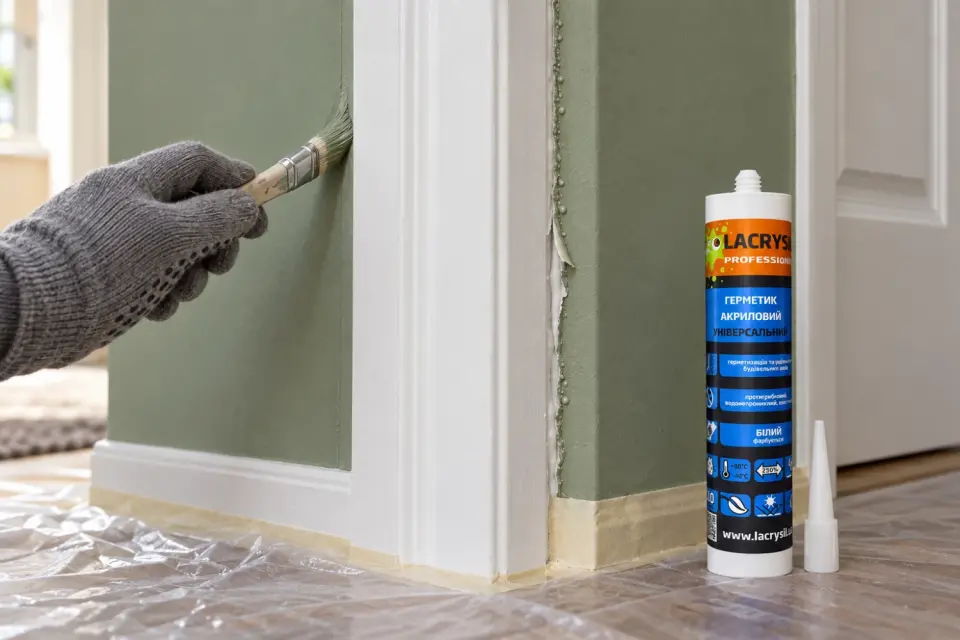
You can paint acrylic sealant and MS polymer adhesive-sealant, but not silicone: paint does not bond to it and peels off. An acrylic joint is painted after it has fully dried, in 24–48 hours, with water-based paint together with the wall or window reveal. Below is a table for LACRYSIL sealants and the order of work, so the joint disappears under the paint and does not crack.
Which sealants can be painted
Sealant | Paintable | Typical use |
|---|---|---|
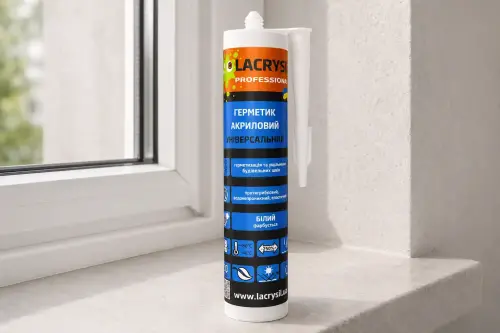
Acrylic “Universal” | yes, can also be filled over | windows, doors, skirting boards, sills, cracks |
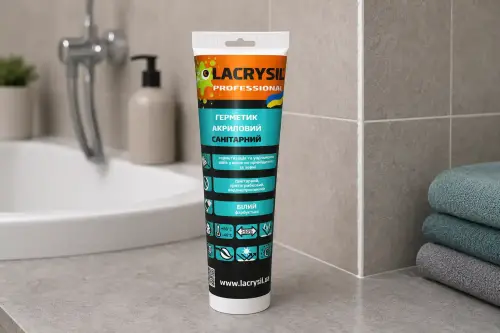
Acrylic “Sanitary” | yes | bathroom, kitchen, laundry next to painted walls |
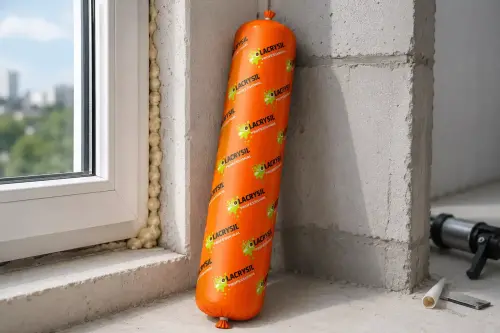
Acrylic for installation seams “A” and “B” | yes, with the facade or reveal | window and door installation joints |
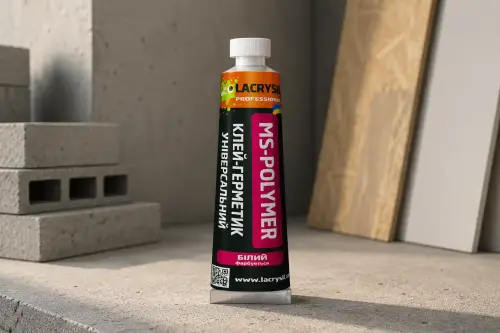
MS Polymer “Universal”, white | yes | metal, glass, plastic, joints under vibration |
Silicone “Universal” and “Sanitary” | no | bathtub joint, shower, glass, outdoor work |
Cured silicone has a smooth, inert surface that repels paint. That is why finishers use acrylic wherever the joint should disappear and keep silicone for areas where water stands. More on acrylic types in the article acrylic sealant: where to use it.
Acrylic sealant for painting
Acrylic sealant “Universal” is the basic choice for joints that will be painted. The white elastic joint is filled over with the reveal and painted with the wall or skirting board. It bonds to glass, wood, stone and mineral surfaces and handles outdoor work. Apply at +10 to +35 °C.
For humid rooms there is acrylic sanitary sealant. It contains antiseptics against mould, like sanitary silicone, but the joint accepts paint. It stretches up to 500 %, handles joint movement up to 35 % and is vapour-permeable, so moisture does not build up behind the tiles.
In a window installation joint, the outer layer is closed with vapour-permeable sealant “A”, painted with the facade, and the inner layer with vapour-barrier sealant “B”, painted with the reveal.
MS polymer for joints on metal or glass
Acrylic performs poorly between two non-porous surfaces: metal, glass, smooth plastic. Here use MS Polymer adhesive-sealant “Universal”. The white version is for painting, the clear one for joints that stay visible. The formula contains no silicone or solvents and releases no oils, so there is no halo around the joint to spoil the paint. Curing takes 24–48 hours, maximum joint depth is 7 mm.
How to paint over sealant, step by step
- Remove old sealant, clean and dry the joint.
- Fill the joint completely. Acrylic shrinks slightly as it dries, so apply it with a small margin.
- Smooth the joint with a spatula wetted with water or soapy water.
- Let the sealant dry for 24–48 hours. Paint on a wet joint blisters and cracks.
- Check the joint: if it has sunk, add a thin second pass and let it dry again.
- Prime the porous surface around it so the paint goes on evenly.
- Paint with water-based acrylic paint in two coats together with the surface.
Below +5 °C the sealant dries more slowly, so in winter work in a heated room or allow extra time. More on drying times in the article how long sealant and silicone take to dry.
What paint to use over sealant
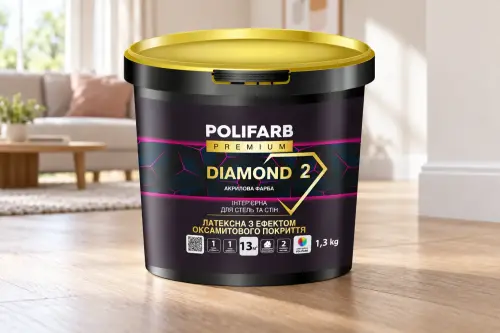
In living rooms, kitchens and bathrooms the joint is painted with the same paint as the wall. For surfaces that get washed, DIAMOND 2 acrylic latex paint has class 1 wet scrub resistance. It is also recommended for bathrooms, except where water hits the wall directly. How to prepare bathroom walls is covered in the article how to paint a bathroom wall.
Outside, the installation joint is painted with acrylic facade paint together with the wall. If the paint is rated for both facades and interiors, one bucket covers the joint on both sides of the window.
Common mistakes
- painting a silicone joint: the paint does not bond and peels off in a strip;
- painting acrylic before it has fully dried;
- applying too much sealant: the excess dries longer and goes to waste;
- using acrylic on a bathtub joint where water stands all the time instead of sanitary silicone sealant.
What to choose
For joints under paint in dry rooms and on windows, take acrylic “Universal”; for bathrooms and kitchens, acrylic “Sanitary”. Seal metal and glass with white MS Polymer “Universal”. Paint over with the same paint as the wall: DIAMOND 2 indoors, acrylic facade paint outside. Silicone joints are never painted, so pick white or clear from the start.
FAQ
Can you paint silicone sealant?
No. Paint does not hold on the smooth silicone surface. If the joint needs painting, use acrylic sealant from the start.
How long before you can paint acrylic sealant?
After it has fully dried, in 24–48 hours depending on joint thickness and temperature.
Which sealant to use in a bathroom if the joint will be painted?
Acrylic sanitary sealant: it contains antiseptics and takes paint. For the bathtub-to-tile joint where water stands, sanitary silicone is the better choice.
Can MS polymer sealant be painted?
Yes, the white MS Polymer “Universal” adhesive-sealant is designed for painting. Paint it after curing.