How to paint a bathroom wall when the old paint is peeling: remove everything loose, feather the edges, clean off mould, prime, and apply two coats of latex paint with Class 1 wet scrub resistance. You do not need to strip the wall back to concrete; sound old paint can stay.
Why paint peels in a bathroom
A bathroom is a zone of high humidity and condensation. Ordinary interior paint applied the old way, without primer, over a greasy or mouldy wall starts peeling within a year or two. This is especially common in older renovations where oil paint sits under the water-based paint.
Step 1. Prepare the wall
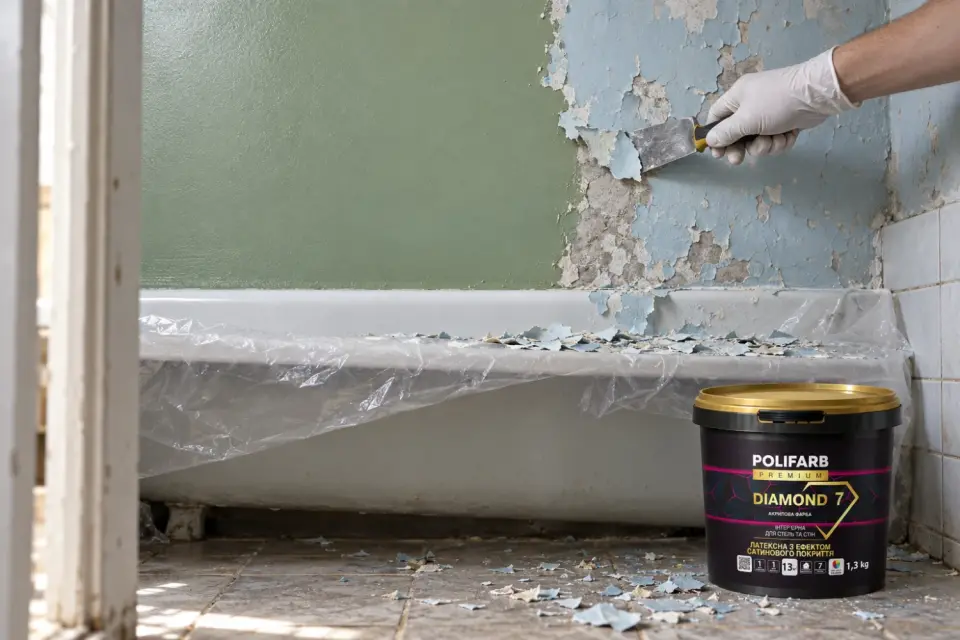
- Remove anything loose. Scrape off flaking paint with a metal spatula or scraper. Leave sound paint in place; just remove what moves.
- Feather the edges. Sand the edges of the peeled areas with 80–120 grit sandpaper so the transitions are smooth.
- Fill defects. Fill cracks, holes and uneven spots with filler suitable for wet rooms, then sand again once dry.
- Wash the wall. Use sugar soap or a degreaser to remove grease, soap scum and dust. Leftover dirt seriously reduces the adhesion of new paint in a bathroom.
- Treat mould. Clean mouldy areas, treat them with an antiseptic for mineral surfaces and let them dry. Why mould appears and how to deal with the cause is covered in why mould appears in the home.
Step 2. Prime
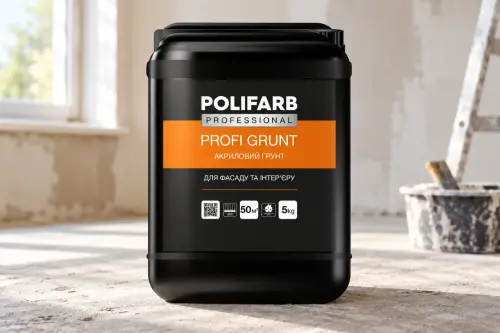
Primer strengthens the substrate, evens out absorption and improves paint adhesion. For bathroom walls use PROFI GRUNT deep-penetrating acrylic primer: one coat at 100–200 g/m² binds dust within old plaster and filler.
If there is old oil paint underneath
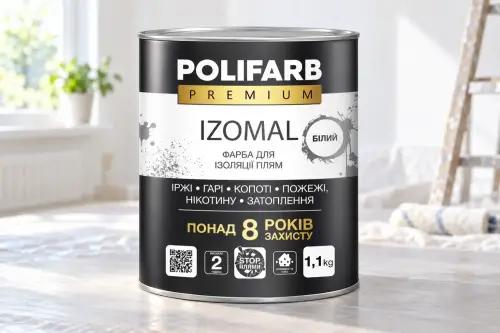
Water-based paint holds poorly on oil paint. If a section still has oil or alkyd paint, apply an intermediate coat of IZOMAL stain-blocking paint. It has increased adhesion to surfaces painted with oil and alkyd enamels, dries in 2 hours and seals stains from leaks, rust and nicotine so they do not bleed through the topcoat.
Step 3. Choose the paint
You need a moisture-resistant paint that withstands frequent washing and condensation and lets vapour through.
Paint | Finish | In the bathroom |
|---|---|---|
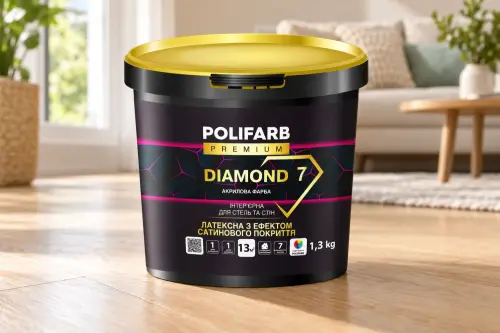
DIAMOND 7 | Satin, Class 1 scrub resistance | Dense film, marks come off first time; outside the direct splash zone |
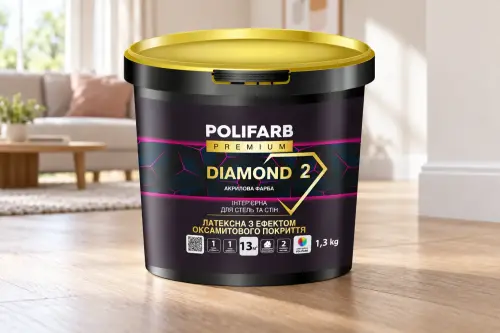
DIAMOND 2 | Deep matte, Class 1 scrub resistance | Hides uneven old walls; not where water hits directly |
RUBBER FARBA | Elastic matte film, Class 1 | Resists water and disinfectants, goes over old alkyd and oil paint |
DIAMOND 7 satin acrylic latex paint is the practical choice for a bathroom: dirt clings less to the film. If the wall is uneven after repairs, choose DIAMOND 2 deep matte acrylic latex paint. Both use 125 g/m² per coat. For walls that get wet all the time, RUBBER FARBA acrylic rubber paint is an option; read more in what rubber paint is.
Step 4. Paint
- Work at +10…+25 °C with normal air humidity. Ventilate the bathroom and let the walls dry before you start.
- Use a short- or medium-nap roller, and a brush for corners and edges.
- DIAMOND paints go on in two coats: the first evens out absorption, the second gives a uniform colour. The first coat can be slightly thinned if the instructions allow it.
- Apply the next coat only after the previous one has dried. Keep the extractor fan running while painting and drying.
Step 5. Joints around the bath and basin
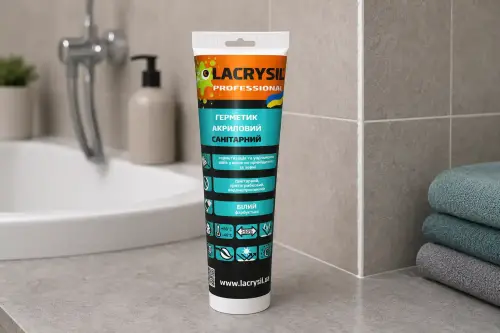
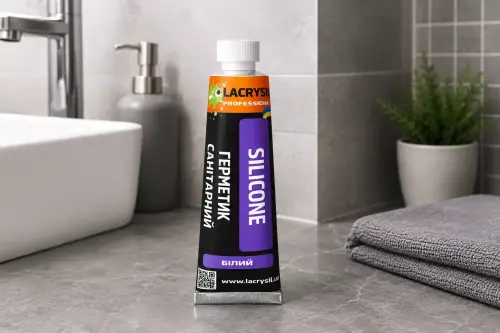
Areas that get direct water are not painted; they are tiled or sealed. Fill the joint between bath and tiles with Sanitary silicone sealant containing fungicides: virtually zero shrinkage, movement up to 20%. Where the joint has to disappear under paint (bath against a painted wall, joints behind the basin), use Sanitary acrylic sealant: it contains antiseptics, takes paint and handles movement up to 35%. How to choose silicone for a bathroom is explained in neutral or acid-cure silicone.
What to buy for the bathroom
PROFI GRUNT under the paint, IZOMAL on areas with old oil paint or stains, DIAMOND 7 or DIAMOND 2 in two coats, and sanitary sealant on the joints. Work out how much paint you need with the paint consumption calculator.
FAQ
Can I paint bathroom walls with ordinary emulsion?
Better not. You need a paint with Class 1 wet scrub resistance that withstands washing and condensation, such as DIAMOND 7 or DIAMOND 2 acrylic latex paint.
Do I have to remove all the old paint in the bathroom?
No, only what is peeling. Sound paint is sanded, washed and primed.
How do I paint over old oil paint in a bathroom?
Sand, degrease and apply an intermediate coat of IZOMAL stain-blocking paint, then the water-based paint.
How many coats of paint are needed in a bathroom?
Two coats at 125 g/m² each for DIAMOND 2 and DIAMOND 7.