Paint for a house renovation is chosen for four different jobs: interior walls, the facade, timber and metal. POLIFARB, a Ukrainian paint manufacturer since 2002, covers all four, and below you will find what to use in each area and in what order to work.
Quick selection table
Area | Task | What to use |
|---|---|---|
Bedroom, living room | Deep matt, walls are not washed | EKOFARBA |
Kitchen, hallway, children’s room | Frequent wet cleaning | DIAMOND 2, DIAMOND 7 or DIAMOND 15 |
Facade with mineral wool, older buildings | Maximum vapour permeability | SILIKON FASAD |
Plinth, roof, slate, metal profile (metal and galvanized steel over GF-021 primer) | Flexible coating that does not crack | RUBBER FARBA |
Timber cladding, gazebo, fence | Protection from rot, fungus and beetles | DREVOZAHIST IMPREGNAT |
Gates, pipes, rusty steelwork | Anti-corrosion protection without a separate primer | Zahyst 3in1 |
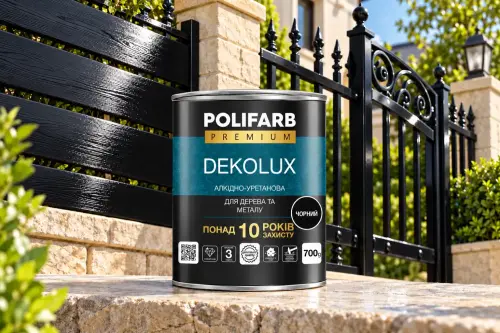
Machinery, handrails, metal and wood in gloss | Hard, wear-resistant film | DEKOLUX |
Interior walls and ceilings
Interior paint is chosen by wet scrub resistance and sheen level. Class 1 wet scrub resistance is the highest on the five-point scale.
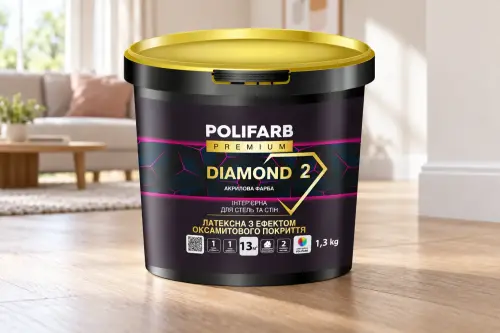
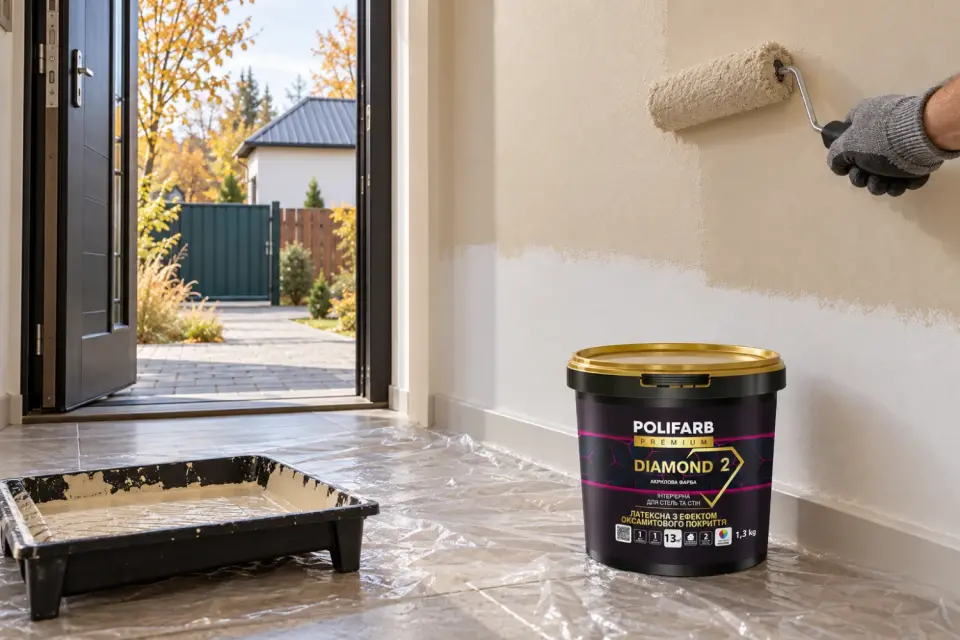
- DIAMOND 2 acrylic latex paint: deep matt, class 1. Hides minor irregularities, good for large walls under side light.
- DIAMOND 7 acrylic latex paint: satin, class 1. Stains wipe off faster than from a matt surface. Kitchens, hallways, children’s rooms.
- DIAMOND 15 acrylic paint: silky sheen, the densest film in the range, class 1. Needs a flat, fully filled surface.
- EKOFARBA acrylic paint: deep matt, 500 dry abrasion cycles. For bedrooms and living rooms where walls are not washed.
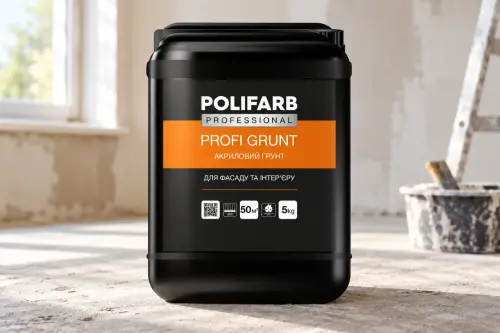
Prime before painting. PROFI GRUNT deep-penetrating acrylic primer consolidates porous and crumbling substrates and evens out absorbency, so two coats of paint do the job instead of three. For room-by-room advice, see choosing the right wall paint.
Facade
Exterior walls take UV, rain, temperature swings and frost. Two different approaches work here.
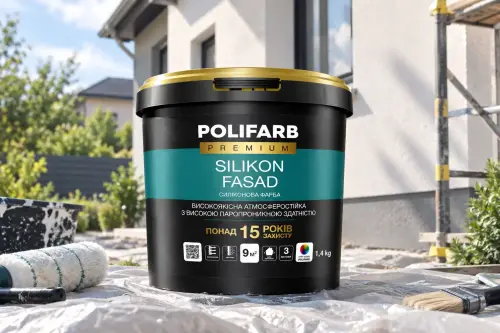
- SILIKON FASAD silicone paint lets water vapour out of the wall while repelling rain from the outside. It is used on facades insulated with mineral wool and on older buildings whose walls need to breathe. Declared facade protection is over 15 years, and the coating can be washed with cleaning agents.
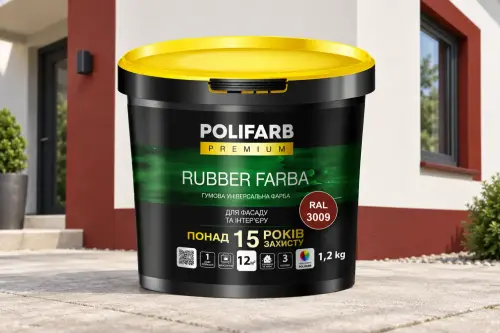
- RUBBER FARBA acrylic rubber paint stays flexible after drying and moves with a substrate that expands in summer and contracts in winter. That is why it is used on roofs, plinths, slate and metal profiles. Metal, including galvanized profiled sheeting, is first primed with DEKOMAL or EXTRAMAL GF-021: RUBBER FARBA does not go directly onto zinc. It also goes over surfaces previously painted with alkyd and oil paints.
For a detailed comparison, read acrylic vs silicone facade paint.
Timber
Outdoor wood is destroyed by moisture, fungus and beetles. DREVOZAHIST IMPREGNAT antiseptic wood preservative soaks into the fibres instead of forming a film, so the preservative itself does not peel. It protects against fungi, mould and beetles; eight shades are available and the wood stays vapour-permeable. For outdoor timber, cover the dried preservative with 2–3 coats of pentaphthalic varnish. A step-by-step system for fences is described in how to paint a wooden fence so it does not rot.
Metal
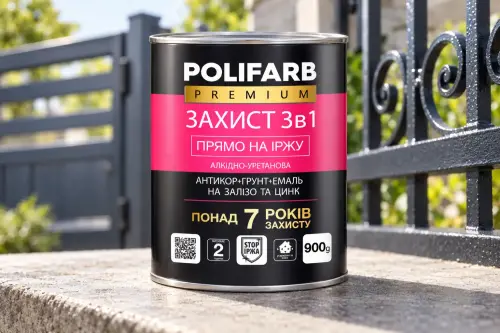
- Zahyst 3in1 anti-corrosion primer-enamel goes straight onto rust: converter, primer and enamel in one. Suitable for ferrous metal (not for galvanized steel, which is primed with GF-021 and painted with RUBBER FARBA or PF-115), dries in 2 hours per coat, RAL colours.
- DEKOLUX alkyd-urethane enamel gives a very hard gloss finish on metal and wood: over 10 years of protection, 3-hour drying, 30–60 g/m² per coat.
- 7-in-1 acrylic primer enamel for wood, metal and concrete: water-based, no strong odour, dries in 30 minutes, does not yellow.
To paint gates so rust does not come back, see how to paint metal gates without rust.
What order to paint in during a full renovation
- First fix leaks, do the waterproofing and all wet trades: plastering, screeding, filling.
- Plan exterior work for a dry season: roof, facade, plinth, fence.
- Paint metal and wood before interior finishing so dust and splashes do not land on fresh walls.
- Ceilings before walls, walls before floors.
- Seal old leak stains with a stain-blocking paint before painting; see how to cover stains on a ceiling.
Work out how much paint each area needs with the paint coverage calculator.
What to buy
A basic set for a house: PROFI GRUNT primer, DIAMOND 2 or EKOFARBA for rooms, SILIKON FASAD or RUBBER FARBA for the facade and plinth, Zahyst 3in1 for gates and railings, IMPREGNAT for timber. Try colours for inside and outside in the colour visualiser.
FAQ
Which paint should I use on kitchen walls?
A paint with class 1 wet scrub resistance: DIAMOND 2 for deep matt or DIAMOND 7 in satin, which releases stains more easily.
What paint goes on a facade insulated with mineral wool?
A vapour-permeable silicone paint such as SILIKON FASAD. An impermeable layer would spoil how the insulation works.
Can I paint metal directly over rust?
Yes, if you use a primer-enamel designed for rust, such as Zahyst 3in1. Remove loose rust first.
What do I paint first, the ceiling or the walls?
The ceiling. Splashes from the ceiling inevitably land on the walls, so walls come after it.