Selected package
Leftover:
We use necessary cookies for the cart, session, and security. Analytics and marketing cookies are enabled only after your choice. Learn more
Polifarb App
Add the store to your home screen for faster access and an app-like full-screen experience.
It installs in a couple of taps — here is how.
Tap in the Safari toolbar
Choose “Add to Home Screen”
To install the app, open this site in the Safari browser.
Search
Start typing to see suggestions.
Save to favorites
Add to compare
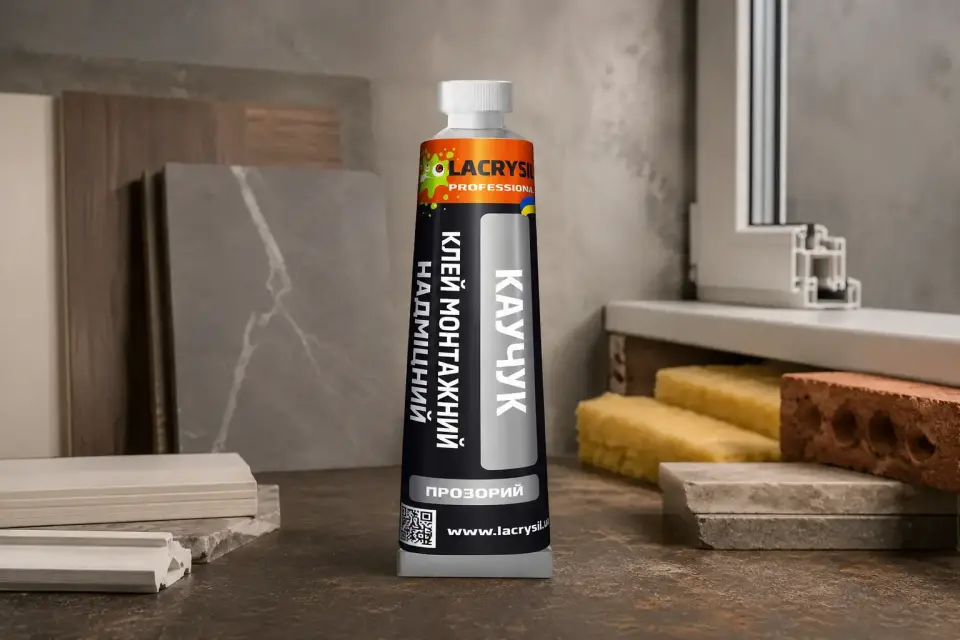
A solvent-based rubber adhesive. 2500 kg/m² Works from -10 °C Waterproof Contact bonding grabs instantly
3 available
Selected package
Leftover:
Cheaper package combination
pcs
Leftover:
Extra Strong rubber adhesive is a multi-purpose solvent-borne synthetic construction adhesive.
The only adhesive in the range applied from -10 °C. Water-based acrylics simply freeze and never reach strength.
Very high initial tack fixes the part at once, and the rated load suits heavy work: wall panels, exterior cladding, ceramic slabs, stone and gypsum parts.
Coat both faces, let them flash off to touch-dry, then join. There is no second chance to move the part, so mark out first.
Not merely water-resistant but watertight, and untroubled by two non-porous faces: metal to metal, glass to metal, plastic to concrete, the pairings where acrylics struggle.
Not for mirrors: the solvent eats into the silvering. Glue mirrors with a solvent-free MS Polymer adhesive.
Solvent-borne: ventilate and keep away from flame. Clean with acetone or petrol, not water. Beige, service -40 to +80 °C, 18-month shelf life.

0.2–0.5 kg/m². Contact bonding coats both faces, so the real figure per square metre of joint doubles.
Use a notched trowel for area work and a gun for beads.
Preparation
Contact bonding
Bead application
Afterwards
| Material / Base | Concrete, brick, gypsum, plasterboard | Stone, granite, marble | Glass | Wood, chipboard, fiberboard, MDF, plywood | Tile, ceramic, porcelain | Ferrous and galvanized metal, stainless steel | Rubber, PVC | Aluminum, copper and their alloys |
|---|---|---|---|---|---|---|---|---|
| Concrete, brick, gypsum, plasterboard | ||||||||
| Stone, granite, marble | ||||||||
| Glass | ||||||||
| Wood, chipboard, MDF, fiberboard, plywood | ||||||||
| Tile, ceramic, porcelain | ||||||||
| Ferrous and galvanized metal, stainless steel | ||||||||
| Rubber, PVC | ||||||||
| Aluminum, copper and their alloys | ||||||||
| Tile roofing, slate, tinplate |
Really usable in winter?
Yes, from -10 °C: the main advantage over acrylics, which do not work below freezing at all.
Clean-up?
Acetone or petrol. Water will not touch it.
What is contact bonding?
Coat both faces, wait until touch-dry, then join. The grab is instant, so position accurately first time.
Will it attack polystyrene?
Yes. The solvent dissolves it. Use an acrylic adhesive or adhesive foam for EPS and XPS.
Indoors?
Only with active ventilation; it is solvent-borne and smells strongly until dry.
4 similar products