Alkyd enamel is paint based on alkyd (pentaphthalic or glyphthalic) resins dissolved in an organic solvent, most often white spirit. It forms a hard gloss film with high adhesion, which is why it is used on metal, wood and concrete outdoors and indoors. Below: composition, pros and cons, a comparison with acrylic, and a table of PF-115, PF-266 and GF-021 grades with real consumption figures.
Composition and how alkyd enamel dries
- Alkyd varnish: a binder based on polyesters modified with vegetable oils, glycerol and rosin.
- Solvents: white spirit, solvent naphtha and others.
- Pigments and fillers provide colour and hiding power.
- Additives: driers to speed up drying, anti-corrosion and antiseptic agents.
As it dries, the solvent evaporates and the resin oxidises in air, polymerising into a hard, elastic film. Full drying takes 4 to 24 hours depending on grade, film thickness and temperature. Alkyd enamels appeared in the mid-20th century as a replacement for oil paints: they kept the elasticity and strength but dry faster.
Pros and cons
Advantages
- resistance to abrasion, moisture, UV and temperature changes;
- adhesion to metal, wood, concrete, brick and plaster;
- deep gloss and an even finish;
- corrosion protection in grades with the right additives;
- can be applied by brush, roller or spray.
Disadvantages
- strong solvent odour during application and drying, ventilation required;
- dries slower than water-based paints: a PF-115 coat takes up to a day;
- not used in children's rooms without ventilation;
- thin only with recommended solvents, or the colour loses brightness.
Alkyd enamel or acrylic paint
Property | Alkyd enamel | Acrylic paint (water-based) |
|---|---|---|
Base | organic solvents | water |
Full drying | 4–24 h | 1–4 h |
Odour during work | strong | minimal |
Abrasion resistance | high | high in premium lines |
Weather resistance | high | good to high |
Typical use | metal, wood, outdoors and indoors | mainly walls, ceilings, facades |
Alkyd wins on hardness and gloss on metal and wood; acrylic wins on drying speed and lack of odour. How water-based paints work is explained in our article on acrylic paints, and the difference between "enamel" and "enamel paint" is covered separately: enamel vs paint.
Alkyd enamel grades and where they are used
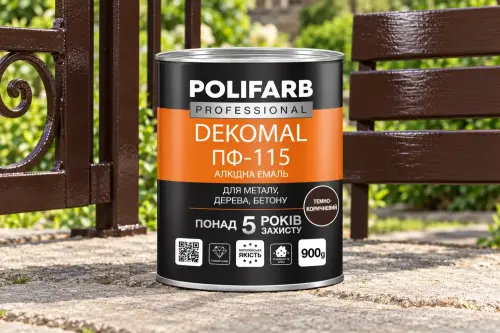
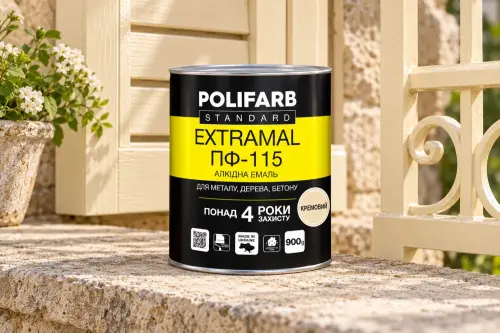
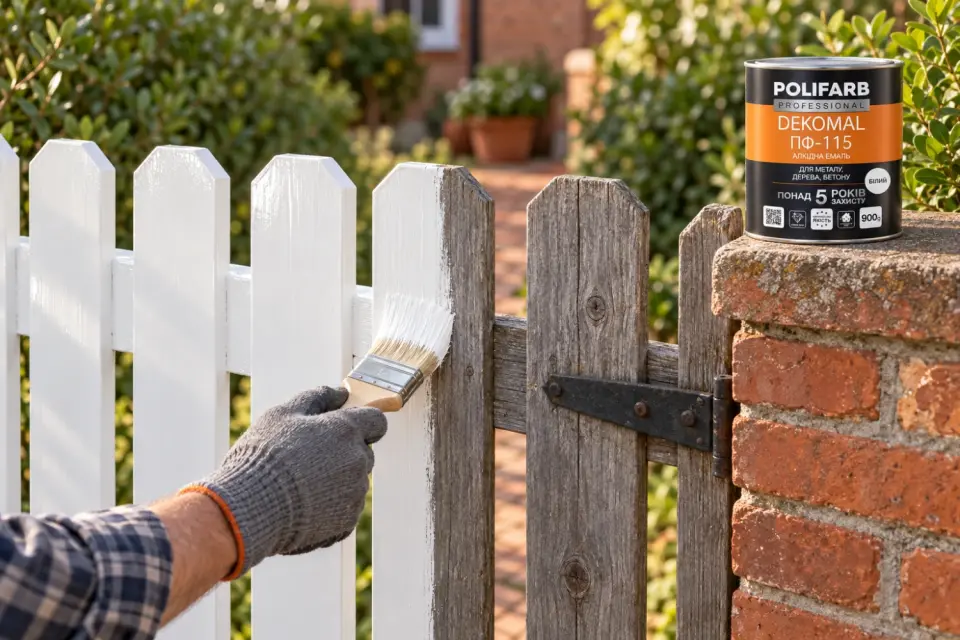
- PF-115: general-purpose enamel for metal, wood and concrete: fences, gazebos, benches, garages, plinths.
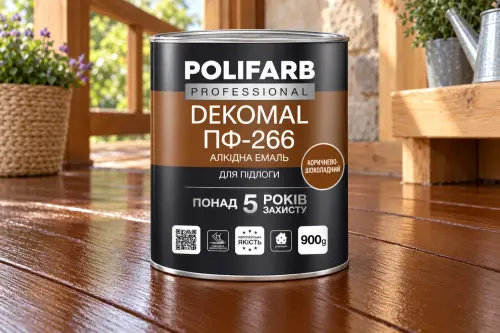
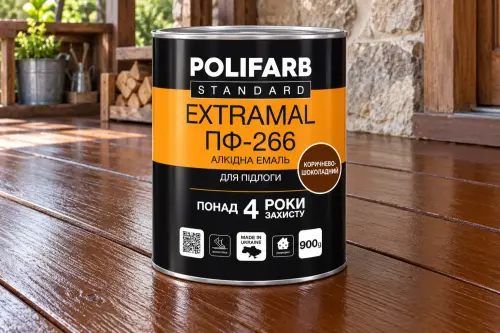
- PF-266: enamel for wooden floors, resistant to abrasion and detergents.
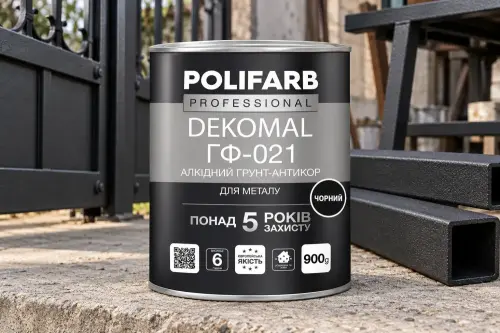
- GF-021: anti-corrosion primer under the topcoat on metal.
Product | Consumption per coat | Coat drying | Declared protection |
|---|---|---|---|
DEKOMAL PF-115 | 60–120 g/m² | up to 24 h | over 5 years |
EXTRAMAL PF-115 | 100–150 g/m² | up to 24 h | over 4 years |
DEKOMAL PF-266 | 80–130 g/m² | up to 24 h | over 5 years |
EXTRAMAL PF-266 | 160–220 g/m² | up to 24 h | over 4 years |
DEKOMAL GF-021 (primer) | 60–100 g/m², 1 coat | 6 h | — |
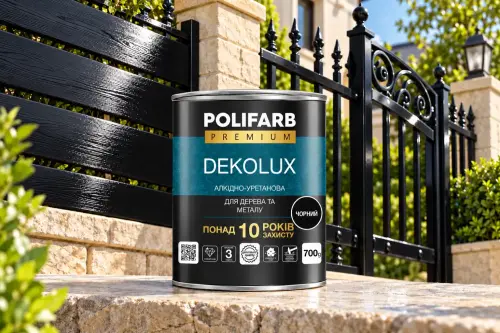
DEKOLUX (alkyd-urethane) | 30–60 g/m² | 3 h | over 10 years |
PF-115: DEKOMAL or EXTRAMAL
DEKOMAL PF-115 alkyd enamel from the PROFESSIONAL line goes further and lasts longer; it comes in 28 ready-made shades and does not fade in the sun. EXTRAMAL PF-115 alkyd enamel from the STANDARD line is cheaper per can but uses roughly one and a half times more material. It suits jobs where the coating is renewed every few years anyway: a shed, a temporary fence, yearly touch-ups on benches. Compare the cost per square metre, not per can.
Floor enamel
DEKOMAL PF-266 floor enamel and EXTRAMAL PF-266 are formulated for foot traffic and washing with detergents. Regular PF-115 wears through in paths within a season. Floor enamel goes on thicker, hence the higher consumption; allow a day between coats.
Primer under enamel on metal
DEKOMAL GF-021 anti-corrosion primer provides an adhesion layer under the enamel and reduces its consumption. Without primer, enamel on smooth metal relies only on its own grip and peels after a couple of seasons. The full sequence on a gate example is in how to paint metal gates.
When you need a harder film
For machinery, handrails and gates where the coating takes mechanical wear, there is DEKOLUX alkyd-urethane enamel: urethane makes the film harder and a coat dries in 3 hours. More in the DEKOLUX review.
How to work with alkyd enamel
- Clean the substrate, remove loose rust and flaking paint, degrease.
- Prime metal with an anti-corrosion primer; treat wood with an antiseptic or primer.
- Stir the enamel and, if needed, thin with white spirit, solvent naphtha or a 1:1 mix.
- Apply two thin coats with drying time between them as specified for the grade.
- Ventilate the room until fully dry.
The paint consumption calculator will work out how much enamel your area needs.
FAQ
How long does alkyd enamel take to dry?
A coat of PF-115 or PF-266 dries in up to 24 hours, DEKOLUX alkyd-urethane in 3 hours, DEKOMAL GF-021 primer in 6 hours.
What do you thin alkyd enamel with?
White spirit, solvent naphtha or a 1:1 mix. Water does not work.
What is the difference between PF-115 and PF-266?
PF-115 is general-purpose for metal, wood and concrete; PF-266 is designed for wear and washing on wooden floors.
Can you use alkyd enamel in an apartment?
Yes, with ventilation: the solvent smell lasts until it dries. Water-based primer-enamels are more convenient for living rooms.