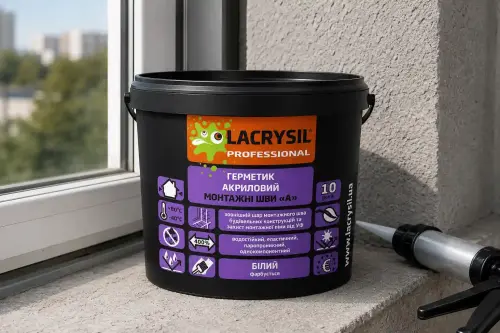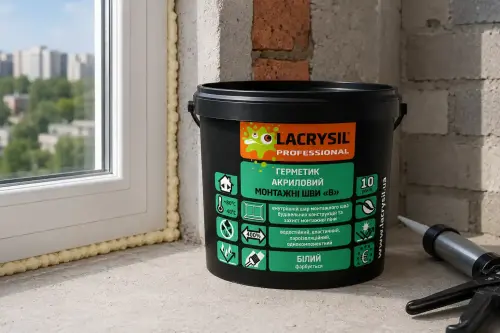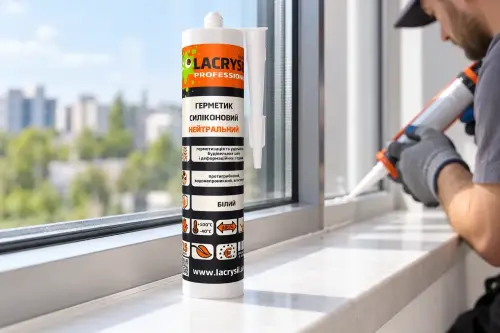











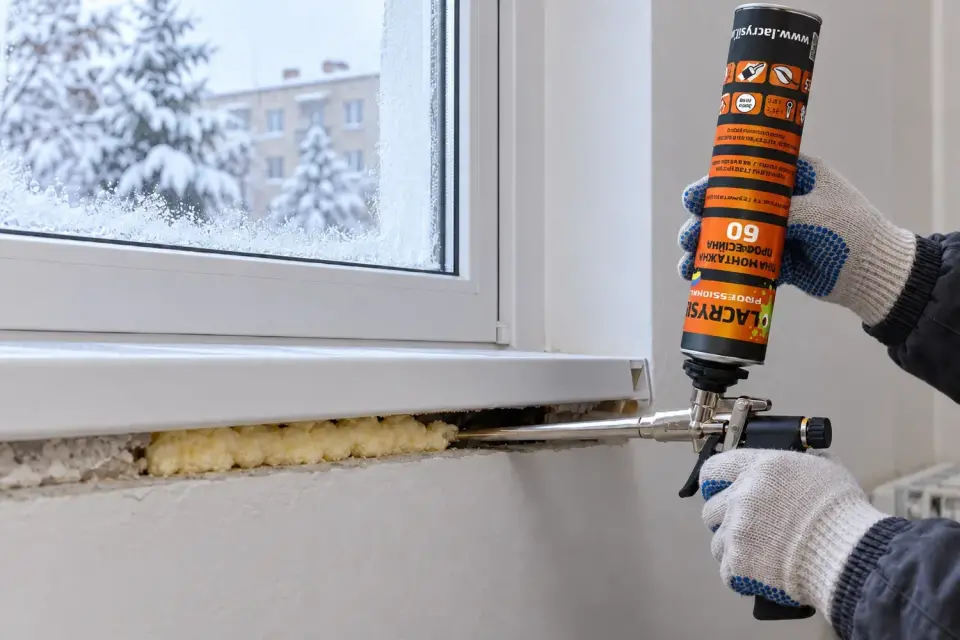
A draught from under the window sill usually means the installation joint has failed: the foam under the sill was under-filled, has crumbled or was left uncovered. Less often the air comes through the sill-to-wall joint or the sash seal. Fill the cavity with foam and close the joint with sealants: “A” outside, “B” inside. A narrow visible joint is closed with sealant alone.
Why the joint starts leaking
Mounting foam does not withstand UV, so exposed foam outside breaks down within a season. Foam also absorbs moisture; without a vapour barrier on the room side it gets wet in the first heating season, and the water freezes and destroys it from inside.
Step by step
Cut out crumbled foam and clean the joint.
Keep the can at +15…+30 °C.
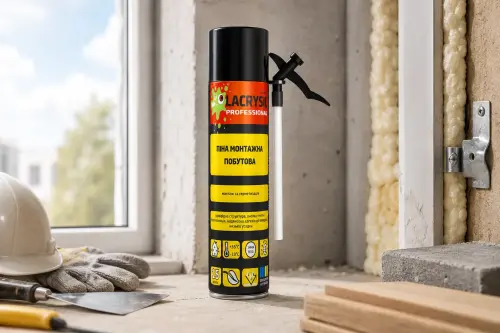
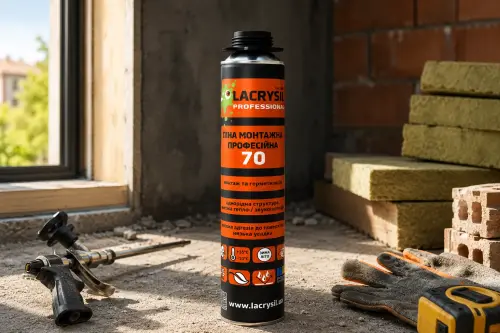
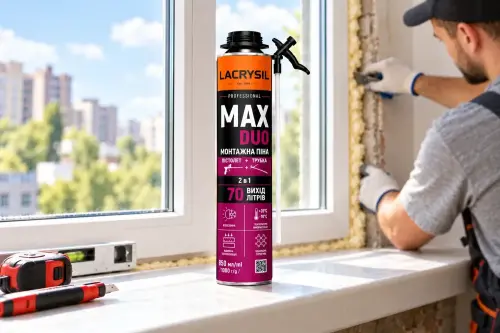
Fill a third of the gap with household foam (it expands 200–300 %) or two thirds with professional gun foam (15–30 %).
Trim after 25 minutes; full cure takes 12–24 hours.
Cover the foam outside with installation joint sealant “A” (vapour-permeable, from -25 °C) and inside with sealant “B” (vapour barrier, from +5 °C). Never swap them.
In frost
Foam is applied from -10 °C with a warm can, sealant “A” from -25 °C on a dry, ice-free surface, sealant “B” in a heated room from +5 °C.
A narrow sill-to-wall joint that will be painted takes acrylic sealant such as “B”; one that stays visible on white PVC can take white neutral silicone, which cannot be painted.