Selected package
Leftover:
We use necessary cookies for the cart, session, and security. Analytics and marketing cookies are enabled only after your choice. Learn more
Polifarb App
Add the store to your home screen for faster access and an app-like full-screen experience.
It installs in a couple of taps — here is how.
Tap in the Safari toolbar
Choose “Add to Home Screen”
To install the app, open this site in the Safari browser.
Search
Start typing to see suggestions.
Save to favorites
Add to compare
The outer layer of a window installation joint. Vapour-permeable It lets moisture out of the foam Gunned from -25 °C A 20-year life
4 available
Maximum joint depth: 5 mm
Selected package
Leftover:
Cheaper package combination
pcs
Leftover:
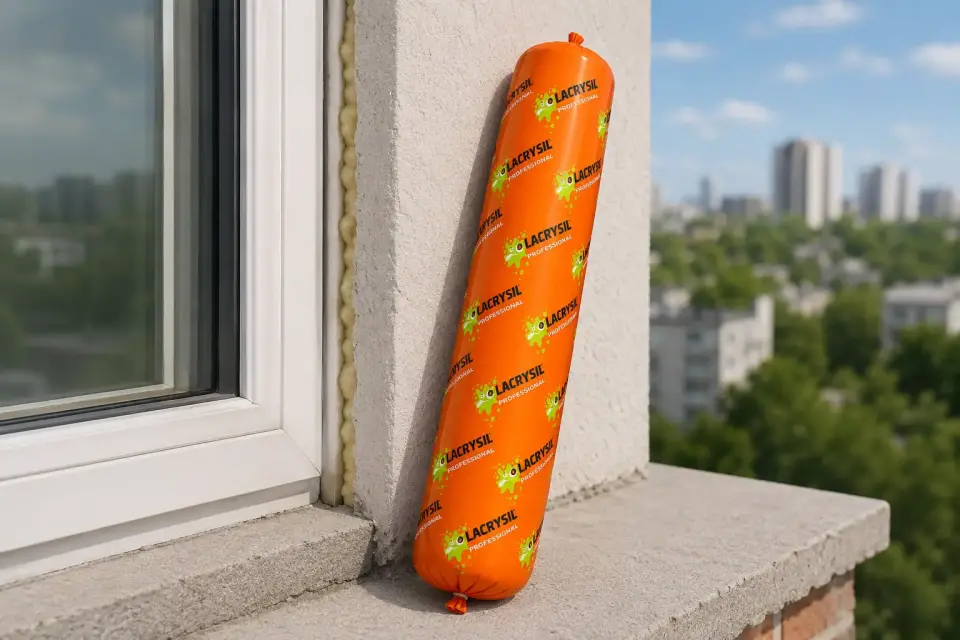
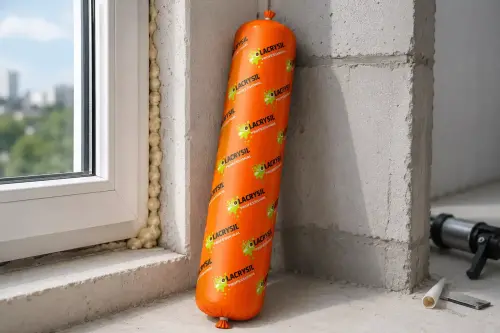
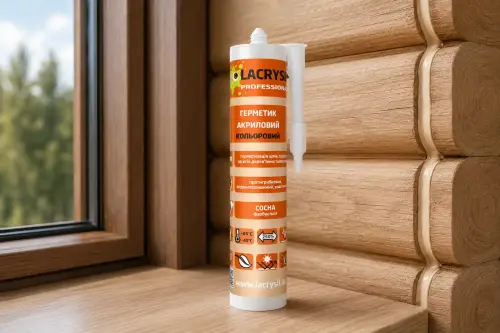
Joint sealant "A" is a one-component vapour-permeable acrylic sealant for the outside of an installation joint.
A window joint has three layers: an outer one shielding the foam from weather and UV, the foam itself, and an inner one keeping room vapour out. This is the outer layer; "B" is its inner counterpart. Swapping them traps moisture in the foam.
Foam absorbs moisture. In winter it freezes, expands and destroys the foam from within, and the joint starts to leak air within two or three seasons. A permeable outer seal lets the vapour escape instead.
-25 to +35 °C, the widest range in the sealant line. Windows are fitted in winter too, and most acrylic sealants will not cure below +5 °C.
A 20-year joint life, resistant to weather and movement, with strong adhesion to concrete, PVC, aluminium, timber, render, brick and natural stone, and painted along with the facade.
It must not be thinned with water: the maker is explicit: thinning cuts adhesion, destroys thixotropy and changes the joint.
Acrylic, white, service -40 to +100 °C, about 0.13 kg per running metre. 600 ml, 1.2, 3 and 7 kg, 18-month shelf life, water clean-up.

About 0.13 kg per running metre: count the window perimeter, not its area.
The same run also needs sealant "B" on the inside. Buy both together.
Preparation
Application
Do not
Afterwards
Compatibility table
| Material / Base | Concrete, brick, gypsum, plasterboard | Stone, granite, marble | Mirror, glass | Wood, chipboard, fiberboard, MDF, plywood | Tile, ceramic, porcelain | Primed metal | Plastic, PVC | Polystyrene |
|---|---|---|---|---|---|---|---|---|
| Concrete, brick, gypsum, plasterboard | ||||||||
| Stone, granite, marble | ||||||||
| Mirror, glass | - | |||||||
| Wood, chipboard, MDF, fiberboard, plywood | ||||||||
| Tile, ceramic, porcelain | - | |||||||
| Primed metal | ||||||||
| Plastic, PVC | - | - | - | |||||
| Polystyrene |
How does "A" differ from "B"?
Direction of vapour. "A" is permeable and faces out; "B" is a vapour barrier and faces in. Reversing them traps water in the foam.
Can one sealant do both sides?
No. The joint works only as a pair.
Really down to -25 °C?
Yes, on a dry, ice-free surface.
Why no water?
Thinning cuts adhesion and destroys thixotropy; the maker forbids it.
How much for a flat?
Six windows is about 35 m: roughly 4.5 kg.
5 similar products