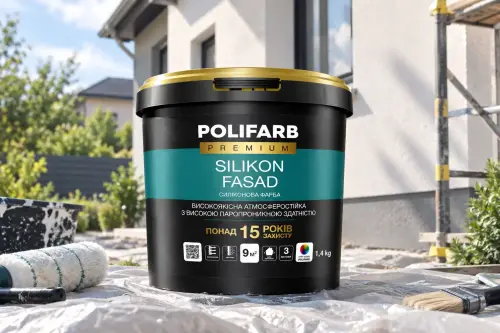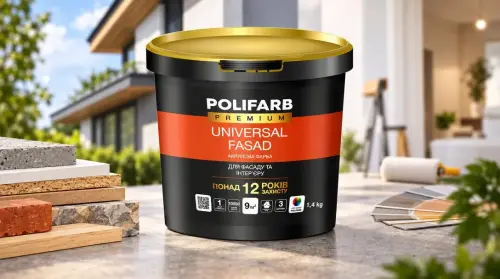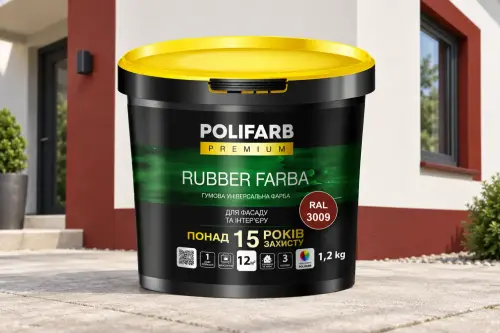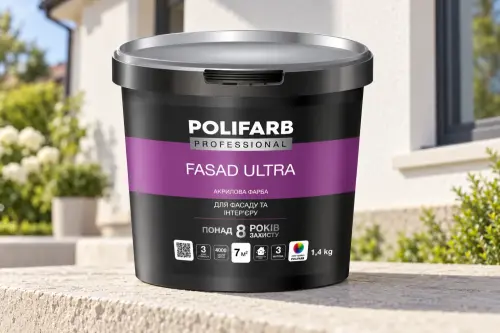
POLIFARB facade paints can be applied at air and substrate temperatures of +5 to +30 °C, and RUBBER FARBA rubber paint at air temperatures from +10 °C. For most products the optimum is +18 to +25 °C with humidity up to 60%. The data sheets have no separate clause about rain, but the dry-substrate and humidity requirements cannot be met while it rains. Below is a table of limits for facade paints, enamels, wood treatments, sealants and foam.
Application temperature and humidity: table
Product | Application temperature | Air humidity | Other notes in data sheet or description |
|---|---|---|---|
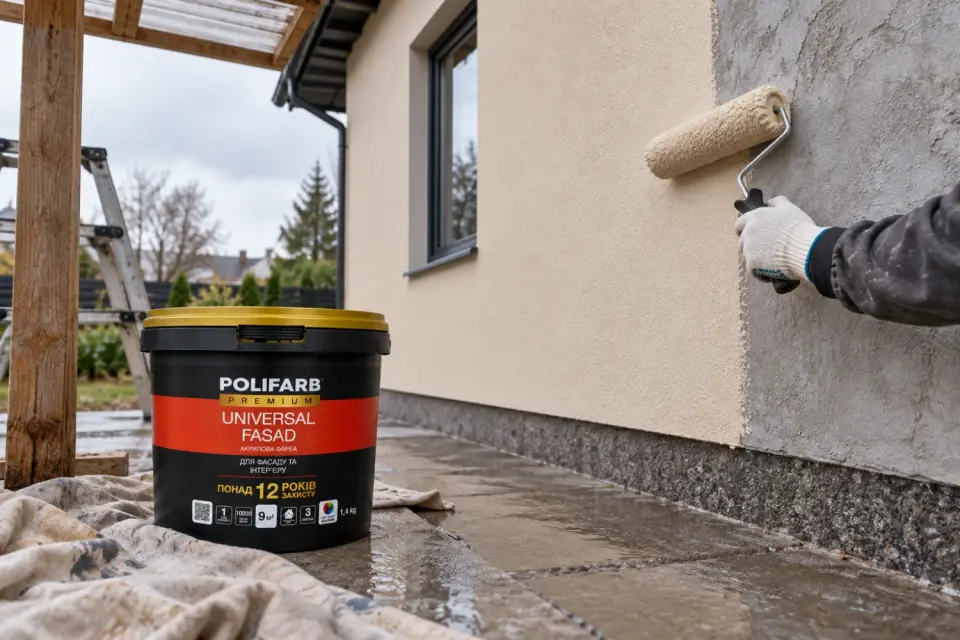
SILIKON FASAD, UNIVERSAL FASAD, FASAD ULTRA | +5…+30 °C | optimum up to 60% at +18…+25 °C | 2 coats 2 h apart, washable after 7 days |
RUBBER FARBA | air +10…+30 °C, substrate from +5 °C | below 80% | dry substrate; a coat dries in up to 2 h at +23 °C and 50% humidity; full strength after 28 days |
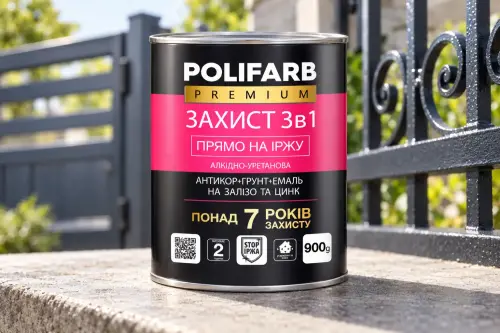
ZAHYST 3 in 1 | +5…+30 °C | max 60% | dry, degreased substrate |
ZAHYST 3 in 1 hammer finish | +5…+30 °C, optimum +10…+25 °C | max 60%, optimum 40–65% | cures in 4–7 days |
PF-115 enamels | +5…+30 °C | max 60% | clean metal in dry weather |
IMPREGNAT, LASUR | +5…+30 °C, never below +5 or above +35 °C | max 60% | dry timber |
Sealant for installation joints “A” | −25…+35 °C | — | outer layer of a window joint |
Acrylic sealant “Universal” | +10…+35 °C | — | does not gain strength on a cold wall |
Professional and household foam | from −10 °C | — | — |
Fire-rated B1 foam | +10…+35 °C | — | store the can at +15…+30 °C |
Aqua Block waterproofing | +5…+35 °C | — | full cure 24–72 h |
Paint and enamel figures come from the technical data sheets; sealant, foam and waterproofing figures from the product descriptions.
Facade paints: +5 to +30 °C
SILIKON FASAD silicone facade paint, UNIVERSAL FASAD facade paint and FASAD ULTRA acrylic paint share the same conditions: work at +5 to +30 °C, ideally +18 to +25 °C with humidity up to 60%. They go on in two coats 2 hours apart. Fresh render is painted no sooner than 3–4 weeks, concrete after a month. One more limit applies to sand-cement renders: if their pH is above 10 at the time of painting, these paints are not compatible. The work sequence is in how to paint a facade, and the acrylic-versus-silicone question in acrylic and silicone facade paint compared.
Rubber paint: from +10 °C air temperature
RUBBER FARBA rubber paint has a higher threshold: work at air temperatures of +10 to +30 °C and humidity below 80%, with the substrate no colder than +5 °C. The surface must be clean, dry and degreased. A coat dries in up to 2 hours at +23 °C and 50% humidity, and the time changes under other conditions. The film reaches full strength after 28 days. Apply 2–3 coats, each once the previous one is dry. Typical roof mistakes are covered in 5 mistakes when painting a roof with rubber paint.
Enamels and wood treatments: humidity up to 60%
ZAHYST 3 in 1 primer-enamel, DEKOMAL PF-115 alkyd enamel, IMPREGNAT wood preservative and LASUR wood lacquer all work within +5 to +30 °C and relative humidity of no more than 60%. The preservative and lacquer must also never be applied below +5 °C or above +35 °C. Their data sheets note that low temperature and high humidity lengthen drying. If you plan to paint galvanised steel, ZAHYST 3 in 1 is not suitable and no paint goes directly onto zinc: galvanised steel is primed with GF-021 and then painted with RUBBER FARBA, PF-115 enamel or DEKOLUX; see how to paint galvanised steel and profiled sheet.
Can you paint in the rain?
POLIFARB data sheets contain no explicit “do not paint in rain” clause. There are two requirements that rain breaks:
- A dry substrate. RUBBER FARBA, ZAHYST 3 in 1, IMPREGNAT and LASUR require a dry surface, and metal for PF-115 enamel is cleaned in dry weather.
- Air humidity. Max 60% for alkyd products, below 80% for RUBBER FARBA, and 60% as the optimum for facade paints. In rain and fog humidity goes beyond these limits.
The data sheets do not say how many hours to wait after rain. The only guide is that the substrate must be dry all the way through and humidity within the table limits. If rain hits a coat before it has dried, inspect the area once dry and repaint if needed.
Sealants, foam and waterproofing: what you can do in the cold
You will not paint a facade in winter, but installation joints are possible. Sealant for installation joints “A” goes on from −25 to +35 °C. Professional mounting foam works from −10 °C. Acrylic sealant “Universal” needs +10 °C, and Aqua Block waterproofing +5 °C. Curing times in different conditions are covered in how long sealant and silicone take to dry.
Common mistakes
- Applying RUBBER FARBA at +6…+9 °C, going by the +5 °C limit for facade paints.
- Painting a wall or roof that has not dried out after rain.
- Painting fresh render before 3–4 weeks.
- Applying alkyd enamel at humidity above 60%.
- Putting ZAHYST 3 in 1 on galvanised steel, or painting zinc without GF-021 primer.
What to use
For a facade within +5…+30 °C use SILIKON FASAD, UNIVERSAL FASAD or FASAD ULTRA; for roofs, plinths and galvanised steel (over GF-021 primer) use RUBBER FARBA at air temperatures from +10 °C. Plinths have their own selection: paint for plinths and foundations. Work out quantities in the paint consumption calculator. If the facade needs restoring after damage, start with repairs after damage: windows, roof and facade.
FAQ
What is the minimum temperature for painting a facade?
SILIKON FASAD, UNIVERSAL FASAD and FASAD ULTRA: from +5 °C. RUBBER FARBA: from +10 °C air temperature with the substrate no colder than +5 °C.
Can I paint a facade while it is raining?
No. The data sheets require a dry substrate and limit air humidity, and rain breaks both conditions.
How long should I wait after rain before painting?
The data sheets give no number of hours. Paint once the substrate is completely dry and humidity is within the product’s limits.
Can I paint a facade in hot weather?
The upper limit for paints and enamels is +30 °C, and +35 °C for IMPREGNAT and LASUR.