For a bathroom, choose a water-based paint with wet-scrub class 1 and divide the room into zones. The ceiling and walls outside the splash area can be painted; where water hits the wall directly, paint does not hold up. Below is what each paint’s technical documentation says about bathrooms, how to prepare a wall after mould and how to seal the joints.
Bathroom zones: where paint works and where it does not
- Ceiling and upper walls. Condensation settles here, but there is no direct spray. A class 1 paint that can be wiped is right.
- Walls outside the splash zone: by the door, above the washing machine, behind the mirror. Same requirements.
- Shower area, wall right next to the bath, splashback above the basin. This is direct water contact. The DIAMOND 2, DIAMOND 7 and AKRYLTIKS product pages explicitly exclude these areas. Tile them over waterproofing.
Which paint suits a bathroom
Paint | What it says about bathrooms | Wet-scrub class | Gloss level |
|---|---|---|---|
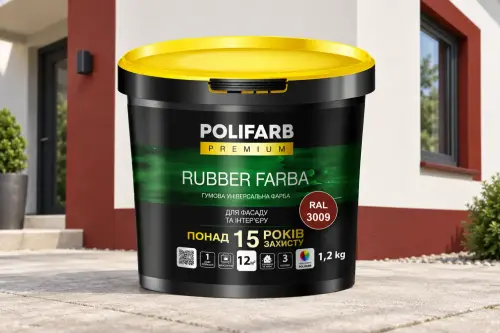
RUBBER FARBA | data sheet: "bathroom walls"; coating resists water, detergents and disinfectants | 1 | 3, matt |
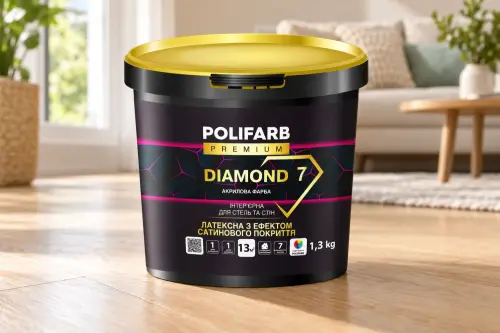
DIAMOND 7 | product page: bathroom outside the splash zone | 1 | 7, satin matt |
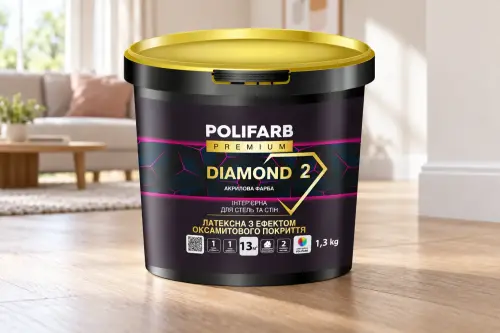
DIAMOND 2 | product page: allowed except where water hits directly | 1 | 2, deep matt |
RUBBER FARBA: for bathrooms that get washed often
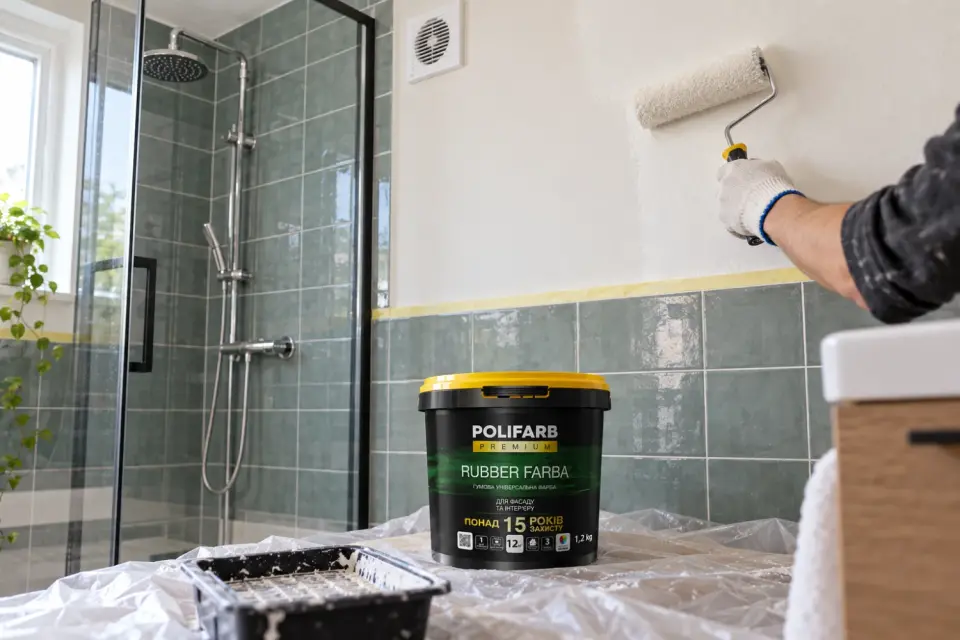
RUBBER FARBA acrylic rubber paint is the only paint here whose data sheet names bathroom walls directly. The film stays elastic, withstands water, detergents and disinfectants, and has wet-scrub class 1. A useful property for older bathrooms: it can go over surfaces previously painted with alkyd and oil paints, once the gloss is sanded matt. Apply 2–3 coats, the second once the first is dry (a coat dries in up to 2 hours), at an air temperature of +10…+30 °C. The coating reaches full strength after 28 days. There is a ready RAL palette and a tinting base.
DIAMOND 7 and DIAMOND 2: for an ordinary bathroom
If the bathroom walls are flat and you want an interior look, choose DIAMOND 7 satin acrylic latex paint or DIAMOND 2 deep-matt paint. Both are wet-scrub class 1, can be tinted in the POLIFARB Color System and go on in one or two coats with 2 hours between them at +5…+30 °C. Satin wipes clean of splashes and toothpaste more easily; matt hides surface defects better. Do not wash the coating for 7 days.
Paints without a wet-scrub class, such as EKOFARBA or SNEJINKA, do not belong in a bathroom: they are only rated for dry rubbing, and bathroom walls get wiped with a damp cloth. How latex differs from acrylic and how to read the wet-scrub class is covered in latex or acrylic paint.
Mould: what to do before painting
Paint does not cure mould. These paints’ data sheets claim no anti-fungal properties for the film, so mould prevention rests on three things: a working extractor, a dry substrate and intact joints. Why mould appears and how to remove it is explained in why mould appears at home.
- Fix the source of moisture: check the extractor and any leaking pipes or joints.
- Treat affected areas with a dedicated anti-mould product following its label, then rinse and dry the wall.
- Strip flaking old paint back to a sound layer. If it comes off in sheets, follow our guide on painting a bathroom wall when the old paint is peeling.
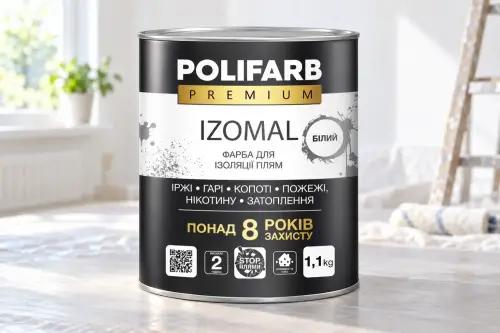
- Cover dried stains from leaks, rust or soot that bleed through paint with IZOMAL stain-blocking paint. One coat is enough under a topcoat, no primer is needed, and the next coat can follow after 2 hours. IZOMAL is solvent-borne, so keep the room ventilated. Stains must be dry: if a leak is still active, fix it first.
- Prime the substrate with one coat of PROFI GRUNT deep-penetrating primer. Paint after 2 hours.
- Apply two coats of paint with the drying interval given in the data sheet.
Joints and the splash zone
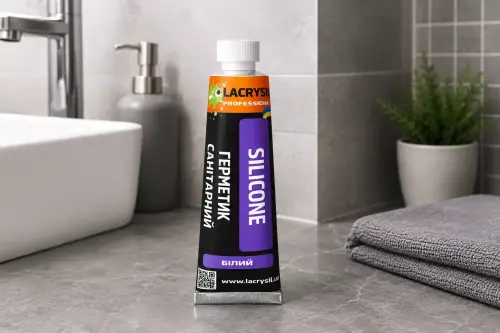
Most black lines in a bathroom appear on joints, not on walls. Seal the bath-to-tile joint with sanitary silicone sealant: it contains fungicides, has practically zero shrinkage and takes movement up to 20%. If the bath meets a painted wall and the joint should be painted with it, use sanitary acrylic sealant: it contains antiseptics, takes paint and handles movement up to 35%. How to choose a silicone is covered in neutral or acetic silicone.
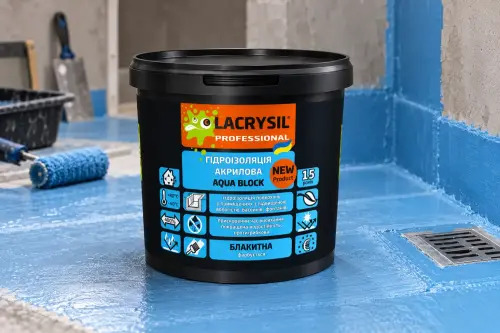
The shower area and the wall above the bath are coated with brush-on waterproofing before tiling. Water Block acrylic waterproofing is designed for bathrooms among other areas and forms a flexible waterproof film under the tiles.
Common mistakes
- Painting a damp wall straight after a shower or after mould treatment.
- Painting the shower area instead of tiling it.
- Washing the fresh wall before 7 days are up.
- Painting over untreated mould: it will come back through.
- Applying RUBBER FARBA in a cold room: the air must be at least +10 °C.
What to buy
For a bathroom that gets washed often, and for walls with old oil paint, take RUBBER FARBA. For flat walls and ceilings under normal use, DIAMOND 7 or DIAMOND 2. Under them, PROFI GRUNT; on stains, IZOMAL; on joints, sanitary silicone or sanitary acrylic sealant; in the shower area under tiles, Water Block. Work out the paint quantity in the paint consumption calculator.
FAQ
Can bathroom walls be painted with water-based paint?
Yes, with a water-based paint of wet-scrub class 1, outside the direct water zone. A paint with no wet-scrub class will not do.
What paint should I use on a bathroom ceiling?
Deep-matt DIAMOND 2, class 1, or RUBBER FARBA if the ceiling needs frequent washing. Prime the ceiling first and cover leak stains with IZOMAL.
Can I paint the wall inside the shower?
No. The interior paint product pages exclude the shower area and the wall right next to the bath. Those areas are tiled over waterproofing.
Will paint protect against mould?
Not on its own. Treat the mould with a dedicated product first, then keep the wall dry: extractor, sealed joints and a washable paint that is easy to wipe.