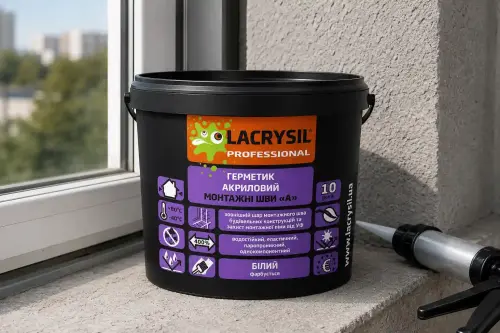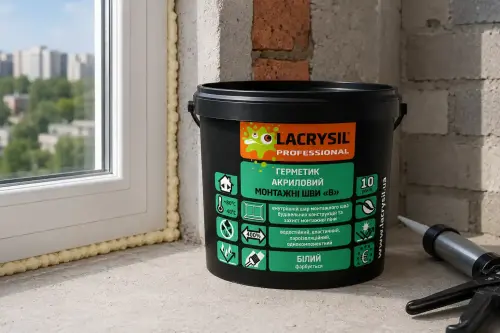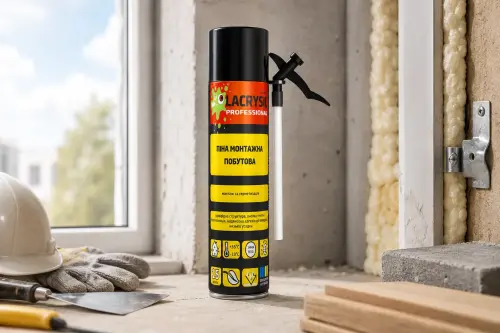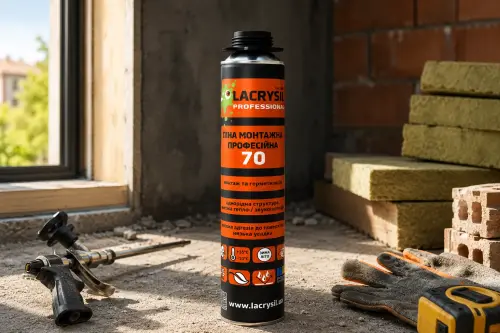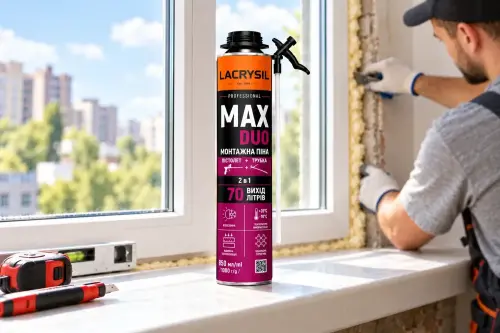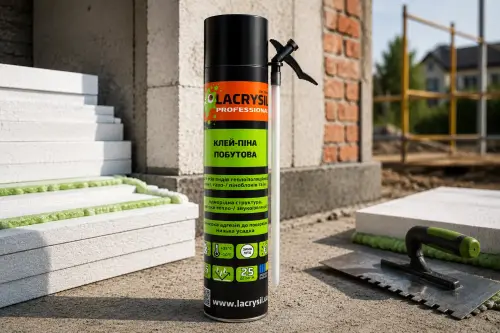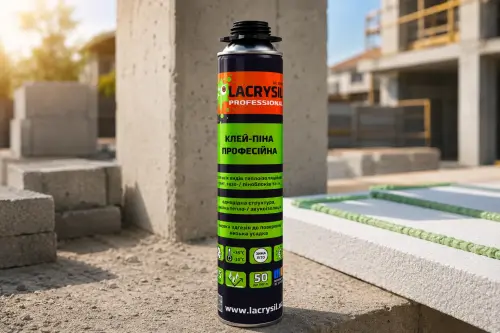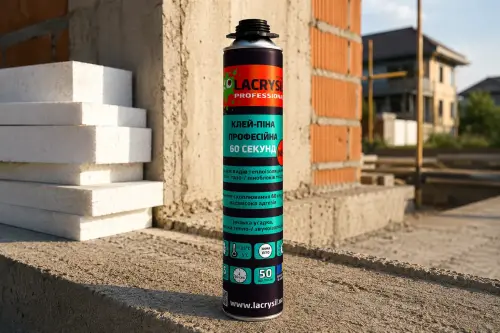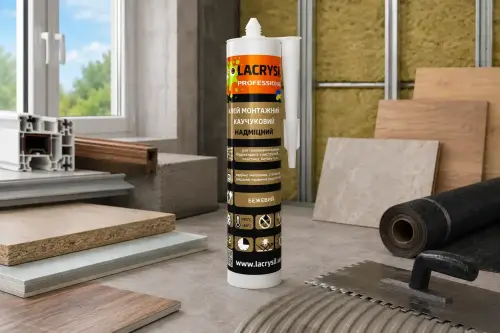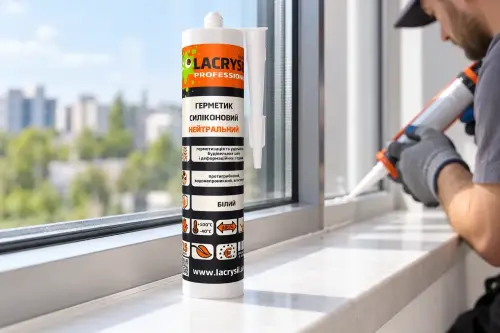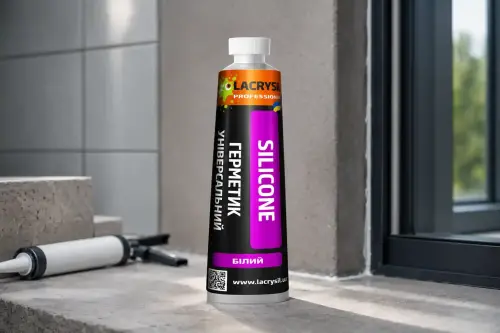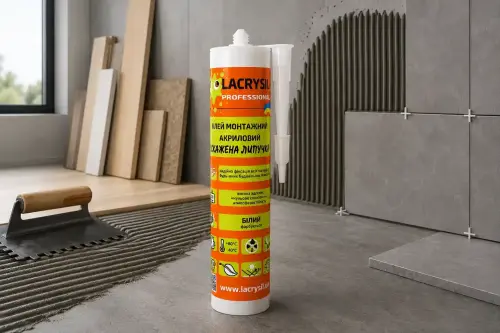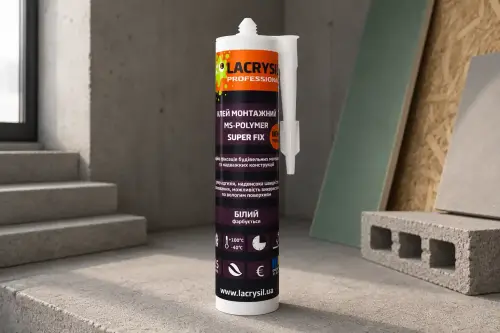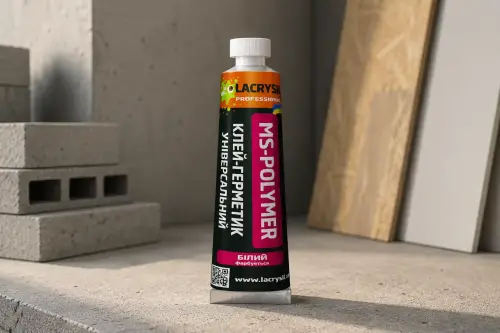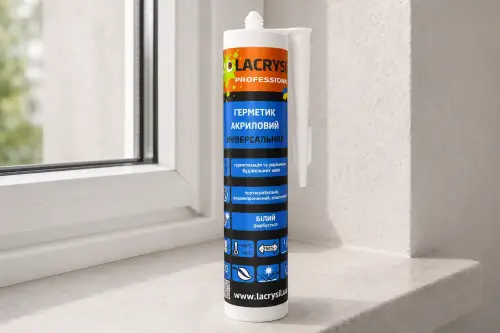









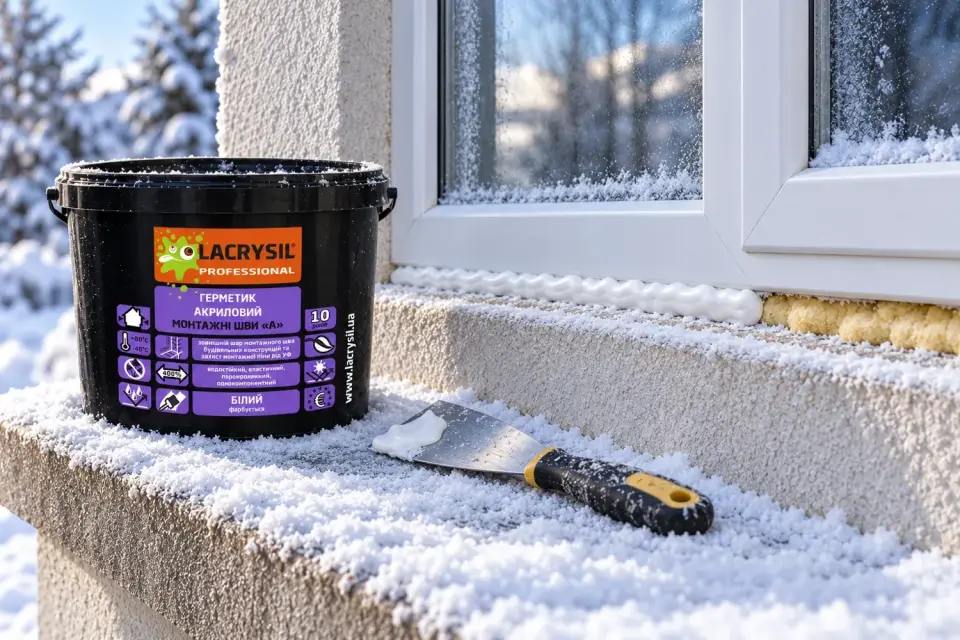
In frost you can still close the outer window joint, foam a gap, bond insulation or a heavy panel, but not with every product. Below zero the range offers the “A” installation joint sealant (from -25 °C), mounting foams and adhesive foam (from -10 °C, “60 seconds” from -5 °C) and rubber adhesive “Extra Strong” (from -10 °C). Silicones and acrylic adhesives need at least +5 °C, MS polymers +10 °C.
Application temperature
Product | Apply at |
|---|---|
-25…+35 °C | |
Household, professional and MAX DUO mounting foam | -10…+35 °C, can at +15…+30 °C |
Adhesive foam, household and professional | -10…+35 °C |
Adhesive foam “60 seconds” | -5…+35 °C |
-10…+35 °C | |
Sealant “B”, silicones, acrylic adhesives | from +5 °C |
MS Polymer “Super Fix” and “Universal”, acrylic sealant “Universal” | +10…+35 °C |
Acrylic adhesive-sealant “2 in 1” | +18…+22 °C |
Key points
Keep foam cans warm, +15…+30 °C: a cold can gives a ragged structure and half the yield.
A service range down to -40 °C means the cured joint survives frost, not that you can apply the product in frost.
Do not apply sealant on ice or frost; never use the vapour-barrier “B” sealant outside.