Can you paint acrylic over enamel? Yes, provided the old enamel is sound and there is a product in between that is rated for that substrate. In POLIFARB data sheets, adhesion to surfaces previously painted with oil or alkyd paints is stated for two products: IZOMAL stain-blocking paint and RUBBER FARBA acrylic rubber paint.
Why acrylic can peel off old enamel
Alkyd or oil enamel forms a dense, smooth film that absorbs almost no water. Water-borne paint sits on top of the gloss, and with weak adhesion it eventually flakes or comes away in strips with masking tape.
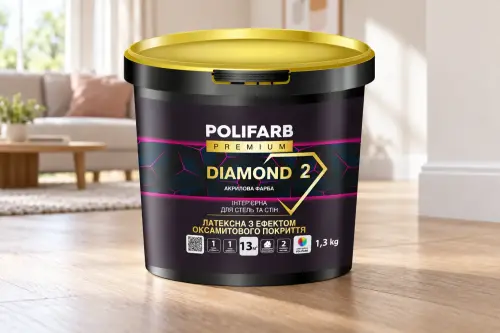
The data sheets of interior paints such as DIAMOND 2 acrylic latex paint say that sound old paint coatings only need washing with water and detergent. Oil and alkyd enamels are not named there. Adhesion to them is stated only for IZOMAL and RUBBER FARBA, so the rest of this article covers those two routes.
Assess the old coating first
- Paint that flakes, blisters or comes off in pieces. Remove it completely: both data sheets require removing flaking layers.
- Old lime, chalk or glue-based paint. Remove it too and wash the substrate with water, as described in can you paint over whitewash.
- Enamel that is sound but glossy. Wash it, dull it, then go through IZOMAL or RUBBER FARBA.
- You do not know what is on the wall. Treat it as enamel and pick one of the two routes below.
Route 1. IZOMAL as an intermediate coat under any water-borne paint
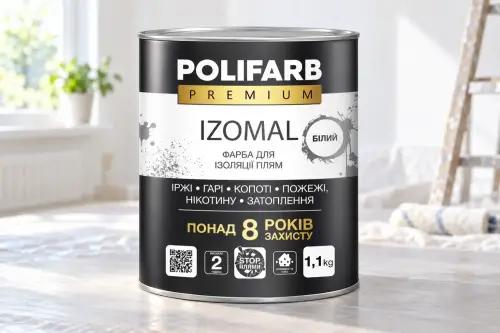
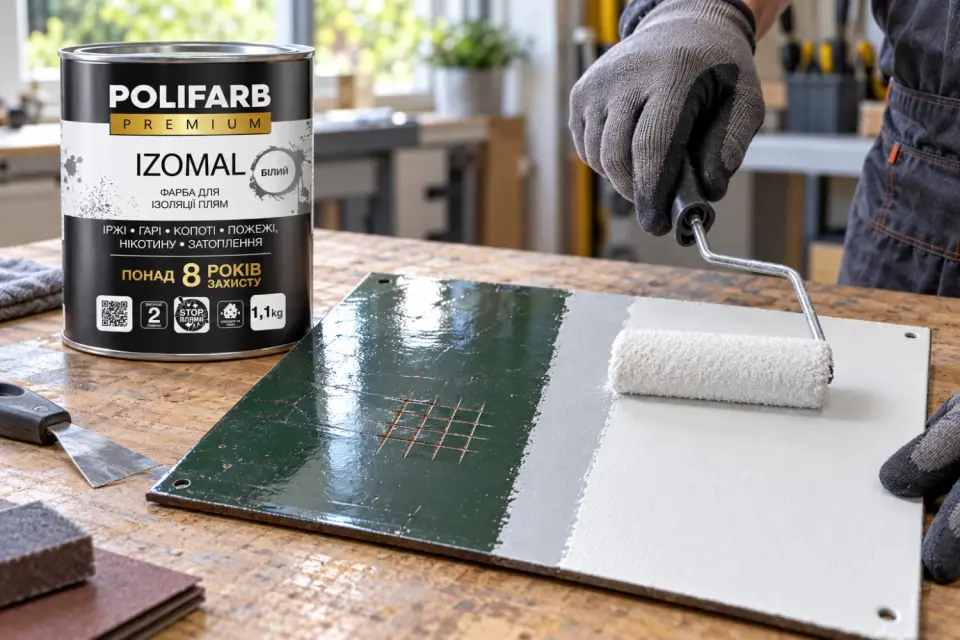
IZOMAL is a solvent-borne paint on acrylic resins with increased adhesion, including to substrates painted with oil or alkyd enamels. Its data sheet explicitly allows any POLIFARB water-borne paint on top once it has dried.
- Remove flaking coatings and crumbling filler.
- Wash the sound old enamel with water and detergent and let it dry.
- Apply one coat of IZOMAL by roller, brush or spray. Under a topcoat, the data sheet recommends exactly one coat.
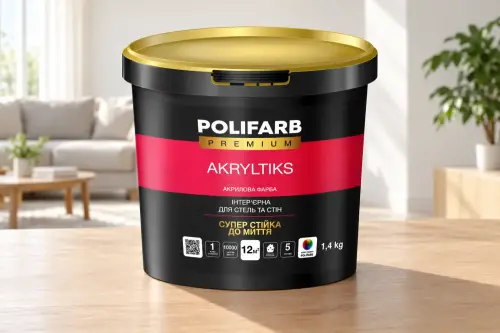
- After 2 hours, apply a water-borne topcoat such as AKRYLTIKS acrylic paint or DIAMOND 2.
IZOMAL consumption is 150–180 g/m² per coat on non-absorbent substrates such as old enamel. Work at +5…+30 °C and humidity up to 60%; white spirit is the thinner and tool cleaner. The paint is flammable, so ventilate the room while working. IZOMAL also covers rust, soot, nicotine and water stains; see our article on IZOMAL stain-blocking paint.
Route 2. RUBBER FARBA directly over alkyd or oil paint
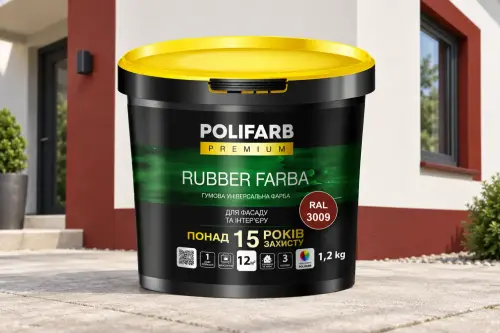
The rubber paint's data sheet states that it can be applied to surfaces previously painted with alkyd and oil paints. No intermediate coat is needed, but preparation is mandatory.
- Clean off dust, dirt, mould and anything that flakes. The surface must be dry and degreased.
- Sand gloss and semi-gloss surfaces until matt. Key sound old coatings with fine sandpaper.
- Apply 2–3 coats, each after the previous one has dried (a coat dries in up to 2 hours). Thin with water if needed, by no more than 10%.
- Paint at air temperatures of +10 to +30 °C.
The finish is matt with wet-scrub class 1, and it reaches maximum strength after 28 days. The paint suits kitchen, hallway and bathroom walls, plinths, fences, metal and wood. The data sheet does not recommend it for floors, thresholds or plastics. How rubber paint works is explained in what rubber paint is.
Adhesion test before painting the whole area
Before painting a room, check adhesion on a small patch in an inconspicuous spot.
- Prepare the patch like the rest of the surface and apply the full system: IZOMAL plus topcoat, or RUBBER FARBA.
- Wait until it has fully dried.
- With a sharp knife, cut through the film to the substrate in a grid of several lines each way.
- Press strong tape onto the grid and pull it off sharply.
If the cut edges are clean and almost nothing is left on the tape, adhesion is adequate. If squares of new paint come away, sand the substrate more thoroughly. If the old enamel comes off too, it has to be removed. Run the same tape test on the old coating before you start.
Doors, furniture, floors: what the manufacturer does not state
The IZOMAL and RUBBER FARBA data sheets cover walls, ceilings, mineral substrates, metal and wood painted with oil and alkyd paints. Lacquered furniture, doors with a factory lacquer, veneer and laminate are not mentioned, so the manufacturer gives no "acrylic over lacquer" system. Options for wooden doors are covered in how to paint interior doors.
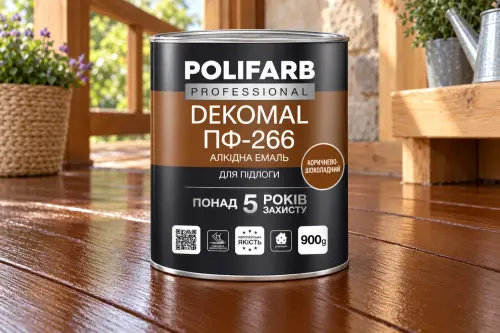
An enamel-painted floor is not covered with acrylic: RUBBER FARBA is not recommended for floors. A painted wooden floor is renewed with DEKOMAL PF-266 alkyd floor enamel in 1–2 coats after preparation; other options are on the wooden floor paints page.
Common mistakes
- Applying water-borne paint straight onto glossy enamel without IZOMAL or sanding.
- Painting over enamel that is already flaking.
- Applying IZOMAL in two coats under a topcoat. One coat is enough as an intermediate layer; two or more are needed only when IZOMAL is the finish.
- Skipping the adhesion test and finding the problem on the whole wall.
What to buy
For walls and ceilings over old enamel: one coat of IZOMAL, then a POLIFARB water-borne paint suited to the room. How to choose it by wet-scrub class is explained in latex or acrylic paint. If you want a single coating without an intermediate layer and the surface is neither a floor nor plastic, take RUBBER FARBA. Work out the quantity in the paint consumption calculator.
FAQ
Can I use water-based paint over oil paint?
Through an intermediate coat of IZOMAL: its data sheet states adhesion to oil and alkyd enamels and allows any POLIFARB water-borne paint on top.
Do I need to strip old enamel before painting?
Flaking and peeling enamel, yes. Sound enamel is washed with water and detergent, and for RUBBER FARBA also dulled with sandpaper.
Can rubber paint go over alkyd paint?
Yes. RUBBER FARBA can be applied to surfaces previously painted with alkyd and oil paints after cleaning, degreasing and dulling the gloss.
Can I paint lacquered doors or furniture with acrylic?
The IZOMAL and RUBBER FARBA data sheets do not list lacquer as a substrate, so the manufacturer gives no proven system for lacquered surfaces.