Paint and coating materials are liquid or paste products that form a solid film on a surface after application: paints, enamels, varnishes, primers and impregnants. Every coating has four main components (binder, pigment, filler and solvent), while additives handle specific properties. How these are combined decides whether a coating lasts for decades or peels after a couple of seasons.
What paint and coating materials are made of
Component | What it does | Examples |
|---|---|---|
Binder (film former) | Forms the film, holds pigment, gives adhesion, strength and elasticity | Acrylic dispersions, alkyd resins, silicones, polyurethanes |
Pigment | Colour, hiding power, partly UV and corrosion protection | Titanium dioxide, iron oxides, organic pigments |
Filler | Body, sheen level, film hardness | Chalk, quartz, talc, mica |
Solvent or thinner | Working viscosity, application, drying speed | Water, white spirit, solvent naphtha |
Additives | Specific properties: thixotropy, mould protection, flow | Thickeners, biocides, dispersants |
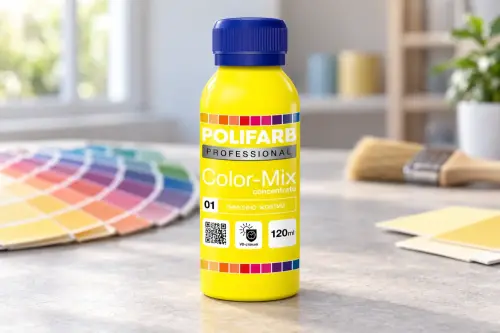
Pigments can also be added separately: COLOR-MIX universal tinting paste works in both water-based paints and alkyd enamels, and its 20 base colours give over 100 shades.
Main types of coating materials
Paints
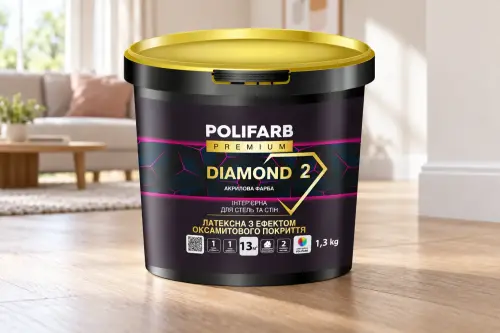
Pigmented products for walls, ceilings and facades. The most common today are water-based acrylics: thinned with water, tools cleaned with water, vapour-permeable film. An example is DIAMOND 2 acrylic latex paint for interior walls and ceilings. More on this type in acrylic paints: what they are.
Enamels
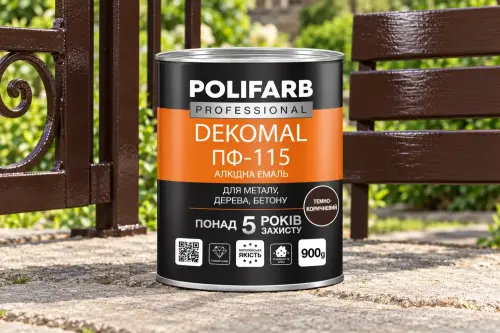
Enamel gives a hard, often glossy film that resists moisture and wear. The classic is alkyd enamel such as DEKOMAL PF-115 alkyd enamel for metal, wood and concrete: 60–120 g/m² per coat, thinned with white spirit or solvent naphtha. The difference between enamel and "enamel paint" is covered in a separate article on enamels.
Primers
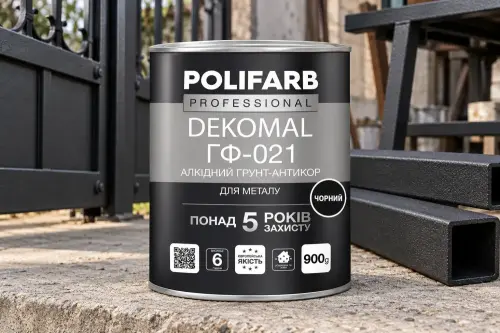
A primer prepares the base: binds dust, evens out absorbency, improves adhesion of the topcoat and, on metal, protects against corrosion. For example, DEKOMAL GF-021 anti-corrosion alkyd primer goes on in one coat (60–100 g/m²), dries in 6 hours and reduces enamel consumption.
Primer-enamels
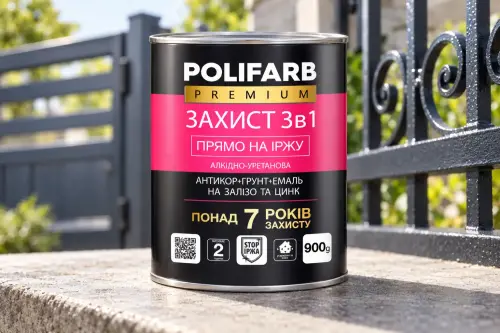
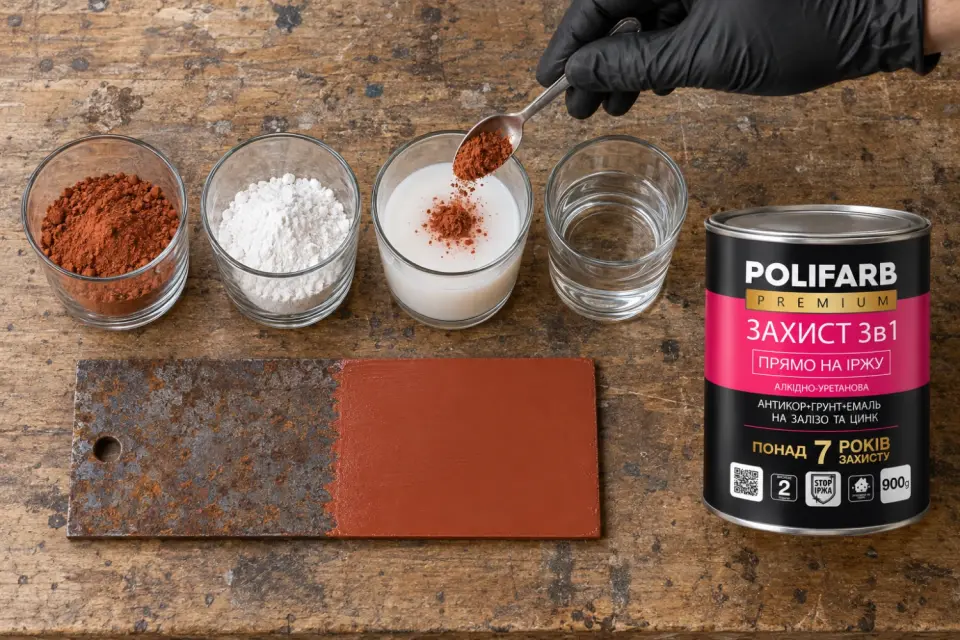
These combine primer and topcoat. Zahyst 3in1 anti-corrosion primer-enamel replaces rust converter, anti-corrosion primer and enamel, and goes straight onto rust.
Varnishes, stains and impregnants
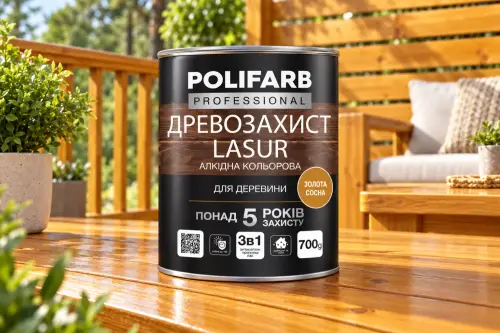
Varnish forms a clear film, a stain (lasur) a semi-transparent tinted one, and an impregnant soaks into the wood fibres without a film. DREVOZAHIST LASUR wood stain-varnish combines impregnant and varnish in one product and keeps the wood grain visible.
Water-based vs solvent-borne coatings
Parameter | Water-based | Solvent-borne (alkyd etc.) |
|---|---|---|
Thinner | Water | White spirit, solvent naphtha, organic solvent |
Odour | No strong odour | Noticeable odour during work |
Drying per coat | From 30 minutes to several hours | Alkyd PF-115: up to 24 hours |
Typical use | Walls, ceilings, facades, radiators | Metal, wood, floors, industrial sites |
The two groups do not mix: water will not blend with alkyd enamel, so thinning and tool cleaning call for an organic solvent such as ROZCHYNNYK 3 in 1, which also degreases metal before painting.
How coatings protect metal from corrosion
The most frequent problem is corrosion under the paint film. A common mistake is to paint metal without an anti-corrosion primer. Moisture and oxygen then reach the metal, corrosion starts at the edges, travels along the metal–film boundary and destroys the coating from inside. That is why metal is first primed with DEKOMAL GF-021 or EXTRAMAL GF-021, and enamel or RUBBER FARBA rubber paint goes over the primer.
That is why metal gets a multi-layer system:
- Surface preparation (phosphating or oxidising in industry).
- Anti-corrosion primer.
- Main paint or enamel.
- Topcoat varnish.
Flake fillers (aluminium, mica, graphite) work like a labyrinth. The flakes overlap in several layers, so moisture has to travel around them through thin layers of binder. The denser the packing, the better the barrier, and the flakes also reinforce the film against microcracks.
Mineral pigments and fillers are usually hydrophilic and can act as bridges for water. Their surface is pre-treated with hydrophobic agents (silanes, stearates), so that even the capillaries inside the coating repel water.
Water repellency and elasticity
Making only the outer surface water-repellent is not enough: with temperature and pressure swings, water still gets in as vapour. Modern coatings tackle this at polymer level:
- microphase-separated structure (segregating copolymers): rigid domains give strength, elastic ones stop cracks spreading;
- primers with high adhesion to metal that do not need perfect surface cleaning.
Solvents and coating quality
The solvent controls drying speed, viscosity, flow and even the properties of the cured film.
- White spirit and kerosene: for oil and alkyd materials.
- Aromatic hydrocarbons: for fast-drying systems.
- Alcohols and esters: in acrylic and polyurethane compositions.
The key rule: the solvent must evaporate completely and leave no residue that lowers adhesion or water repellency. Too much solvent makes the film thinner and reduces hiding power and protection.
Special coatings: electrical insulating varnishes
A separate group is varnishes for electrical engineering. For example, KF-965 varnish to GOST 15030-78 is a solution in organic solvents of drying oils, esterified fatty acids, rosin-based resin and drier. Non-volatile content is at least 60%, drying at 210 °C takes no more than 12 minutes, and the film's dielectric strength is 60–70 kV/mm.
Putting it into practice
For home renovation, three things matter most: choose the coating for the substrate, do not skip the primer, and do not mix water-based and solvent-borne systems. Ready-made "surface to material" matches are collected in how to choose paint for any surface, and alkyd systems for metal and wood are covered in alkyd enamels for protection and decoration.
FAQ
What counts as a paint and coating material?
Paints, enamels, varnishes, stains, primers, primer-enamels, impregnants, fillers for painting and tinting pastes.
How does paint differ from enamel?
Enamel forms a harder, denser, often glossy film that resists moisture and abrasion. Wall paints are usually matt and vapour-permeable.
Can vapour-permeable paint be used on metal?
Not directly. First prime the metal with DEKOMAL GF-021 anti-corrosion primer; over it you can apply enamel or, for example, RUBBER FARBA rubber paint.
What do you thin alkyd enamel with?
An organic solvent: white spirit, solvent naphtha or a mix of the two. Water does not mix with alkyd enamel.