How to clean brushes and rollers: water-based, alkyd and dried paint
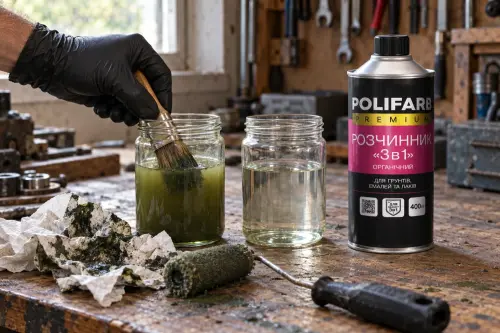
Step by step: how to clean brushes and rollers after water-based paint and alkyd enamels, how to dry tools and what to do if paint has dried.
We use necessary cookies for the cart, session, and security. Analytics and marketing cookies are enabled only after your choice. Learn more
Polifarb App
Add the store to your home screen for faster access and an app-like full-screen experience.
It installs in a couple of taps — here is how.
Tap in the Safari toolbar
Choose “Add to Home Screen”
To install the app, open this site in the Safari browser.
Search
Start typing to see suggestions.
Blog
Choose a category, tags, and sorting to quickly find the right article.
Page 2 of 2
Step by step: how to clean brushes and rollers after water-based paint and alkyd enamels, how to dry tools and what to do if paint has dried.
How to seal an opened can of paint, where to keep water-based paints and enamels, what winter does to paint and how to check it before reuse.
What rubber paint is, why its film stretches instead of cracking, which substrates it bonds to and how to apply it so the coating performs.
Which paints a full renovation needs: a selection table for rooms, facade, timber and metal, plus the order of work from roof to floor.
What paint and coating materials are, what binder, pigment, filler and solvent do, how paint differs from enamel, varnish and primer, and how metal protection works.
What acrylic paint is made of, how it dries, how it compares with oil and PVA paints, and which acrylic paint to use for ceilings, kitchens and facades.
What goes into the price of paint, how wash-resistance classes differ, and how to work out the real cost of one square metre of wall instead of one bucket.
What makes a paint job last: substrate preparation, priming, choosing paint by its data-sheet properties, brush, roller or spray, application conditions and ventilation.
0 items