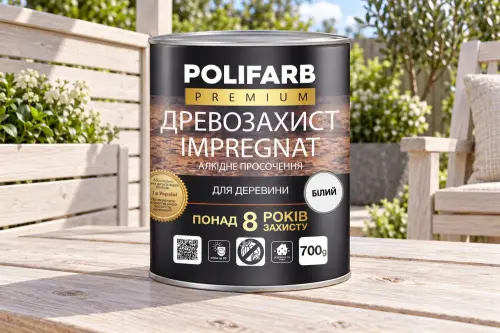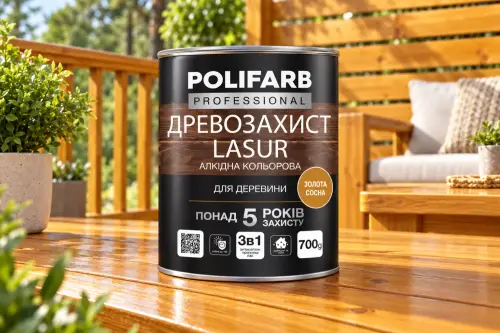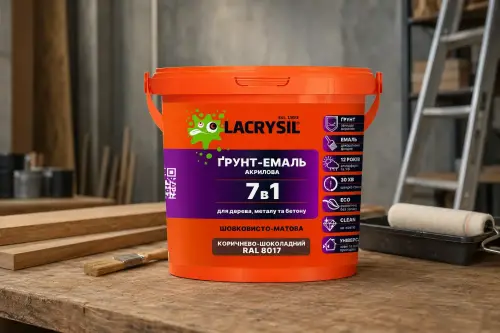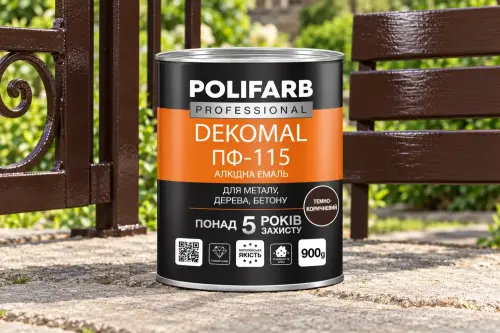
What to paint natural-wood cladding boards with depends on whether the grain should stay visible. For a transparent finish, use DREVOZAHIST IMPREGNAT impregnation with lacquer on top, or DREVOZAHIST LASUR wood stain. For opaque colour, use the water-borne 7-in-1 primer-enamel without a strong smell, or PF-115 alkyd enamel over primed wood.
Which cladding this covers
This is about cladding boards and panelling made of natural wood. The IMPREGNAT data sheet names tongue-and-groove cladding, skirting and solid-wood panels; LASUR names wooden facades, gazebos and fences. The manufacturer does not state these products for plastic cladding or foil-faced MDF cladding. The data sheets say nothing about steam rooms or saunas either, so these systems are not offered for them.
Three systems compared
System | Look | Where | Coats and drying |
|---|---|---|---|
IMPREGNAT + pentaphthalic lacquer | precious-wood colour, grain visible | indoors and outdoors | impregnation 2–3 coats 8 hours apart, lacquer 1–2 coats indoors, 2–3 outdoors |
clear IMPREGNAT + LASUR | satin-matt film, grain visible | mainly outdoors: facade, balcony, gazebo | IMPREGNAT 1 coat, LASUR 2–3 coats 24 hours apart |
7-in-1 primer-enamel or PF-115 | opaque colour | 7-in-1 indoors and out; PF-115 including outdoors | 7-in-1: coats 30 minutes apart; PF-115: primer 24 hours, 1–2 coats |
Preparing the cladding
- The surface must be sanded, dry, free of dust, dirt, oils and resin, and degreased.
- Fill gaps and dents with wood filler if needed.
- Remove flaking old paint. For impregnation and stain, sand back to clean fibres, because they will not soak through an old film.
- It is easier to treat the boards before fixing them, including the tongues and ends you cannot reach later.
System 1. IMPREGNAT under lacquer
DREVOZAHIST IMPREGNAT alkyd impregnation soaks deep into the wood and cures within its fibres, tints it to precious-wood shades and protects against fungus, mould and wood-boring insects. No primer is needed, and the impregnation does not stop the surface from breathing.
- Stir the impregnation and keep stirring during work.
- Apply with a soft brush, pad or sponge along the grain. Do not spray.
- For a richer colour, apply 2–3 coats, each 8 hours after the previous one.
- Protect the dried surface with pentaphthalic lacquer: 1–2 coats indoors, 2–3 outdoors.
Colours: clear, pine, teak, oak, mahogany, walnut, wenge and rosewood classic. Consumption is 80–100 g/m² per coat. The data sheet does not leave the impregnation without lacquer, so budget for the lacquer from the start.
System 2. Clear IMPREGNAT and LASUR for outdoor cladding
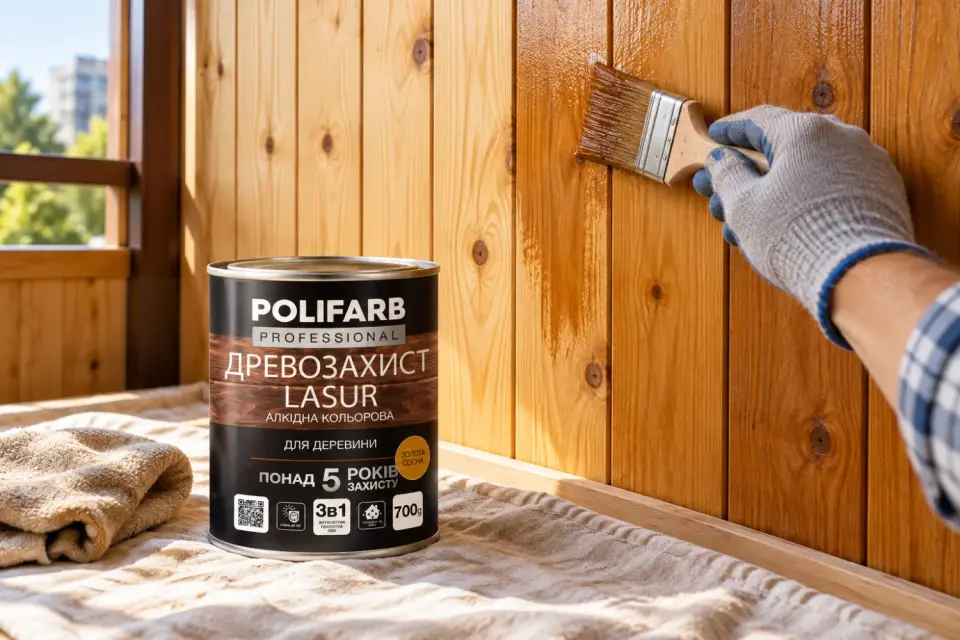
DREVOZAHIST LASUR wood stain combines antiseptics, impregnation and lacquer in one product. It is weather-resistant, protects wood from moisture and UV, and forms a strong elastic film through which the texture shows.
- For better protection outdoors, the data sheet recommends one coat of clear IMPREGNAT first.
- Stir the stain. Apply by roller, brush or spray along the grain.
- Apply 2–3 coats, each 24 hours after the previous one.
- Work at +5…+30 °C and humidity up to 60%.
Colours: golden pine, rosewood, chestnut, dark oak, teak and walnut. Consumption is 80–100 g/m² per coat. How this system works on a fence is covered in how to paint a wooden fence so it does not rot.
System 3. Opaque colour
7-in-1 primer-enamel for indoor cladding
The 7-in-1 acrylic primer-enamel for wood, metal and concrete is water-borne with no strong smell, so cladding in a living room can be painted without moving out. It needs no separate primer, a coat dries in 30 minutes, the coat should be about 0.25 mm thick, and tools are washed with water. The finish is satin-matt, weather- and UV-resistant, for indoor and outdoor use. More in 7-in-1 acrylic primer-enamel.
PF-115 alkyd enamel for verandas and outbuildings
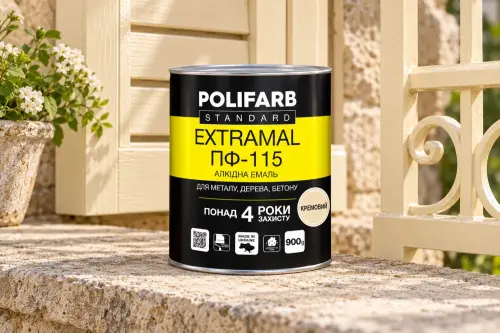
The data sheets of DEKOMAL PF-115 alkyd enamel and EXTRAMAL PF-115 recommend them for outdoor structures: gazebos, benches, verandas, fences and outbuildings. The finish is glossy.
- Prime bare wood with one coat of clear Drevozahist impregnation, that is IMPREGNAT in its clear version, or with drying oil. Let it dry at least 24 hours before enamelling.
- Apply 1–2 coats of enamel by roller, brush or spray. The second coat goes on once the first is fully dry, within 24 hours.
- If needed, thin with white spirit, solvent naphtha or a 1:1 mix, by no more than 10%.
- Work at +5…+30 °C and humidity up to 60%.
Consumption per coat is 60–120 g/m² for DEKOMAL and 100–150 g/m² for EXTRAMAL. The enamel is flammable and smells of solvent, so indoors the 7-in-1 primer-enamel is more practical. Both PF-115 enamels are on the PF-115 enamels page, and alkyd enamels in general are covered in alkyd enamel: what it is and which grades exist.
How much material you need
For 20 m² of cladding in two coats you need 3.2–4 kg of IMPREGNAT, and the same of LASUR. If you treat boards before fixing, include the ends and tongues in the area. Work out your own figures in the paint consumption calculator.
Common mistakes
- Leaving IMPREGNAT without a lacquer topcoat.
- Spraying IMPREGNAT: the data sheet forbids it.
- Applying the next coat of LASUR sooner than 24 hours.
- Painting PF-115 onto unprimed wood.
- Painting plastic or foil-faced MDF cladding with wood products.
What to buy
To keep the grain indoors: IMPREGNAT plus pentaphthalic lacquer. For a facade, balcony or gazebo: clear IMPREGNAT plus LASUR. For opaque colour indoors: the 7-in-1 primer-enamel; on verandas and outbuildings: PF-115 over primer. Doors of the same wood can be finished with the same products, see how to paint interior doors.
FAQ
Can cladding be painted without impregnation?
The 7-in-1 primer-enamel needs no separate primer. Under PF-115, bare wood must be primed with clear Drevozahist impregnation or drying oil, and under LASUR outdoors a coat of clear IMPREGNAT is recommended.
How many coats of stain go on cladding?
LASUR goes on in 2–3 coats, 24 hours apart. Outdoors, one coat of clear IMPREGNAT is recommended first.
What can I paint indoor cladding with without a smell?
No paint is completely odourless. The weakest smell comes from the water-borne 7-in-1 primer-enamel: it has no strong smell and dries in 30 minutes.
Can MDF or plastic cladding be painted?
Foil facings and plastic are not listed among the substrates of these products, so the manufacturer does not state such use.